Questions every buyer should ask an outbound provider
The AI edition
The one question buyers rarely ask about AI in outsourced sales, and why the answer says more about a provider than any list of features.

AI is becoming part of almost every sales conversation I have at the moment. Most outsourced sales providers will tell you they use it somewhere, whether that's for research, coaching, email personalisation, data analysis or workflow automation.
And, to be clear, I'm an advocate for it when it's used appropriately.
AI can remove much of the manual work that slows salespeople down. It can help teams use data more effectively, spot useful patterns and spend more time having meaningful conversations with the right prospects.
But there's one question I don't hear enough buyers asking:
"What actually happens when one of our prospects answers the phone?"
It sounds fairly basic. In reality, the answer will probably tell you more about how a provider operates than a long list of AI features ever could.
1 When efficiency creates a problem
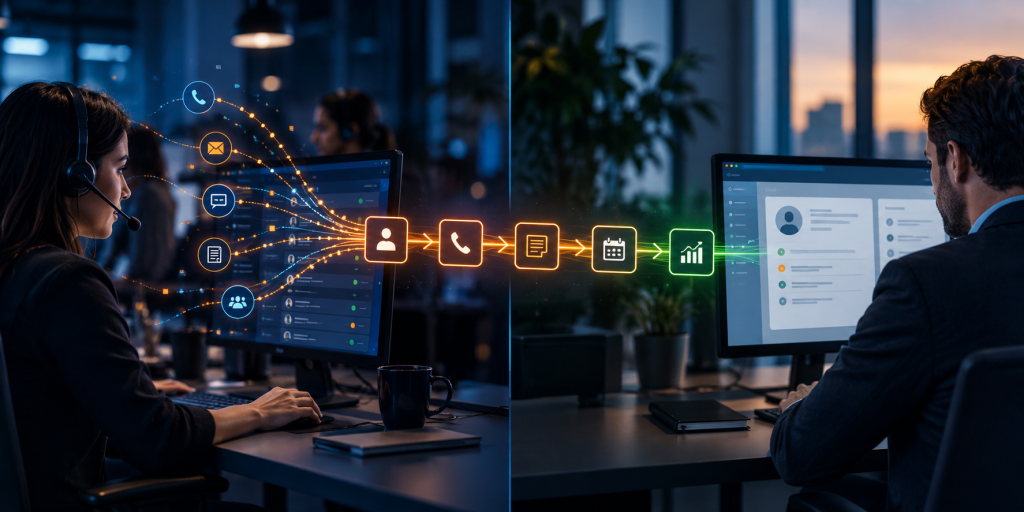
I've recently heard about providers using AI-powered dialling technology that calls multiple telephone numbers at the same time.
The principle is simple: calling several numbers simultaneously increases the chance of someone answering and reduces the time salespeople spend waiting between conversations.
On paper, that sounds efficient.
The problem comes when more than one person answers and there's only one salesperson available.
What happens to everyone else?
In some cases, nobody is there to speak to them. They might hear silence, experience a delay while the system tries to connect them or find that the line disconnects before a conversation has even started.
It would be easy to dismiss that as a small operational detail. I don't think buyers can afford to look at it that way.
The person answering the phone doesn't know which dialling platform is being used, how many other numbers were called or how the provider's SDR team is structured.
They simply know that your business called them and nobody was there.
That becomes their first impression of your brand. If they're a decision-maker within an account you've specifically chosen to target, it may also affect whether they answer the next time somebody from your business tries to contact them.
2 Technology isn't the problem
This isn't an argument against AI or sales technology.
We use technology across our own outsourced SDR programmes because it helps our teams work more efficiently and gives us better insight into campaign performance.
Power diallers reduce the manual work between calls. Better data helps SDRs prioritise the right accounts and reach the right decision-makers. AI and automation can help teams understand what's working, where conversations are getting stuck and what needs to change.
The combination of experienced people, good data and smart technology makes outbound more effective. But the order matters.
Technology should help good salespeople have better, more relevant conversations. It shouldn't create activity for activity's sake or prioritise dial volume over the experience of the prospect receiving the call.
This is also central to our combined Air + Cleverep European outbound sales capability . Following Air's acquisition of Cleverep , we're bringing together intelligent data and AI-supported targeting with experienced salespeople who remain responsible for the conversation itself.
For me, that's where AI adds the most value: improving the thinking, targeting and preparation behind the outreach.
3 Why buyers need to understand the process
When you outsource sales, you're trusting another business to represent yours in the market.
Your prospects are unlikely to see the provider as a separate organisation. As far as they're concerned, they're speaking to your sales team. Or, in the case of a silent call, trying to.
A silent or abandoned call can make your business appear careless, intrusive or badly organised. The difficult part is that you may never know that impression has been created.
The prospect might not complain or ask to be removed from your data. They may simply be less likely to answer the next call, open the next email or engage with your business in the future.
There's a compliance question too.
In January 2026, Ofcom reminded organisations that their systems and processes should be designed to prevent silent and abandoned calls. Its guidance specifically refers to over-dialling and situations where a call is answered but no agent is available. Ofcom also makes clear that responsibility can apply to organisations and the call centres working on their behalf.
You can read Ofcom's guidance on silent and abandoned calls here . The ICO also provides guidance on live direct marketing calls .
Buyers don't need to become experts in every piece of regulation before appointing an outbound provider. But they should expect that provider to explain clearly how its technology and processes support compliant delivery.
"I'm sure the software takes care of it" isn't a good enough answer when your brand is the one being represented.
4 More activity doesn't automatically mean better performance
A provider might be able to make significantly more calls using AI or automated dialling. That can look impressive in a proposal or monthly report, particularly when it's presented as a major increase in SDR productivity.
But is the technology actually producing more of the right conversations?
Dial volume has always been one of the easiest outbound metrics to make look impressive. It's also one of the least useful when viewed in isolation.
I'd rather understand how many relevant decision-makers were reached, what was learned from those conversations, how many qualified opportunities were created and whether those opportunities progressed.
Those are the measures that tell you whether an outbound programme is contributing commercially. The objective should be a more predictable flow of qualified B2B leads and sales opportunities, not simply more activity at the top of a report.
If a provider told me its AI allowed the team to make ten times more calls, my response would be: what has that actually improved?
Has it increased contact and conversion rates? Are the conversations with the right people? What's the impact on prospect experience? And how is the additional activity contributing to pipeline?
Technology should make the sales process better for the buyer, the salesperson and the prospect. If it only makes the activity report look busier, I'm not sure it's solving the right problem.
Comparing in-house and outsourced SDR costs?
If you're currently assessing your options, compare the estimated cost of building an internal SDR team against outsourcing — including salaries, recruitment, management and technology.
Use your own figures and see the comparison side by side. No sign-up required.
Compare the costs5 What a good answer should tell you
If you're evaluating an outbound partner, ask:
"How does your AI or dialling technology work when someone answers the phone?"
A good provider should be able to explain:
- Whether a salesperson is immediately available when somebody answers
- Whether the system calls one prospect or several at a time
- How silent or abandoned calls are prevented and identified
- How call quality and prospect experience are reviewed
- Who is responsible for compliance
- How the technology improves conversations, conversion and pipeline
None of this should require a technical background to understand. The answer should be straightforward because the provider should already have thought through the process.
If the response is vague, I'd keep digging. And if it focuses entirely on how many more calls the technology can make, I'd be asking what that increase is actually delivering.
AI is going to play a much bigger role in outbound over the next few years. But I don't think the providers that stand out will simply be the ones using the most AI.
They'll be the ones that can explain how they use it, where they don't use it and what safeguards sit around it.
Because when a prospect answers the phone, they aren't judging your outsourced sales provider. They're judging your business.
Related reading
Technology is only one part of assessing a potential sales partner. Read How to Choose the Right Outsourced Sales Agency in the UK for the wider questions to ask about experience, delivery, reporting, cultural fit and commercial alignment.