

Cold Call Lead Generation for B2B: What Actually Works When You Need Predictable Pipeline

Cold Call Lead Generation for B2B - Air Marketing Leading Outsourced Sales Provider
Cold Call Lead Generation for B2B

Cold call lead generation remains one of the most misunderstood sales channels in B2B.

At Air, we see organisations abandon cold calling not because it fails, but because it is rarely built or managed as a professional sales discipline. When cold calling is treated as a volume exercise, it produces noise. When it is treated as a structured revenue channel, it creates control, visibility, and pipeline predictability.

The difference is execution.

In this article, we explain how cold call lead generation works in modern B2B environments, why it breaks down inside most organisations, and how we design and deliver it as part of an integrated outbound strategy.

Does cold call lead generation still work for B2B companies?

Yes, but only when it is built around buyer relevance and commercial intent.

B2B decision-makers have not stopped answering the phone. What they have stopped responding to are calls that lack context, insight, or a clear reason for engagement. In our delivery work, we consistently see senior buyers engage when calls demonstrate an understanding of their market, role pressures, and commercial priorities.

Cold call lead generation works when:

  • Clearly defined audience: the audience is tightly scoped and relevant to your offer.
  • Problem-led message: the message is rooted in real business problems, not product features.
  • Trained caller capability: the caller is trained to hold a commercial conversation, not read a script.

This is why Air positions cold calling as a conversation channel, not an interruption tactic.

Why cold call lead generation fails inside most organisations

A common pattern we see across growth-stage B2B businesses is that cold calling is deployed without the foundations required for success.

The most frequent failure points include:

  • Activity over outcomes: teams are measured on dials rather than qualified conversations or pipeline contribution.
  • Generic messaging: calls focus on products and features rather than buyer problems and commercial impact.
  • Poor data discipline: target lists are outdated, poorly segmented, or lack insight into buyer context.
  • Isolated execution: cold calling runs separately from email, LinkedIn, and wider outbound activity.
  • Undertrained resources: cold calling is handed to junior hires without the coaching or structure required to succeed.

The commercial impact is significant. Time is wasted, confidence erodes, and cold calling is incorrectly labelled “ineffective”.

How Air builds effective cold call lead generation programmes

At Air, we design cold call lead generation as part of an end-to-end sales delivery system, not a standalone tactic.

1. Precise ICP and role definition

We start by defining exactly who should be called and why. This includes sector, company size, buying triggers, and the specific challenges faced by each decision-maker.

2. Insight-led messaging

Our calls are informed by real sales conversations across markets. Messaging is continuously refined based on what buyers respond to, not assumptions made in isolation.

3. Integrated outbound execution

Cold calls are sequenced alongside targeted email and LinkedIn activity. Each touchpoint reinforces the last, creating familiarity and relevance before and after the call.

4. Professional delivery

Air callers are trained sales professionals, not script readers. They are coached to qualify, challenge, and progress conversations commercially.

5. Continuous optimisation

Performance is reviewed weekly. Messaging, targeting, and approach are adjusted based on outcomes, not gut feel.

This is how cold call lead generation becomes predictable.

How many cold calls does it take to generate a B2B lead?

There is no fixed number, and any provider offering one should be challenged.

In our experience, results are driven by:

  • Data quality: accuracy, freshness, and segmentation of the list.
  • Message relevance: how well the opener and angle map to buyer priorities.
  • Caller capability: ability to qualify, challenge, and progress commercially.
  • Follow-up discipline: structured persistence across calls, email, and LinkedIn.

Well-designed programmes typically require fewer calls, not more, because conversations are better targeted and better handled. This is why Air focuses on conversion efficiency, not call volume.

In-house vs outsourced cold call lead generation

Many organisations attempt to build cold calling internally without appreciating the true cost.

In-house delivery requires:

  • Hiring and onboarding: recruiting and ramping specialist SDRs.
  • Ongoing coaching and management time: training, QA, and performance management.
  • Data, tooling, and process ownership: keeping lists clean, systems running, and messaging updated.
  • Time to reach consistent performance: ramp time before predictable pipeline appears.

Outsourcing cold call lead generation to Air gives organisations access to:

  • Proven sales processes: delivery built around outcomes, not activity.
  • Experienced delivery teams: trained callers who can run commercial conversations.
  • Immediate market insight: learning from live buyer conversations, in real time.
  • Transparent reporting and accountability: visibility into activity, outcomes, and pipeline contribution.

For businesses that need pipeline now, outsourcing removes execution risk while maintaining control.

What good cold call lead generation looks like in 2026

Effective programmes share the same characteristics:

  • Clear commercial intent: every call has a defined purpose and qualification standard.
  • Buyer-led conversations: relevance, context, and commercial outcomes lead the dialogue.
  • Integrated outbound execution: calls reinforce, and are reinforced by, email and LinkedIn.
  • Measurable pipeline contribution: performance is tracked through qualified conversations and opportunities created.

At Air, we build cold call lead generation to support revenue growth, not vanity metrics. The objective is always the same: qualified conversations that progress into real pipeline.

Related reading

Is Telemarketing Still Effective for B2B Lead Generation?

This article explores how telemarketing, cold calling, and modern outbound should be combined to build predictable B2B pipeline.

Commercial next step

If your outbound activity feels inconsistent, or your internal team lacks the time or structure to make cold calling work properly, Air builds and delivers cold call lead generation as part of a wider sales system designed to produce predictable pipeline.

If you want to see how this would work for your market, we are happy to talk through a practical approach.

Complete the form below and we’ll get back to you within one working day.

Talk to an expert at Air Marketing - Trusted Outsourced Sales Agency UK

Why AI Products Don’t Sell Themselves (And Never Will)

AI Sales Strategy for AI Products | Outsourced Lead Generation & Sales Support - Air Marketing
Why AI Products Don’t Sell Themselves (And Never Will)

Why AI Products Don’t Sell Themselves (And Never Will)

Over the last year, we’ve seen a clear shift in demand, with a growing number of AI companies coming to us for sales support.

These are not early-stage experiments. They are businesses with sophisticated models, credible use cases, and genuine technical differentiation. The assumption was simple: build something intelligent, put it into the market, and growth will follow.

It hasn’t.


The false promise of ‘self-selling’ AI

AI founders are often sold the idea that innovation removes the need for traditional sales effort. In reality, B2B buying behaviour hasn’t fundamentally changed.

Related reading: We’ve covered this in more depth in Inbound Plateaued? Here’s How Outbound Can Restart Your Growth Curve , which looks at why inbound-only growth stalls and how outbound reintroduces momentum.

Decision-makers are still risk-averse. They still need reassurance. They still want to understand not just what the technology does, but what it means for their business, their team, and their credibility internally.

What we’re seeing from AI companies coming inbound

There’s a striking consistency across conversations with AI businesses. The same challenges keep surfacing:

  • Strong inbound interest, but low conversion
  • High demo volumes, but stalled decisions
  • Technically impressive products that struggle to articulate commercial value
  • Heavy reliance on automation, with minimal human follow-up

Why old-fashioned sales is outperforming modern automation

Despite advances in automation, the highest-performing AI GTM motions still rely on fundamentals:

  • Human-led discovery calls that uncover real commercial pain
  • Sales conversations that translate models into outcomes
  • Objection handling in real time, not via nurture sequences
  • Consistent follow-up driven by people, not workflows

Yes, automation accelerates process, but it does not replace trust.

Why AI founders are choosing to outsource SDRs rather than hire internally

For many AI founders, the decision to outsource SDRs isn’t about cost-cutting. It’s about speed, focus, and reducing execution risk.

Hiring internally looks straightforward on paper. In practice, it introduces friction at exactly the point where momentum matters most.

Hiring slows the GTM learning loop

Recruiting, onboarding, training, and iterating messaging can take months. Outsourced SDR teams allow founders to test positioning, markets, and messaging in weeks, not quarters.

Founder-led sales doesn’t scale

Many AI businesses rely on founders to sell early on. That works until it doesn’t. Outsourced SDRs create separation between product leadership and pipeline creation, without founders stepping completely away from sales insight.

Good SDRs are hard to find – and harder to ramp

AI propositions are complex. Hiring junior SDRs and expecting them to confidently sell advanced technology is a high-risk bet. Outsourced teams bring experience, structure, and commercial discipline from day one.

Consistency matters more than headcount

One or two internal SDRs can struggle with momentum through holidays, churn, or underperformance. Outsourcing provides coverage, process, and continuity without single points of failure.

AI companies want signal, not noise

The goal isn’t activity volume. It’s learning what resonates, what converts, and why. Outsourced SDR teams are often brought in to generate commercial signal that sharpens product, marketing, and pricing decisions.

For AI founders, outsourcing SDR isn’t a shortcut. It’s a way to build confidence in the GTM motion before committing to permanent headcount.

That’s why we’re seeing more AI companies treat outsourced SDR as a strategic bridge – not a replacement for an in-house sales team, but a faster route to one that actually works.

Where this leaves AI companies

The most successful AI companies are not choosing between technology and humans. They are deliberately blending both.

AI sharpens targeting, personalisation, and insight. Human sales teams provide credibility, context, and reassurance.

If your AI product isn’t converting at the rate you expected, the issue is rarely the model. It’s usually the missing human layer around it.

Conclusion

AI will keep evolving. The fundamentals of B2B buying will keep demanding confidence, clarity, and human reassurance. The winners won’t be the businesses with the cleverest product – they’ll be the ones that can consistently translate it into commercial outcomes.

If this sounds familiar, speak to one of our experts about how our lead generation and outsourced SDRs services are helping AI companies turn technical capability into consistent, predictable revenue.

SaaS Growth 2026: How Leading Brands Are Building Predictable Sales Pipelines

SaaS Companies Revenue Growth 2026 - Air Marketing Outsourced Sales Agency UK
SaaS Growth 2026: How Leading Brands Are Building Predictable Sales Pipelines

SaaS Growth 2026: How Leading Brands Are Building Predictable Sales Pipelines

The pressure on SaaS growth is changing. The SaaS landscape is shifting – fast.

Recent data shows:
  • The average B2B SaaS sales cycle has increased from 107 to 134 days – roughly a 25% rise year-on-year.[1]
  • Fewer than one in five SaaS firms say they have full confidence in their pipeline forecasts.[2]
  • Organisations that define and enforce a structured sales process see up to 28% more revenue than those that don’t.[3]

In 2026, success won’t be defined by who shouts the loudest or automates the fastest – but by who builds the most reliable system for generating qualified opportunities month after month.

Why predictability has become the new currency

  • Clarity over chaos – clean data, structured processes, and defined ICPs.
  • Performance over volume – fewer, better-qualified conversations.
  • Integration over isolation – SDRs, marketing, and sales ops working as one revenue engine.

The playbook behind predictable SaaS pipelines

  • Rebalancing inbound and outbound. Outbound is no longer an afterthought – it’s a precision tool for creating qualified conversations in defined markets.
  • Building SDR teams that think commercially. The best SaaS SDRs understand value, not just volume. They know how to open a conversation that leads to revenue.
  • Using data as a decision driver. From call performance to conversion ratios, data fuels continual optimisation – not micromanagement.
  • Investing in training and culture. Predictable performance comes from confidence, coaching, and clear career progression, not scripts and spreadsheets.

Outsourced SDR models are rising in influence

  • Faster setup and scalability.
  • Proven processes and playbooks.
  • Access to skilled SDRs trained to represent your brand with precision.

Sources

  1. MADx Digital – SaaS Sales Statistics 2025: Average B2B SaaS Sales Cycle Increased from 107 to 134 Days. madx.digital
  2. Forecastio – SaaS Sales Forecasting Challenges and Confidence Levels. forecastio.ai
  3. SuperOffice – Organisations that define and enforce a sales process see up to 28% more revenue than those that don’t. superoffice.com

Ready to see the difference for yourself?

If you want outbound that delivers revenue, not just activity, let’s talk about what a performance-led model could do for your pipeline.

What Top-Performing Sales Teams Do Differently With Their Process

top performing sales teams - air marketing - outsourced SDRs

What Top-Performing Sales Teams Do Differently With Their Process

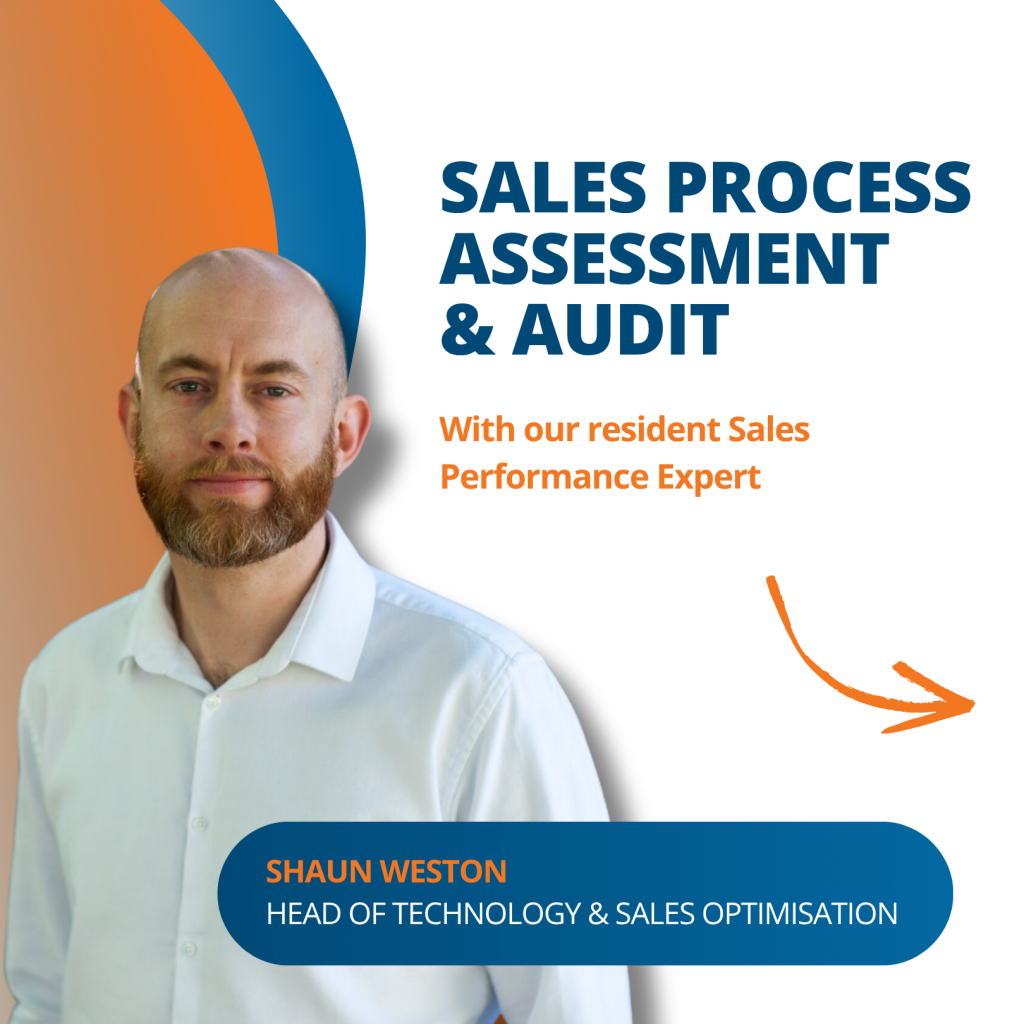
By Shaun Weston, Head of Technology & Sales Optimisation at Air Marketing

Every business invests in training, tools, and targets. But the teams that genuinely outperform have something less visible yet far more powerful: an operational discipline around how they sell. It’s quiet, systematic, and often overlooked – but it’s the reason their numbers look the way they do.

Most sales functions believe they have a process, but what they actually have is a collection of habits, preferences, and inherited ways of working. Top-performing teams see it differently. They build a sales process with the same precision an operations team would bring to a factory line – something measurable, repeatable, and continuously improved, not something left to interpretation or personal style.

What the Best Teams Do Differently

1They define a single, clear sales process everyone actually follows

High-performing teams don’t let each salesperson “interpret” the process. They eliminate variability. There’s one process, one language, and one standard for qualification, progression, and forecasting. Consistency makes performance measurable – and therefore optimisable.

2They document every stage of the customer journey

Not in a dusty playbook. Not in someone’s head. The journey is clearly mapped, kept live, and updated as markets evolve. When information is accessible and current, new hires ramp faster and experienced reps operate with fewer assumptions.

3They use qualification frameworks rigorously

Whether it’s MEDDIC, SPICED, or a tailored model, top teams treat qualification as a discipline, not a box-tick. They don’t waste cycles on poor-fit opportunities. They allocate time where the probability of revenue is real.

4They build their sales process around how customers decide

Average teams design processes around internal preference. High-performing teams design around buyer reality. They understand decision journeys, risks, buying committees, budget cycles, and internal politics – and they align their process to it.

5They track pipeline health using leading indicators

Lagging metrics tell you what already happened. The best teams focus on early signals: activity quality, progression speed, conversion ratios, meeting show rates, and deal ageing. They fix issues before the quarter is lost.

6They measure stage-by-stage conversion rates

If you don’t know where deals stall, you can’t improve. Top teams treat the pipeline as an operational system. When a stage leaks, they interrogate the root cause – messaging, skill gaps, ICP mismatch, missing proof points – and they fix it.

7They coach weekly using real calls and real data

Not generic check-ins. Not motivational chatter. Practical coaching based on call reviews, objection analysis, and win/loss insights. The goal is behavioural change that compounds over time.

8They inspect CRM usage – and make it useful

A CRM only feels like a burden when it’s poorly designed. High-performing teams build workflows that genuinely help reps: automated tasks, clean views, and minimal friction. They inspect usage not to police reps, but to ensure data stays accurate enough for operational decisions.

9They align sales and marketing around messaging and handovers

When these functions drift, performance suffers. Top teams maintain tight alignment on ICP definition, campaign themes, qualification standards, lead handling, and feedback loops. Buyers encounter consistent messaging at every stage.

10They automate the repetitive work

Admin isn’t selling. The best teams automate scheduling, reminders, data entry, enrichment, qualification scoring, and follow-up tasks. The aim is straightforward – more selling time without more headcount.

11They refine their process continually

Sales improvement isn’t a quarterly initiative. It’s ongoing operational work. Top teams run short optimisation cycles, test new approaches, update documentation, retrain reps, and enhance workflows. Their process evolves with their market.

The real difference?

High-performing teams don’t assume the process works – they ensure it does. They operate with transparency, discipline, and continuous improvement. They build a revenue engine designed to scale.

Final thought

If your sales results feel inconsistent, the issue rarely sits with individuals. It sits with the process they’re operating inside. The teams that outperform aren’t just better at selling – they’re better at creating the conditions for selling to succeed.

If you’d like support assessing or strengthening your sales process, our team can help you map it, diagnose gaps, and build a more reliable engine for revenue growth.

Over Half of Pipeline Loss Comes From This One Process Gap

Sales Process Assessment & Audit - Air Marketing, Sales Specialists in the UK

Sales leaders often assume pipeline loss comes down to objections, budget, competition, or shaky follow-up. Those factors play a role – but the data points somewhere far more fundamental.

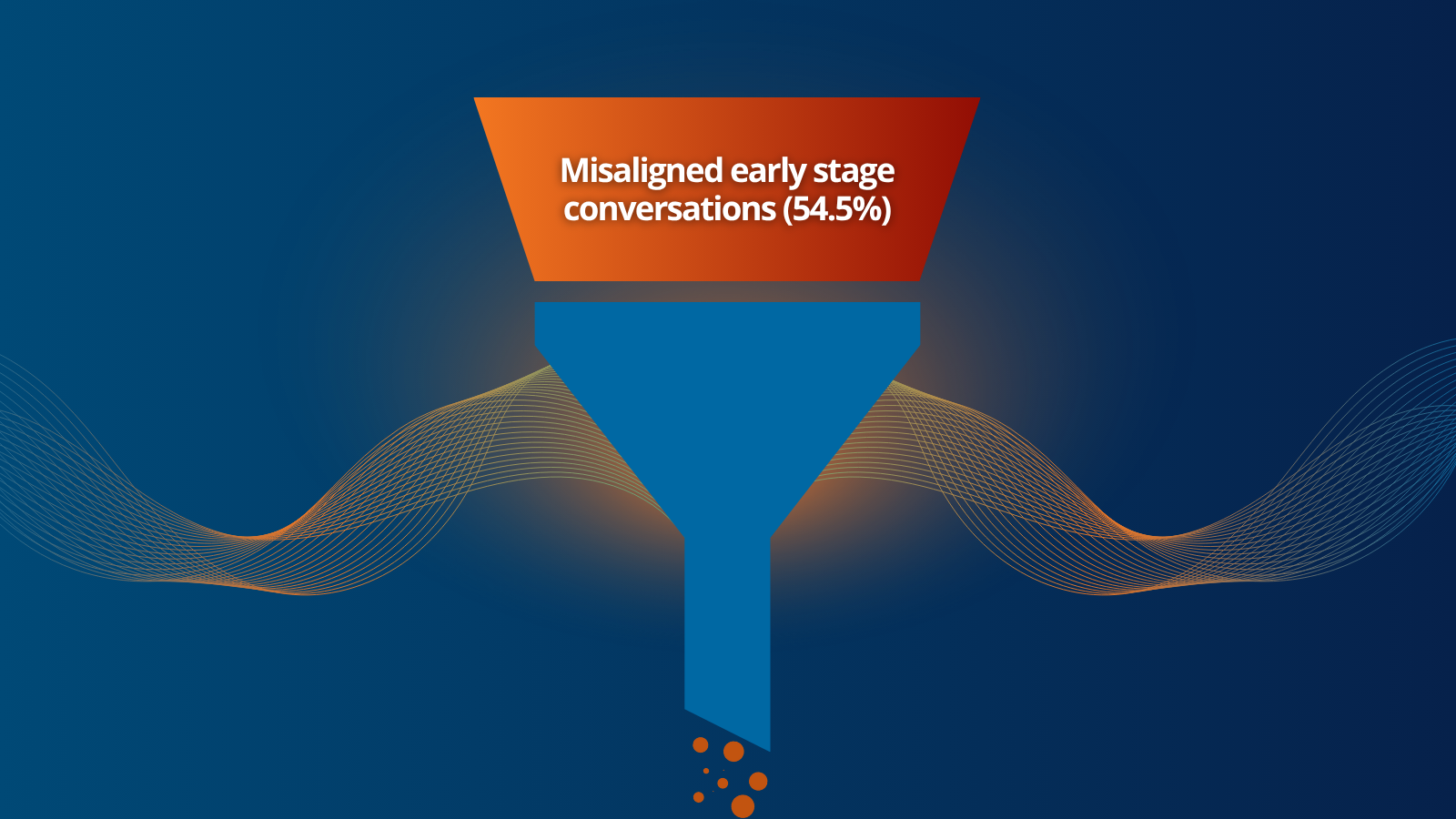
Research shows that in 54.5% of deals*, there is a misalignment between buyer and seller on the core problem that needs solving.

Not poor product knowledge. Not bad proposals. Not inadequate closing technique. The real damage starts in the very first meaningful conversation.

The consequence? When you miss the real problem in discovery, everything downstream becomes harder: qualification, proposal, negotiation, forecasting, and renewal.

Misalignment begins earlier than you think

When sellers and buyers aren’t aligned on the problem, everything downstream loses precision:

  • Qualification becomes subjective and driven by “gut feel” rather than clear criteria.
  • Messaging becomes generic, because the real commercial pain isn’t fully understood.
  • Proposals miss the true decision drivers, so deals slow down or stall.
  • Forecasting becomes skewed, and a high percentage of deals drift into “no decision”.

This isn’t a skills issue. It’s a process issue.

Why this process gap exists

In our work with sales teams, we see three common causes.

1. Discovery isn’t clearly defined in the process

Teams assume discovery is happening because calls are happening. But without a shared structure, the quality varies wildly.

2. Reps mistake rapport for qualification

Conversations feel “good”, so opportunities get progressed — despite vague commercial impact or urgency.

3. Leaders mirror their top performer – and assume everyone else does too

The rest of the team rarely replicates the same discipline, resulting in inconsistency disguised as pipeline.

This is why your pipeline feels unpredictable

If early-stage conversations lack clarity, later-stage accuracy becomes impossible.

  • Your pipeline looks full, but a significant percentage isn’t genuinely qualified.
  • Forecasts lean towards optimism because deals appear more progressed than they are.
  • Deals seem to “drop out” suddenly when they were never truly aligned in the first place.

A structured review separates a pipeline that looks healthy from one that truly converts.

Fixing the process gap that loses half your deals

A proper assessment of your sales process reveals where discovery is breaking down. A robust review should examine:

  • Whether discovery is consistent across the team — not just your highest performers.
  • Whether you uncover the real business problem, not surface-level needs.
  • Whether progression criteria create clarity — or add noise.
  • Whether your qualification model helps or hinders prioritisation.
  • Where real behaviours differ from your documented process — and why.

When teams fix this one structural gap, conversion lifts across the entire funnel — not through new tools but because every deal starts with clarity.

*Source: Corporate Visions – Reality Gap Study indicating that in 54.5% of deals, buyers and sellers are misaligned on the core problem to be solved.

Is Now the Right Time to Review Your Sales Process?

Sales teams are under pressure to deliver predictable revenue. Yet in many organisations, results still hinge on individuals rather than systems. If momentum is carrying you further than method, it may be time to assess whether your sales process is built for the market you sell to today.


Here are ten triggers to help you self-qualify whether a sales process review should be on your agenda.

  1. Deals are taking longer to close

    Sales cycles are stretching out even though your opportunity mix hasn’t changed. That often points to unclear qualification, poor deal control or weak next-step management – all process issues.

  2. Forecasts feel more like guesswork than strategy

    If you’re relying on gut feel or last-minute spreadsheet updates, your pipeline data isn’t giving reliable visibility. A clear, consistent process drives forecasting accuracy and decision-making confidence.

  3. Your new hires take too long to ramp up

    When success depends on individual experience rather than a repeatable framework, onboarding becomes slow and inconsistent. A well-defined structure helps new reps perform faster and more predictably.

  4. Sales and marketing aren’t telling the same story

    If outbound says one thing, your website says another, and content doesn’t match either, prospects get confused and conversion suffers. Misalignment is usually a process gap, not a comms problem.

  5. Your CRM is full of noise

    Duplicates, deals with no next step, or opportunities marked “open” for months are classic red flags. When reps stop trusting the data, the system stops being useful – and leadership loses visibility.

  6. You’re hearing “no decision” more than “no thanks”

    Quiet prospects often signal a process that doesn’t guide clear next steps or reinforce urgency. Strong processes create momentum; weak ones stall it.

  7. Top performers succeed despite the process

    If results come from individual brilliance, not team-wide consistency, your system isn’t doing enough of the heavy lifting. A strong process should elevate everyone.

  8. You’ve added more tools… but things haven’t got faster

    When your stack feels more like a to-do list than a time-saver, tech and process are misaligned. Tools add value when they serve the system – not when they replace it.

  9. You can’t easily explain what “good” looks like

    If definitions of success vary between reps or managers, your process isn’t clear enough to drive consistent performance or meaningful coaching.

  10. You’re relying on experience, not evidence

    If decisions about pipeline, messaging or performance still lean on “what’s always worked”, your process hasn’t evolved with your market. Modern buyers expect modern systems.


Where to start

Reviewing your sales process doesn’t mean starting from scratch. It means identifying what works, where friction lives, and how to create clarity and control across every stage of the buyer journey.

That’s exactly what our Sales Consultancy delivers – auditing your current approach, aligning people, process and technology, and building a framework that improves forecasting, performance management and pipeline visibility.

5 Common Gaps Exposed: Sales Process Audit Insights

Behind every underperforming sales team, there’s usually a broken process. Without structure and clarity, even the best teams struggle to build momentum and scale.

When done properly, a sales process audit reveals the hidden gaps holding back sales performance. From the hundreds of sales process audits we’ve delivered, five clear gaps appear time and time again:


1. Sales Conversations That Lack Structure

Too many salespeople are left to ‘freestyle’ their conversations, particularly in discovery calls. Without structure, messaging drifts, qualification suffers, and deals stall later in the process because the groundwork was never properly laid.

In every sales process audit, we assess how your team runs their conversations: the questions they ask, how they position value, and how well those conversations align with modern buying journeys.


2. No One’s Quite Sure What the Official Process Is

If your process isn’t clearly defined and documented, it doesn’t really exist. All too often, we find sales process documentation is outdated, inconsistent, or simply ignored. That leaves reps interpreting stages differently, pipeline reviews becoming subjective, and deals moving at uneven speeds.

A sales process audit digs into whether your documented process truly reflects what’s happening in real sales conversations – and, importantly, whether your team actually follows it.


3. Collateral That Doesn’t Close Deals

Outdated decks. Generic case studies. Content that speaks more to you than to your buyers. We see it all the time. Even worse, reps often don’t know what resources they have, or they’re forced to create materials on the fly.

We evaluate the quality, accessibility, and effectiveness of your sales collateral. The right tools should equip your team to have more impactful conversations – not hold them back.


4. Data That Can’t Be Trusted

If you can’t trust your data, you can’t forecast, coach, or scale effectively. We frequently uncover reporting issues: pipeline stages that don’t reflect reality, fields left incomplete, or inconsistent logging that makes conversion rates impossible to track accurately.

We dig into whether your data reflects true pipeline health, where deals are being lost, and which behaviours are driving wins. Without reliable data, decision-making is just guesswork.


5. Tech That Slows You Down

Sales technology should be an accelerator – but more often than not, it becomes a drag. We regularly find stacks bloated with overlapping platforms, poor integration, and underused features. The result? Reps spend more time managing systems than selling.

A sales process audit evaluates your stack from top to bottom: adoption, automation, and efficiency. The goal is to streamline and optimise – so tech becomes a genuine enabler of sales success.


Conclusion

If any of these gaps sound familiar, you’re not alone – most organisations experience at least one (if not all five). The difference lies in identifying them early and putting in place the structures, tools, and processes to fix them.

Ready to uncover the gaps in your sales process?

At Air, we specialise in helping businesses optimise sales performance through our Sales Process Audit.

This detailed assessment highlights strengths, uncovers gaps, and identifies opportunities for improvement – helping you increase conversion rates, shorten sales cycles, and drive sustainable growth.