Are you thinking about your inbound marketing?

Are you thinking about your inbound marketing?

The backbone of any successful inbound strategy is tactical lead nurturing, to encourage your prospects through the sales cycle. But have you thought about the best way to approach this to gain the maximum returns?

Here are our top 5 tips on lead nurturing:

1. It’s all about the right content, to the right person, at the right time

Content marketing is an extremely powerful tool if the content is relevant and used effectively. But for content to be relevant to your target audience and support a nurture process, it must be based around your prospects needs and pain points.

Timing is key in a nurture campaign. Individuals will go through a nurture process at different times – depending on the urgency of their needs, their position within the business and how they interact with your content and brand. To move individuals through the process and ultimately down the sales funnel you need to encourage them with the right content and help satisfy their buyer needs.

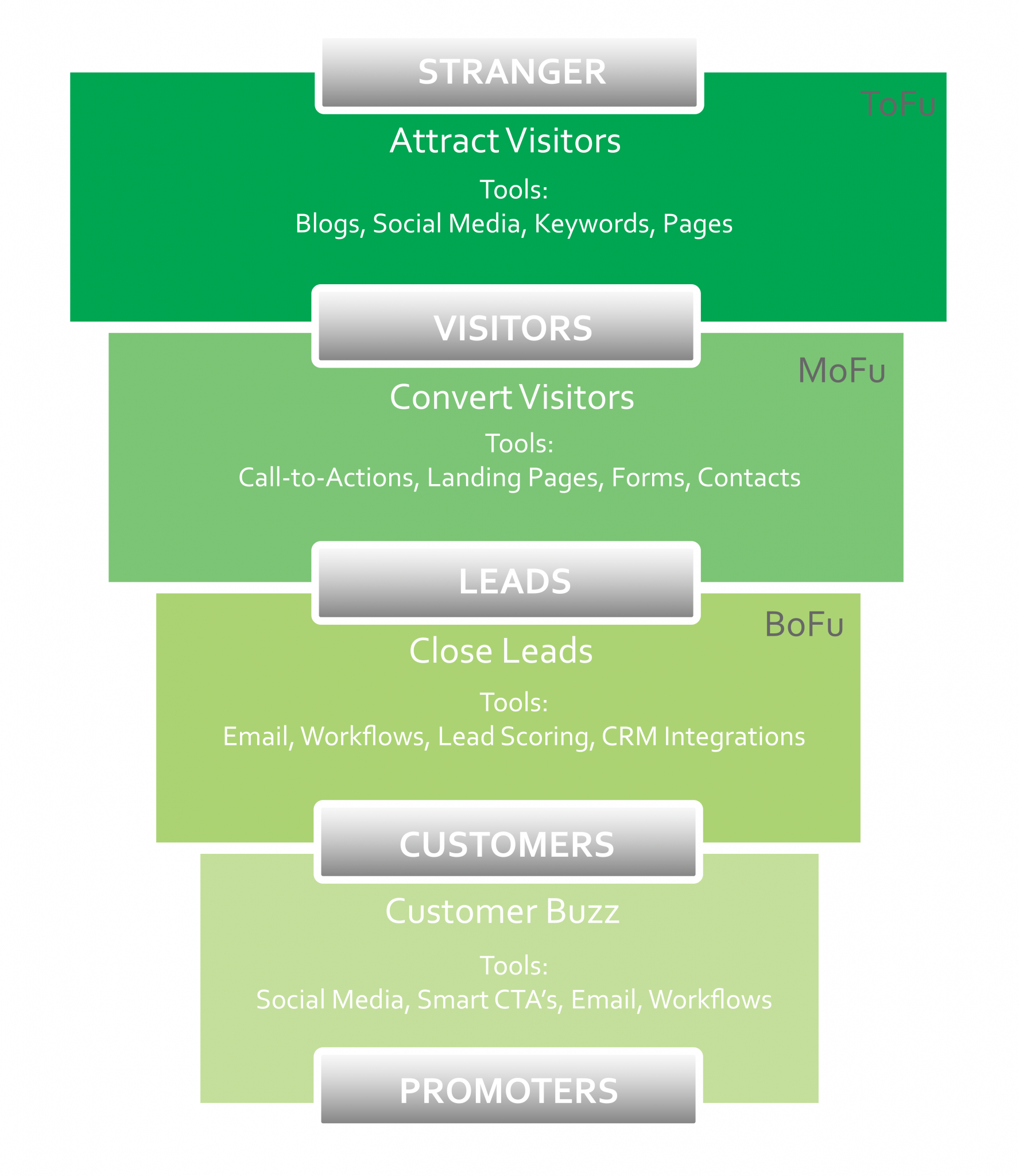
* At the top of the funnel your content needs to be introducing the brand and providing your relevancy. Using content that answers top level questions and concerns.

* In the middle of the funnel your content will need to be in greater depth and detail. By this stage the prospect is interested in the initial information and they are looking to find out more, make sure you are the right fit and explore what you have to offer.

* Once you reach the bottom of the funnel your content needs to guide the prospect to what the best option is for them and convince them that the journey has been worth it, and you are the best provider for them. At this stage you may consider an offer or some form of encouragement to get them over the line.

2. Let your email nurture do the hard work for you

The beauty of many email platforms is that automation is a built-in feature – you just need to make it effective.

Automation allows you to make email nurture do the hard work for you. You can plan out a whole journey and once the setup is complete, your prospect can merrily glide through, experiencing what is relevant to them.

The automation can be as sophisticated or simple as you feel is necessary. But the real bonus is that once individuals start the journey, you begin to collate data about your prospects that will help you make informed decisions in the future.

3. Make sure your sales and marketing effort is aligned

It’s the age old ‘chicken and egg’ scenario – marketing need sales to assist in chasing and closing leads AND sales need marketing to create the brand, credibility and demand in the first place. So it goes without saying that you need to make sure sales and marketing are aligned when carrying out inbound marketing.

If sales are not aware of the effort going into filling the funnel, they won’t be ready for when the leads start coming through. Having a secure CRM system in place to help manage the lead marketing activity to inform the sales team of updates is also well worth the investment.

4. Prioritise follow-ups

Everyone wants to feel valued – whether you are looking to spend your own personal money or invest for your business. That feeling of being valued translates into nurturing because if we can see an individual is expressing the right signals in your business then we know they should be followed up with a call.

Nurturing is a less invasive way of doing this. You may wish to call initially to qualify where they are in the sales funnel and establish if they are the right fit for your target audience. It is worth noting that there are only a few cases where they will engage to buy from you there and then. So, free up your sales team to actually convert those that are ready and instead send those that aren’t on the nurture journey for follow-ups that are informative, educational and encouraging.

5. Have you considered lead scoring?

Lead scoring is an intelligent way to sort hot leads from those that seem unengaged. It allows you to assess the best nurture journey for an individual and un-stick them from the sales funnel.

Many marketing platforms offer the ability (with the right know-how) to implement lead scoring, which will give you even more insight into your prospects. Are they engaging with the website, your emails, your social activity? If not, why not? Can they be invigorated, or do you need to approach them differently?

This information then informs your targeted marketing approach to reach prospects likely of converting and nurture those less likely.

Feeling inspired but don’t feel that you have the resources or expertise in-house to execute this? Get in touch with us today! We’d love to help you generate more inbound opportunities using our skills to help your business grow. Get in touch today on 01392 796702 or email contact@roots2market.co.uk.

Understanding your Unique Selling Proposition (USP)

Today, very few businesses are one-of-a-kind. So, what makes a customer choose your company’s product or service over your competitors?

The truth, it’s not necessarily what you’re selling that sets you apart and grabs a customer’s attention, but the messaging you choose to focus on.

This can be achieved by implementing an effective sales strategy around a “Unique Selling Proposition” that differentiates your business and resonates with your desired customers. When your company goals and values match those of your desired customers you can bet your last penny that they will buy into your business over your competitors.


So, what is a USP?

A Unique Selling Proposition (USP) is a statement that describes how your product, service or company is different and hopefully better than your competitions.

Historically, global brands have presented USPs in their slogans or expressed them in their positioning statements to make themselves more valuable to their customer group. You may have heard of theses famous examples:

Rolls Royce

“Trusted to deliver excellence; like nothing else on earth”

FedEx Corporation

“When it absolutely, positively has to be overnight”

TOMS Shoes

“We give a new pair of shoes to a child in need for every pair you purchase”


How do you establish yours?

Being ‘unique’ is rarely a strong USP and rarely true. Therefore, you must put your focus on an aspect which your desired customer cares about, otherwise your messaging won’t be nearly as effective. A compelling USP should:

  • Focus on the values of your ideal customer: Your desired customer must feel that you truly understand their needs and are therefore the best company to offer them the solution to their problem.
  • Assertive and defensible: Create a USP that encourages a consumer to make a case as to why they shouldn’t choose your competitor.
  • Leverage your industries reputation: Position yourself as the game changer in your industry. For example, the telemarketing industry struggles with a lingering reputation for being disruptive in favour of generating dishonest profits. However, knowing this about our own industry, Air have created a platform where our clients can see exactly how much time we spend on their campaigns minute by minute. This platform is truly transparent and shows us to be a collaborative partner who delivers exactly what we have promised our clients. By creating a USP that has changed the game of our industry we are now considered one of the leading telemarketing companies in the UK.
  • Avoid the “superstar effect”: A great USP is not claiming that your business is the best. How many times have you gone to a new city and seen “Best Restaurant” plastered on the doorway of multiple businesses? Companies often strive to be the best, but the first thing your USP should strive for is difference.
  • More than a slogan: While a slogan is one way your USP can be communicated, it’s also something your organisation should embody in other areas of your businesses. Don’t talk the talk if you can’t walk the walk.


Remember you’re still here to sell!

Just as Relationship Marketing is as much about the marketing as is it about the relationships, the same applies for creating a Unique Selling Proposition; it’s a form of differentiation that needs to be built around selling more products and services, not just to make your business into a quirky brand that stands out but can’t get traction.

  1. Remember each piece of marketing material or conversation must say “Buy this product or service, for this specific benefit.”
  2. Your proposition must be one that your competition cannot or does not offer; It must be unique either to your business or in a claim that your competitors have not made themselves.
  3. Your proposition must attract new customers and be created with the intent to sell, not just stand out.


Would you like more help establishing your USP? At Air Marketing Group we help our clients form and execute USPs that really resonate with their desired customers, deliver rewarding ROI and differentiate their business in the market place. To get the most out of your USP contact our experienced team today: contact@air-marketing.co.uk or phone 0345 241 3038.

How can you keep your sales momentum going over the festive period?

The lead up to Christmas is a fun and festive period. The office is draped with tinsel and twinkling lights, the team are adorned with Christmas jumpers and the Christmas tree is waiting in the door way to greet clients. But what about sales?

Whilst this time of year is fun, it is also stressful and a little tiring. With most people fixated on getting the perfect present, sales can often feel a little harder to win. So how can you keep the momentum of your sales and your team going over the festive period?

  1. Embrace it

This is one is simple but effective. Have fun, it’s Christmas! Your team have been working hard all year and, whilst sales are important, their happiness comes first – happy team = happy clients! Now, this doesn’t mean you need to have an office party every day of December, but the odd bit of festive fun wouldn’t go unappreciated. Throw in a Christmas jumper day, some mince pies, after work drinks and maybe even the simple pleasure of an advent calendar. They’re all little things but they’ll make your team feel valued.

  1. Be personable

Don’t just embrace the festivities with your staff, extend this to clients. Ask people about their festive plans, you may not want to talk about their child’s starring role as a donkey in their school nativity, but it is important to them and therefore important for your business. You could also employ a festive social media campaign, take photos of the office fun and share it with your clients – let them see the people behind the products and they’ll more than likely buy into your warm company climate.

  1. Build your pipeline

Whilst people may not be looking to buy new products right before, or right after Christmas, it doesn’t mean you can’t work to build relationships with new and existing clients so that you can start strong in the new year. Many businesses will slow down all together during this time, so make the most of the quieter market and get your foot in the door. Implement a gentler nurture email or social media campaign so that prospects know you’re there to help but don’t feel overwhelmed at a busy time of year.

  1. Take the time to re-strategize

A slower sales period isn’t always a bad thing. It can give you back some much-needed time to sit back and re-evaluate what went well and not so well over the year. By focusing on finding out where your efforts best lie, you can come back stronger in the New Year with ideas ready to go and a team who know what they are aiming for.

  1. Team initiatives and incentives

Engage with your team, make sure they know where they are headed and what you expect of them over this period. If they generate strong leads or close a certain amount of sales by the end of the week then reward them, have buzz meetings where you shout about their successes. Include them in meetings or catch up with them where you can to cultivate a transparent and honest culture.

  1. Set a theme for the New Year

Looking back on the year, set a theme or goal for the New Year and get your team to begin working on this in December. Do you want to better your sales techniques, customer service, team culture or client relationships? Tell your team that this is what you’re looking to work towards and get them to implement this in their day to day activities.

Team Air hope you have a merry and successful Christmas period. If you feel like you could benefit from any of our services, then why not get in touch to see how we can help you in the New Year? Call: 0345 241 3038 or email: contact@air-marketing.co.uk


Time management is vital to business – how can you better yours?

We’ve all had those days where we come into work and just don’t feel up to the day; tasks have been stacking up for days, deadlines have been pushed back and our workload just seems to be taking over our lives. And on days like these we often don’t help ourselves. Instead of tackling the more pressing tasks, we chose to do admin and smaller jobs which don’t take up as much of our time. Of course, this doesn’t solve the issue and we continue to get increasingly behind on our work and become even more stressed, leading to poor mental health – 1 in 6.8 people experience mental health problems in the workplace.

I know it’s sometimes easier said than done but in business we just need to grab the bull by the horns and take on the tasks that we don’t always feel up to – only 37% of teams in the UK report completing their project on time. An easy way to balance our workload is to simply invest proper time management. By effectively managing our time we reduce stress and increase productivity.


My top tips for time management:

Wind down and plan

Allowing yourself 15 minutes at the end of your day to wind the day down and go over the tasks which need focusing on the following day will allow you to create a structure to follow when you get in.

Book it in

Use your calendar – it’s right there to remind you to do what you need to do! By booking tasks into your calendar you will basically have a virtual PA which nudges you when it’s time to wrap up a task and move on to the next.

Eliminate distractions

Put your phone back in your bag (on silent), pop in your headphones and turn off anything that will distract you. This includes team chat notifications and emails, sometimes you just need to cut yourself off and work for an hour.

Colour code it

Sit down and work out which jobs are high priority and which jobs can be left for a while – then flag them with a colour code, ranking them in order of importance.

Training

Make the most of training opportunities available to you. Sometimes sitting down with your team and/or a trainer and discussing various techniques which other people implement is a great way of making your day, and the business, run more smoothly.


My favourite Time Management concepts:

Follow The Pareto Principle

I am a strong believer in this time management concept – it’s tried and tested, based on the work of the Italian economist, Vilfredo Pareto, in 1906.

To put it simply, 8/10 tasks on your daily to do list are as important as your top 2.

So, take your daily to do list and write down 10 things that you want to achieve today. Of these 10, select the 2 that are most important. Make these your priority. Work towards these throughout the day, resisting the urge to procrastinate and take up smaller tasks.

In working towards your 2 most important tasks, you know that the key tasks can be crossed off and time can be given to the smaller tasks when you have the capacity to fulfil them.

Implement The Eisenhower Matrix

This concept was born from Dwight Eisenhower’s famous quote, “what is important is seldom urgent and what is urgent is seldom important”, and again it’s pretty straight forward.

The basic premise is that some tasks are simply more important to a business than others. Often it pays to be able to delegate, if you have an assistant (or a colleague with a lighter work load) then hand it over and save yourself the time to work on your more important tasks.


There really is nothing worse than coming to work and feeling like you can’t face the day. So, if you’re feeling a little snowed under, why not implement these hints and tips?


Opinion Piece by Nicolette Karides, Learning and Development Coordinator, Air Marketing Group


It Wasn’t Always a Piece of Cake – The History of Telemarketing

When we think about telemarketing and telesales our minds predominantly envisage a masculine environment where characters from Wolf of Wall Street relish in their ego fuelled boiler rooms. Aggressive cold-calling practices, fraudsters, scam artists and relentless robocalls have made our history stand out. However, the industry started very differently and has overtime grown into one of the most transparent and profitable means of marketing used by sales professionals today.

Once upon a time, there were no high-powered men to see here!

Despite the stereotype that’s been created for us, telemarketing came from humble beginnings and was first achieved by a group of women. The women, who were originally housewives, came together with a shared interest in baking and a desire to make their own money.

At this stage no one was a ‘professional’, but not so dissimilar from today, the ladies trialled different conversation techniques to sell.

Overall, this approach proved a success and the women continued to bake, using telemarketing techniques to make connections and build their fortunes.

Thanks to the worlds love of baking, telemarketing was born, and success tasted sweet to those who began utilising it!

In the 1900’s the first ‘lead list’ promoted more ‘quantity’ over ‘quality’

Today marketeers understand the importance of gathering quality data which is going to produce a return on investment for their clients. In the early 1900’s, when the Multi-Mailing Co. started compiling and selling lists from local phone directories, its first ‘lead list’ consisted of 600,000 numbers which spread across multiple cities. At that time, the newly developed telephone system gave the callers access to richer members of the community. These people were considered ‘quality’ prospects, this was mainly due to their worth, regardless of their need or interest in making an investment.

In 1957 the first telemarketing firm dialled out

The first call centre, DialAmerica, began operating with only two calling stations, one inbound station and one outbound station, resembling something similar to traditional telemarketing.

For them, success came in the booming post-war economy. Today, DialAmerica is one of the largest operating call centres globally, making a 100 million calls a year and on average delivering 100,000 phone hours a week.

The switchboard 60’s

In the 1960’s Private Manual Branch Exchanges (PMBX) were invented. These giant switchboards were operated by receptionists who manually connected calls to the correct extension.

The switchboards were used by companies to bring communications in-house and save money rather than outsourcing to third-parties.

At this time the industry was still heavily populated by women, thought to be due to their warm approach, likable nature and cheaper wage.

The 1960’s also introduced the Bell Telephone, a computer system which could dial numbers using tones instead of a rotary dial. It was this invention which paved the road to Interactive Voice Response (IVR), the automated service that was about to fuel the rage of a nation.

The 1970’s and the year of the robot

During the early 1970’s telemarketing began enjoying mainstream success, however even the most experienced sellers were only dialling an average of 100 numbers a day, in comparison to today’s average of 200 plus.

With the growth of sophisticated technologies, the need for operators to manually transfer calls was eliminated. IVR was deployed and the automated service was taking off, despite its complications, expenses and limited computer vocabulary which started to trigger the public’s distaste for telemarketing.

Telemarketing, as it has come to be known, began in the 80’s

In 1981, total business expenditures for telemarketing exceeded the spend on direct-mail advertising for the first time.

In this decade several trends continued to contribute to the growth of telemarketing. These included:

  • High cost personal sales calls, making telemarketing more attractive in this show off B2B era
  • Advances in telecommunications, computers and database management, decreasing costs and increased efficiency
  • Consumer acceptance of 0800 numbers
  • The growing success of inbound and outbound telemarketing campaigns which encouraged more companies to try the phone as a sales tool

Scam artists in the shape of sales agents

Despite the industries progress, by the late 1990’s it looked like the end was near for outbound telemarketing. Annual fraud costs exploded, prompting the Federal Trade Commission, Federal Communications Commission and Watchdog organisations to strengthen regulations to protect customers.

The DMA telephone name removal list grew from 900,000 to 2.5 million names in less than a year and by 2000, the number had increased to 3.2 million.

In 2003, the National Do Not Call Registry was launched by the Federal Trade Commission and had more than 50 million phone numbers registered before the start date.

A time of transparency and professionalism

An industry once deemed annoying to those it came into contact with has turned itself around, with business managers now agreeing B2B telesales calls are the least annoying form of advertising.

Today, the telemarketing industry is more transparent than ever before. In the EU, new GDPR regulations monitor the way personal data is held, used and shared, whilst the Corporate Telephone Preference Service (CTPS) gives corporate subscribers the right to be added to the Central Opt-Out Register. This means they have the right to choose not to receive unsolicited sales and marketing telephone calls to all their organisation’s telephone numbers, or to selected numbers.

The industry revolves around being personable and a telemarketer’s ability to build strong, honest relationships.  Scripts are used to help remind sellers of USPs but also that there’s no room for sales robots in this industry. Every sales agent must have initiative to get past the gatekeeper, identify pain points and deliver personal conversations that position them as the expert in each individual client’s product / service.

Telemarketing is an extremely lucrative industry which requires a lot of skill if your agency wants to match the industries average return of £11 for every £1 a client invests, at Air we proudly return £18 for every £1 spent.

To find out more about the campaigns Air Marketing run and the companies we help, contact us on 0345 241 3038 or contact@air-marketing.co.uk

Integration is a current buzzword, but what does it actually mean for your sales and marketing team?

Sales and marketing both share a common goal – revenue. Yet, often there is a whole host of squabbling that goes on between the two in order to find a way to bring revenue in. This is an age old rivalry, a misalignment that costs B2B companies 10% or more of revenue per year.

Once sales and marketing teams have decided on an idea to run with, they often quickly unravel. 60-70% of B2B content created is never used, often because the marketing team lack the intimate buyer knowledge that sales teams are party too. Even more frustratingly, 79% of marketing leads never convert into sales because they aren’t passed on at all, they aren’t properly followed up or the leads aren’t validated before being sent across.

It’s seemingly obvious then that it is about time that Sales and Marketing teams joined together in a merry dance of integration – businesses with aligned sales and marketing teams achieve 207% higher revenue compared to those which are disjointed and out of touch.

The solution:

  1. Make sure that your sales and marketing teams are working together

For every client, both sides should be able to offer their expert advice as each can bring different skills to the table. Your sales team will often have personable skills, giving them the upper hand when it comes to actually closing leads. However, your marketing team are there to entice those leads in to begin with, using targeted marketing based on their in-depth market research. It is important that teams are on the same page and share an awareness of the client’s needs.

  1. Be transparent

Make sure that each team has access to, or a clear awareness of all that will be happening during a client’s campaign. Have your marketing team share social plans or ask the sales team to proof read blog posts, for example – they may have suggestions on how to keep clients interested during the nurturing process. And vice versa, share call scripts with your marketeers, they may be able to offer more engaging conversation suggestions.

  1. Evaluate results together

Learn from what each team has done well and what you can collectively improve on. Using data from past campaigns will allow you to best assess this. If a referral scheme didn’t work on a previous campaign, why was this and is it a good idea to use it on a similar one in the future or should both teams look at alternative messaging or ways in which the referral scheme is presented? At the end of the day, both teams are here to make money, so each team should have input on how best to do it.

  1. Get to know each other

It sounds almost too easy but how can a team be successful and integrated if none of them know anything about the other? In talking, each team will find out how the other works and who is best to go to for certain tasks. If you allow your teams the opportunity to share common ground and build working relationships and friendships, they are more likely to be motivated and produce work of a high quality.

At Air Marketing Group, we understand the importance of integrating sales and marketing. Within the group we have two brands, Air specialising in business development and inside sales alongside Roots to Market who specialise in Marketing and Demand Generation services.

If you’re looking for a fully integrated sales and marketing experience then get in touch, call: 0345 241 3038, or email: contact@air-marketing.co.uk


How do you say hello?

We communicate every day, through body language, what we wear and how we speak. By our very nature, humans are tribal, we make quick instinctive judgements as to whether a person is a friend or foe. In order to break down the barriers, you will at some point  need to say, “hello!”, but how you say hello says so much more about you and the relationship you have with an individual than you might think.

We do not even question our personal brand day to day, we are instinctive to our settings and to the person we are greeting – or so you would hope. So, if we are so instinctive to our settings when we are going about our lives, why is it so hard for business owners to work out how their businesses might say hello?

When you are trying to establish a tone of voice for a business, the simplest question to ask a client is, “How does your business say hello?

You would be surprised at how often people struggle with the answer to this question. In business, you have to say hello time and time again, to both existing and new customers and it is important that you get it right. When someone comes across your brand for the first time, they will be looking for something tangible, they will ask “Is this the sort of business I want to do business with?” “Are they speaking my language?”

Consider for a moment that you are looking for an IT provider for your business. It is a service that a large proportion of businesses need, but not one that everyone understands – for lots of us they may as well be speaking Elvish. Whilst a provider may be full of professionals who know what they’re doing, they have to be able to translate the complicated world of IT in a relatable way which customers can grasp. It is important that they have a sense of personality whilst also maintaining our view of them as a professional, if, for example, they answered the phone with ‘Yo!’, how likely would we be to take them seriously?

Virgin is a brand which cleverly uses a friendly personality in their approach – they maintain their personality throughout their conversations with all customers, regardless of the product you are purchasing from them. They are fun, friendly and approachable – they appear to be your everyday friend! Lots of businesses may want to mimic this in their brand personability, after all, everyone wants to have friends, but you also need to be able to differentiate yourself and appeal to your target market by standing out from the crowd.

When working with your marketeer, consider who you want to appeal to and how do you speak to them in the most approachable way, what your competitors are doing and how you can do things differently and, simply, how do you want to come across? If you want to exhibit yourself as a fun, dynamic and exciting company, use more colloquial language. However, if you want to be viewed in more of a traditional light, maintain formal communications with your prospects.

So next time you are wondering how your business might come across, and how to appeal to your customers, start with the simple question, “How do we say hello?”

P.S. No geeks were harmed in the stereotypes within this article.

You’ve got a pipeline, but can you convert?

Managing your sales pipeline effectively is a sure-fire way to ensure success for your business, however according to Vantage Point whilst 72% of sales managers hold sales pipeline review meetings, 63% say that their companies do a bad job of managing their sales pipelines.

A strong sales pipeline won’t build itself overnight, but if well managed it will be worth your time and energy.

When developing your sales pipeline, it is essential that you have a definitive sales process. A few basic steps to follow when implementing a sales pipeline are:

  • Clearly outline the stages your sales process will follow
  • Define the number of leads that you require to reach your sales target, from that work out your average conversion rate which will then allow you to outline how many leads you need to generate to enter this process
  • Analyse what all of the converting leads have in common – how were they generated and converted which includes the activities of your marketing team, the actions your sales reps take and the feedback from your prospects.

Implisit analysed the sales pipelines of hundreds of companies and found that the average length from lead to close is 102 days – this is broken into the average time from lead to opportunity being 84 days and opportunity to close being 18 days. This will of course vary from business to business but demonstrates the need to continuously manage and feed your sales pipeline in order to make the most out of it.

So, who is managing your sales pipeline and how are you doing this?

This may be down to a dedicated Business Development Manager or it may be a whole sales team focused on selling, building relationships and developing pipelines. It’s a big task and needs experienced individuals to be carried out as successfully as possible.

We find that creating a multi-touchpoint experience for prospects improves pipeline management and ultimately conversion. Yes of course we are advocates of lead generation via telephone, but our expertise stretches across the whole sales cycle taking prospects on a journey. This incorporates touchpoints such as email, social media, lead generation, follow-up pipeline calls, and even inside sales closing calls.

Could your pipeline improve your sales? Let’s talk, call: 01392 796 702 or email: contact@roots2market.co.uk.

Are you listening?

In the world of business, we often watch the wild success of one company and the quick failure of many others.  At the heart of all business is the customer, whilst business is of course fuelled by money, money is easier to obtain if you simply take a minute to stop and listen to what the customer is saying. After all, people buy from people!

An essential strength of using telemarketing whether they are integrated within your in-house sales team or outsourced is the ability to talk directly to your target market and listen to their feedback. No one wants to receive cold calls, however if your brand is presented as open and receptive to feedback and objections, they are more likely to gain success. However, if you’re not open or willing to listen, then you may risk your business stagnating or failing.

In order to be successful, you need to make the customer feel as though your values and business goals are centered around their needs, as ultimately, they are the ones buying and using your product or service. You shouldn’t simply be thrusting a product or service at them and hoping for the best without taking their input on board.

Listening to customer feedback is especially vital for telephone-based sales professionals who are representing start-ups, businesses choosing to release a new product or service, and those marketing an existing product or service to a new audience. Asking customers, or potential customers, for their feedback is a key step in the process of reaching a sale, enabling you to assess your product/service, refine its offering and match to the customers’ requirements.

Their opinions provide insight to your customer and shapes the direction and message of your brand, ensuring that your business is aiming itself at the correct target audience. If the customers you’re interacting with are continuously providing negative feedback, something isn’t working! You may be missing your target’s needs, aiming the product or service at the wrong group of people, presenting the incorrect message or it may even be that your product or service simply isn’t desired in the market in comparison to competitors. By conducting market research through telemarketing and encouraging potential clients to help you explore the advantages and flaws of your product or service, you will gain vital insights and ideas. But more importantly, you will be able to tailor the product or service for the people who will actually be using it. In doing this, your business, and brand, becomes customer-centric.

Later down the line, listening to customer feedback helps you to measure customer satisfaction, which is obviously vital to keeping your business afloat. By continuously engaging with customers throughout the sales cycle, your sales team will create a sense of loyalty which will help the performance of your business as your customers will feel valued. If customers are actively telling you that they like your offering, share this and encourage others to buy into your brand and offering. But remember this channel of feedback is a two-way street, if they’re also suggesting changes or reporting issues, work to implement these changes and show that you are listening.

The more that you prove that you are open to customer feedback, be it negative or positive, the higher your levels of customer retention will be. Ultimately, a continuously unhappy and ignored customer will find a more suitable alternative to your business and leave. However, if you and your sales team continuously encourage your customers to voice their opinions and where possible adapt to these, you will better be able to measure the satisfaction of customers and keep them on board.

The easiest way to show that you are listening to your customer is to actively seek their point of view – conduct surveys, ask for testimonials, or react to feedback on social media. Social media is a gold mine for feedback, it is fair to say that almost all of your customers will interact with the internet in some way, shape or form, so use this to your benefit. Reply to their comments, negative or positive, engage in conversation with them, don’t simply use automated responses. If you don’t feel that you have the time to do this, then outsource this service, as it is vital that you engage with people on these platforms.

Simply put, if you and your sales team present your business as a customer centric company, the people buying into your product or service will be more connected to you as a brand and in turn this will boost your sales and your customer life-cycles.

So, are you listening?

Email nurturing and your sales campaign

Marketing a product or service by email is nothing new, but in an ever-changing digital world, where target markets are becoming more discerning and wanting that personal touch, we think of email nurturing as a faithful old friend.

No one wants a spam email, or with the onset of GDPR, should be receiving one! We are constantly hit with impersonal advertising in our inboxes, so unless it seems that some time and effort has gone into providing us with the information we seek, we simply aren’t going to buy into it.  According to Experian, personalised emails deliver 6x higher transaction rates. Therefore, it is worth taking some time to think about what an individual may want to receive.

If you have identified a group of individuals or businesses with a legitimate interest in your product or service, running a personalised email campaign is the way to go. Thanks to many email packages now offering comprehensive reporting insights, a simple introduction to coding and segmentation, there is no excuse for not using personalisation. Such sites also allow you to send as many personalised emails as you like in one hit. 100s of tailored emails can be distributed in a matter of minutes, each addressed to a specific person/company, putting your product or service directly in front of decision makers in a format they like.

But you need to keep in mind that personalisation alone will not make your email campaign stand out – it is also important to get creative! We’ve created the email below to give you our favourite hints and tips for a basic, personalised, introduction email:

Once you have sent out your first email, it is key to then follow this up rather than just providing sporadic, one-off communication. A fantastic way to do this is with a nurture stream, this is a sequence of emails that send your recipients on a journey of your story and works especially well for those that express interest or for those that might consider your product or service at a later date.

A key addition to these emails are testimonials. Research has shown that 92% of customers read online reviews, with 88% of people trusting online recommendations as much as ones given in person. An impressive 72% of people claim that positive testimonials lead to them trusting a business.

We’ve created an example nurture email and featured the use of testimonial, have a look below:

If you are interested in using email marketing as a part of your campaign, but perhaps don’t have the resource or expertise in-house, get in touch with us and we will help you by creating a tailor made campaign for your business – give us a call on: 01392 796 702 or email: contact@roots2market.co.uk.