
The 7 Mistakes Companies Make When Hiring Their First SDR

The 7 Mistakes Companies Make When Hiring Their First SDR

For many growing businesses, hiring their first Sales Development Representative feels like a natural step. The Founder has been doing most of the selling, pipeline is inconsistent, and growth targets are increasing. Bringing in a dedicated salesperson appears to be the logical next move.

But building a successful outbound function is rarely as simple as hiring one person and expecting results.

Having worked with hundreds of organisations developing their sales functions, we regularly see the same mistakes appear again and again. Avoiding these pitfalls can save months of frustration and significant investment.

1

Hiring Before Building a Sales Plan

Many companies jump straight to recruitment.

The thinking is simple: we need more sales activity.

But without a clear plan, even experienced SDRs struggle to succeed.

Before hiring, organisations need clarity around:

  • target markets and ideal customer profiles
  • messaging and value propositions
  • qualification criteria
  • sales process structure
  • lead handover between SDR and closing teams

This is where an outbound sales playbook becomes critical. It provides the structure that enables new hires to operate effectively from day one and ensures your team is targeting the right prospects with the right messaging.

2

Expecting an SDR to Replicate Founder Success

Founders often underestimate how much of their own success comes from:

  • deep product knowledge
  • personal credibility
  • autonomy in conversations
  • passion for the business

A new hire simply does not have those advantages.

Expecting an SDR to immediately replicate founder-level results can quickly lead to disappointment. Even highly capable salespeople need time to develop confidence in the product, the market and the messaging.

3

Underestimating Ramp Time

Many businesses assume that once hired, an SDR will start producing meetings almost immediately.

In reality, most SDRs require three to six months before consistently generating pipeline.

During that time they must learn:

  • the market
  • the product
  • the messaging
  • the sales process
  • the objection landscape

Structured training and coaching are essential to accelerate that learning curve. In fact, this is exactly how we build high-performing outsourced SDRs within our own programmes.

Without that structure, early performance can appear disappointing and organisations may lose confidence in their investment before the foundations are in place.

4

Hiring the Wrong Type of Salesperson

Not all sales professionals are the same.

An SDR responsible for high-volume outbound activity requires a very different skill set from someone navigating complex enterprise buying groups.

When hiring your first SDR, businesses must think carefully about what the role actually requires.

For example:

  • high activity outreach versus account-based engagement
  • simple product conversations versus technical discovery
  • short sales cycles versus long consultative deals

Each of these scenarios requires a different type of salesperson.

Getting that match wrong can quickly slow pipeline development.

5

Ignoring the Importance of Data

Even highly capable SDRs cannot succeed without quality data.

Without a defined data strategy, new hires can spend large amounts of time:

  • researching prospects
  • validating contact information
  • identifying suitable target accounts

This dramatically reduces time spent actually selling.

Strong outbound performance depends on clear target profiles and access to clean, segmented data that enables SDRs to focus on conversations rather than research.

6

Underestimating the True Cost

Salary is only one component of building an SDR function.

Organisations must also account for:

  • recruitment costs
  • ramp time
  • sales technology
  • leadership management time
  • attrition risk

When everything is factored in, the real investment can easily exceed £70k-£100k in the first year before predictable pipeline emerges.

Many organisations only discover this after attempting to build the function internally.

7

Expecting Immediate ROI

Outbound pipeline takes time to build.

Deals generated today may not close for months depending on the sales cycle.

If expectations are misaligned internally, leaders can lose confidence in the investment before it has had time to deliver results.

A realistic plan for pipeline generation, opportunity creation and revenue forecasting is essential. Many organisations discover these challenges when reviewing their sales process and identifying where pipeline performance is breaking down.

Building a Sales Function the Right Way

Hiring your first SDR can absolutely be the right move. But success rarely comes from recruitment alone.

High-performing outbound teams are built on strong foundations:

  • a clear sales playbook
  • well-defined target markets
  • consistent messaging
  • structured coaching
  • realistic expectations around pipeline timelines

For some organisations, building this capability internally makes sense. For others, working with an outsourced SDR team can provide a faster route to consistent pipeline while avoiding the challenges of recruitment, ramp time and management overhead.

Final Thought

As Air Marketing Founder & CEO, Owen Richards, often says:

“You’re far more likely to get it wrong before you get it right.”

The key is learning from the mistakes others have already made.

If you’re reviewing how to build or scale your outbound function, we’re always happy to share what we’re seeing across B2B sales teams and how different organisations are approaching pipeline generation.

Complete the form below and we’ll get back to you within one working day.
Talk to an expert at Air Marketing - Trusted Outsourced Sales Agency UK

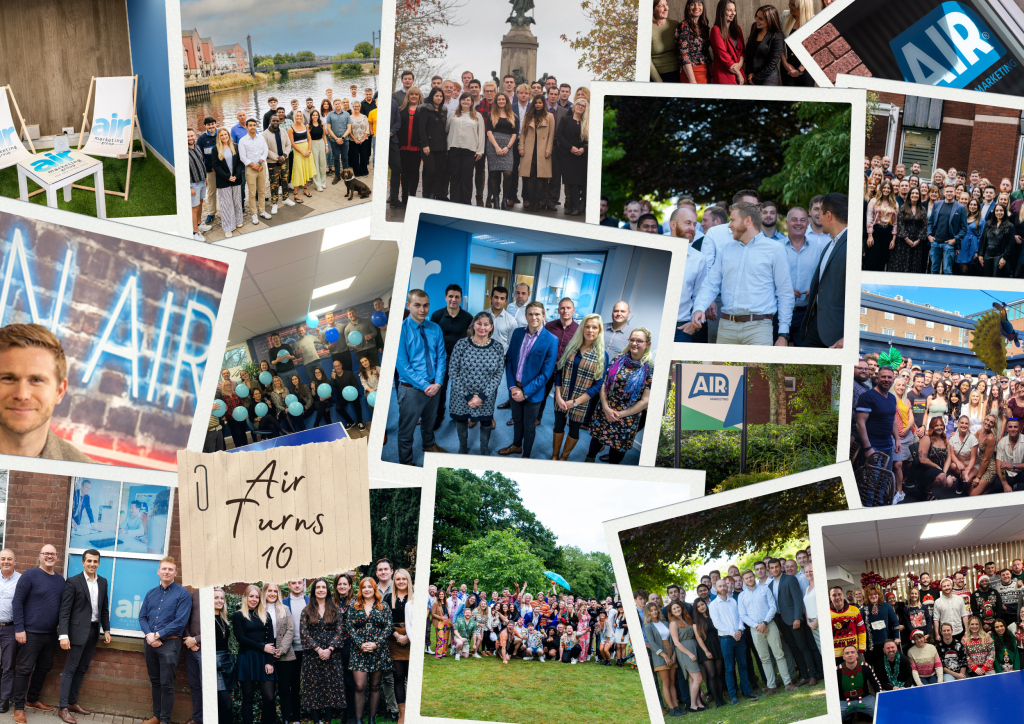
Air Marketing Celebrates 10 Years of Growth, People and Pipeline

Air Marketing Celebrates 10 Years as an Outsourced Sales Partner

Air Marketing is celebrating its 10th anniversary, marking a decade of building sales capability, supporting client growth and developing one of the UK’s leading outsourced sales teams.

Founded in 2016 by Owen Richards and Richard Forrest, Air Marketing has grown from a small start-up into a business of around 100 people delivering outsourced SDR, telemarketing and sales services for organisations across multiple sectors.

Reflecting on the milestone, Founder and CEO, Owen Richards, described the journey as anything but straightforward.

“I cannot believe it has been 10 years. Where the time goes, I don’t know.

I’m not going to do one of those posts where everything has been brilliant. It absolutely hasn’t. In fact, at times it has been pretty horrendous. But that’s the reality of building a business.”


While the path has included its share of challenges, the company’s growth reflects a consistent focus on people, performance and long-term partnerships.

Building a Sales Business From the Ground Up

Air Marketing was founded with a clear belief: sales is a specialist discipline and organisations perform better when it is executed by trained professionals using structured processes.

Over the past decade, the business has evolved from pure telemarketing support into a full sales delivery partner, providing:

Today, Air teams operate as an embedded extension of client organisations, combining experienced sales professionals with data-driven campaign optimisation and continuous training.

This approach has helped clients generate predictable pipeline and measurable revenue growth.

The People Behind the Growth

For Owen, the defining factor behind Air’s progress has always been the people who helped build it.

In the early years, team members such as Shaun Weston and Marco Alfano-Rogers played a pivotal role in helping establish the foundations of the business.

As the company expanded, leaders including Gracie-May Bryan, Alex Burgess, Verity Studley-Wootton, Neil Clarke and Clodagh Murphy contributed to shaping the organisation and strengthening its delivery model.

More recently, the leadership team has expanded again, with Scott Walker, Esta Rigler and Wesley Vedder helping drive operational maturity and improved commercial performance across the business.

This evolution has helped the company reach new levels of profitability, process maturity and campaign performance. Owen says:

“Despite having rocks thrown at us at times, these guys run into battle with me time and time again. The result has been outstanding to see.”

A Partnership at the Heart of Air

The business was originally launched by Owen Richards and Richard Forrest, who had already spent nearly a decade working together in Australia before starting Air.

That long-standing relationship remains central to the company’s story.

“Richard and I started this journey in early 2016, having already worked together in Australia for around eight years. Our connection goes far beyond business partnerships or co-founders.”


Owen also paid particular tribute to Samantha Bennett, highlighting her role in supporting the company’s journey from the early days through to its current scale.

“I literally could not have done this without Sam. A true friend, an exceptional teammate and one of the kindest, most supportive people I’ve ever met.”

A Decade of Lessons

Looking back over ten years of building the company, Owen believes the biggest lesson is not about growth metrics or financial milestones.

Instead, it comes down to the people you surround yourself with.

“Career success is not the money in your pocket, revenue growth, or the number of meetings your AI agent books while you sleep.

It’s how you choose to live, to work, to share moments with people. It’s having the freedom to laugh at work, win and lose together, and still feel like you have purpose.”

Looking Ahead

While the anniversary marks a significant milestone, the focus for Air Marketing remains firmly on the future.

Demand for outsourced sales capability continues to grow as organisations look for more predictable pipeline and specialist expertise without the cost and complexity of building internal teams.

With an experienced leadership team, a sales academy and a proven delivery model, Air Marketing is entering its second decade with the same ambition that launched the business in the first place.

“To everyone who has played a role in the last 10 years – thank you.”


From Candidate to Closer: How We Build High-Performing Outsourced SDRs

Skilled outsourced SDRs from Air Marketing

An outsourced SDR should not be “ready-made”. They should be built, trained, tested and supported.
In B2B outbound sales, the difference between activity and pipeline is skill. That skill does not appear by accident. It is developed through deliberate recruitment, structured training, coaching, and real-world exposure.

At Air Marketing, we invest heavily in the journey from candidate to closer. Because when we resource outbound campaigns for clients, we are not simply allocating headcount. We are deploying trained, performance-ready professionals who understand how to represent complex brands and generate predictable pipeline.

This is the journey of an Air SDR.


Why Most Outsourced SDR Models Fall Short

A common pattern across growth-stage businesses is this:

  • They need pipeline quickly
  • They hire fast
  • They train lightly
  • They hope for results

The problem is obvious.

Outbound sales is a specialist discipline. It requires commercial intelligence, resilience, structured process, market understanding and conversational skill.

Without proper development:

  • Messaging becomes generic
  • Objections are mishandled
  • Targeting lacks nuance
  • Data is underused
  • Performance fluctuates

Clients feel the impact immediately.

We believe an outsourced SDR should feel like an embedded expert, not a temporary resource. That requires investment before a single call is made.


The Air SDR Journey: From Application to Live Campaign

Our recruitment and onboarding process has evolved over time. What follows is the structure we have refined over the last two years.

It is deliberate. It is performance-led. And it is designed to ensure clients receive skilled outbound sales capability from day one.

1

Stage 1: Application With Voice Note – Testing Communication Early

We begin with a written application and a short voice note.

Why?

Because sales is spoken performance. Tone, clarity, energy and confidence matter.

The voice note gives us insight into communication style, natural presence, commercial maturity, and willingness to step outside comfort zones. We are not looking for perfection. We’re looking for potential and coachability. This ensures we identify candidates with the foundational traits required for outbound sales development.

2

Stage 2: Interview – Assessing Commercial Mindset

Successful applicants are invited to interview with senior leadership and a Team Manager.

This stage focuses on resilience and mindset, curiosity and learning agility, understanding of commercial drivers, and cultural alignment with a target-driven environment.

Outbound performance is not purely technical. It is behavioural. We assess both.

3

Stage 3: Live Roleplay – Proving Sales Instinct

Every candidate completes a mock cold call roleplay with an existing BDE.

This is not theoretical. It tests objection handling, active listening, structure, confidence under pressure, and ability to think in real time.

This step is critical in ensuring we resource clients with SDRs who can operate in real outbound environments.

4

Stage 4: Campaign Allocation Before Day One

Based on roleplay performance and previous experience, we allocate the SDR to their first campaign before they start.

This matters.

Campaign allocation is strategic. We consider sector complexity, target persona seniority, sales cycle length, and messaging sophistication.

This allows induction to be aligned to real client context, not textbook sales.

5

Week 1: Induction, Systems and Sales Foundations

The first week includes full induction, sales process training, systems training, CRM and reporting structure, compliance and data handling, market immersion, and structured call framework training.

By Friday, there is controlled calling exposure.

Why introduce calling early?

Because confidence is built through action, not theory.

6

Week 2: Live Campaign With Ongoing Coaching

In week two, the SDR begins live calling on their allocated campaign.

Alongside this, additional training sessions run, calls are monitored and coached, objections are deconstructed, and messaging is refined.

Performance is not left to chance. It is supported daily.

7

Week 3 Onwards: Scaled Responsibility

If ready, and if campaign need dictates, a second campaign may be allocated.

This decision is based on call quality, meeting quality, confidence, feedback from Team Managers, and early conversion indicators.

8

The 3-Month Probation: Structured Performance Development

Probation lasts three months.

During this time, performance metrics are tracked closely, conversion rates are analysed, coaching is continuous, strengths and development areas are identified, and campaign suitability is reviewed.


What This Means for Clients

When clients engage Air Marketing for outsourced SDR support…

They are not receiving They receive
  • A temporary telemarketer
  • A junior resource without structure
  • A plug-and-play operator
  • A fully trained Sales Development Representative
  • Embedded into their brand and proposition
  • Operating within a proven outbound framework
  • Supported by Team Managers, HR & Operations
  • Backed by performance reporting
  • Continuously coached and optimised

The Commercial Impact of Proper SDR Development

  • Higher quality conversations
  • Stronger meeting conversion rates
  • Better alignment with ICPs
  • More accurate qualification
  • Stronger forecasting confidence
  • Reduced ramp time
  • Lower performance volatility

Outbound is a performance discipline. When skill meets data, activity converts into pipeline.


From Candidate to Closer – And Beyond

The journey does not end at probation.

Ongoing development, campaign evolution and performance refinement continue throughout the lifecycle of every outsourced SDR engagement.

Because we are not simply supplying activity.

We are building revenue engines.

And that begins long before the first call is dialled.


Ready to See What a Properly Built Outsourced SDR Function Looks Like?

If you are evaluating outbound support, ask one simple question:

“How are your SDRs recruited, trained and developed?”

If the answer is vague, so will the results be.

If you would like to understand how our structured SDR model could embed into your growth strategy and build predictable pipeline, we would welcome the conversation.

Complete the form below and we’ll get back to you within one working day.

Talk to an expert at Air Marketing - Trusted Outsourced Sales Agency UK

Cold Call Lead Generation for B2B: What Actually Works When You Need Predictable Pipeline

Cold Call Lead Generation for B2B - Air Marketing Leading Outsourced Sales Provider
Cold Call Lead Generation for B2B

Cold call lead generation remains one of the most misunderstood sales channels in B2B.

At Air, we see organisations abandon cold calling not because it fails, but because it is rarely built or managed as a professional sales discipline. When cold calling is treated as a volume exercise, it produces noise. When it is treated as a structured revenue channel, it creates control, visibility, and pipeline predictability.

The difference is execution.

In this article, we explain how cold call lead generation works in modern B2B environments, why it breaks down inside most organisations, and how we design and deliver it as part of an integrated outbound strategy.

Does cold call lead generation still work for B2B companies?

Yes, but only when it is built around buyer relevance and commercial intent.

B2B decision-makers have not stopped answering the phone. What they have stopped responding to are calls that lack context, insight, or a clear reason for engagement. In our delivery work, we consistently see senior buyers engage when calls demonstrate an understanding of their market, role pressures, and commercial priorities.

Cold call lead generation works when:

  • Clearly defined audience: the audience is tightly scoped and relevant to your offer.
  • Problem-led message: the message is rooted in real business problems, not product features.
  • Trained caller capability: the caller is trained to hold a commercial conversation, not read a script.

This is why Air positions cold calling as a conversation channel, not an interruption tactic.

Why cold call lead generation fails inside most organisations

A common pattern we see across growth-stage B2B businesses is that cold calling is deployed without the foundations required for success.

The most frequent failure points include:

  • Activity over outcomes: teams are measured on dials rather than qualified conversations or pipeline contribution.
  • Generic messaging: calls focus on products and features rather than buyer problems and commercial impact.
  • Poor data discipline: target lists are outdated, poorly segmented, or lack insight into buyer context.
  • Isolated execution: cold calling runs separately from email, LinkedIn, and wider outbound activity.
  • Undertrained resources: cold calling is handed to junior hires without the coaching or structure required to succeed.

The commercial impact is significant. Time is wasted, confidence erodes, and cold calling is incorrectly labelled “ineffective”.

How Air builds effective cold call lead generation programmes

At Air, we design cold call lead generation as part of an end-to-end sales delivery system, not a standalone tactic.

1. Precise ICP and role definition

We start by defining exactly who should be called and why. This includes sector, company size, buying triggers, and the specific challenges faced by each decision-maker.

2. Insight-led messaging

Our calls are informed by real sales conversations across markets. Messaging is continuously refined based on what buyers respond to, not assumptions made in isolation.

3. Integrated outbound execution

Cold calls are sequenced alongside targeted email and LinkedIn activity. Each touchpoint reinforces the last, creating familiarity and relevance before and after the call.

4. Professional delivery

Air callers are trained sales professionals, not script readers. They are coached to qualify, challenge, and progress conversations commercially.

5. Continuous optimisation

Performance is reviewed weekly. Messaging, targeting, and approach are adjusted based on outcomes, not gut feel.

This is how cold call lead generation becomes predictable.

How many cold calls does it take to generate a B2B lead?

There is no fixed number, and any provider offering one should be challenged.

In our experience, results are driven by:

  • Data quality: accuracy, freshness, and segmentation of the list.
  • Message relevance: how well the opener and angle map to buyer priorities.
  • Caller capability: ability to qualify, challenge, and progress commercially.
  • Follow-up discipline: structured persistence across calls, email, and LinkedIn.

Well-designed programmes typically require fewer calls, not more, because conversations are better targeted and better handled. This is why Air focuses on conversion efficiency, not call volume.

In-house vs outsourced cold call lead generation

Many organisations attempt to build cold calling internally without appreciating the true cost.

In-house delivery requires:

  • Hiring and onboarding: recruiting and ramping specialist SDRs.
  • Ongoing coaching and management time: training, QA, and performance management.
  • Data, tooling, and process ownership: keeping lists clean, systems running, and messaging updated.
  • Time to reach consistent performance: ramp time before predictable pipeline appears.

Outsourcing cold call lead generation to Air gives organisations access to:

  • Proven sales processes: delivery built around outcomes, not activity.
  • Experienced delivery teams: trained callers who can run commercial conversations.
  • Immediate market insight: learning from live buyer conversations, in real time.
  • Transparent reporting and accountability: visibility into activity, outcomes, and pipeline contribution.

For businesses that need pipeline now, outsourcing removes execution risk while maintaining control.

What good cold call lead generation looks like in 2026

Effective programmes share the same characteristics:

  • Clear commercial intent: every call has a defined purpose and qualification standard.
  • Buyer-led conversations: relevance, context, and commercial outcomes lead the dialogue.
  • Integrated outbound execution: calls reinforce, and are reinforced by, email and LinkedIn.
  • Measurable pipeline contribution: performance is tracked through qualified conversations and opportunities created.

At Air, we build cold call lead generation to support revenue growth, not vanity metrics. The objective is always the same: qualified conversations that progress into real pipeline.

Related reading

Is Telemarketing Still Effective for B2B Lead Generation?

This article explores how telemarketing, cold calling, and modern outbound should be combined to build predictable B2B pipeline.

Commercial next step

If your outbound activity feels inconsistent, or your internal team lacks the time or structure to make cold calling work properly, Air builds and delivers cold call lead generation as part of a wider sales system designed to produce predictable pipeline.

If you want to see how this would work for your market, we are happy to talk through a practical approach.

Complete the form below and we’ll get back to you within one working day.
Talk to an expert at Air Marketing - Trusted Outsourced Sales Agency UK

Why AI Products Don’t Sell Themselves (And Never Will)

AI Sales Strategy for AI Products | Outsourced Lead Generation & Sales Support - Air Marketing
Why AI Products Don’t Sell Themselves (And Never Will)

Why AI Products Don’t Sell Themselves (And Never Will)

Over the last year, we’ve seen a clear shift in demand, with a growing number of AI companies coming to us for sales support.

These are not early-stage experiments. They are businesses with sophisticated models, credible use cases, and genuine technical differentiation. The assumption was simple: build something intelligent, put it into the market, and growth will follow.

It hasn’t.


The false promise of ‘self-selling’ AI

AI founders are often sold the idea that innovation removes the need for traditional sales effort. In reality, B2B buying behaviour hasn’t fundamentally changed.

Related reading: We’ve covered this in more depth in Inbound Plateaued? Here’s How Outbound Can Restart Your Growth Curve , which looks at why inbound-only growth stalls and how outbound reintroduces momentum.

Decision-makers are still risk-averse. They still need reassurance. They still want to understand not just what the technology does, but what it means for their business, their team, and their credibility internally.

What we’re seeing from AI companies coming inbound

There’s a striking consistency across conversations with AI businesses. The same challenges keep surfacing:

  • Strong inbound interest, but low conversion
  • High demo volumes, but stalled decisions
  • Technically impressive products that struggle to articulate commercial value
  • Heavy reliance on automation, with minimal human follow-up

Why old-fashioned sales is outperforming modern automation

Despite advances in automation, the highest-performing AI GTM motions still rely on fundamentals:

  • Human-led discovery calls that uncover real commercial pain
  • Sales conversations that translate models into outcomes
  • Objection handling in real time, not via nurture sequences
  • Consistent follow-up driven by people, not workflows

Yes, automation accelerates process, but it does not replace trust.

Why AI founders are choosing to outsource SDRs rather than hire internally

For many AI founders, the decision to outsource SDRs isn’t about cost-cutting. It’s about speed, focus, and reducing execution risk.

Hiring internally looks straightforward on paper. In practice, it introduces friction at exactly the point where momentum matters most.

Hiring slows the GTM learning loop

Recruiting, onboarding, training, and iterating messaging can take months. Outsourced SDR teams allow founders to test positioning, markets, and messaging in weeks, not quarters.

Founder-led sales doesn’t scale

Many AI businesses rely on founders to sell early on. That works until it doesn’t. Outsourced SDRs create separation between product leadership and pipeline creation, without founders stepping completely away from sales insight.

Good SDRs are hard to find – and harder to ramp

AI propositions are complex. Hiring junior SDRs and expecting them to confidently sell advanced technology is a high-risk bet. Outsourced teams bring experience, structure, and commercial discipline from day one.

Consistency matters more than headcount

One or two internal SDRs can struggle with momentum through holidays, churn, or underperformance. Outsourcing provides coverage, process, and continuity without single points of failure.

AI companies want signal, not noise

The goal isn’t activity volume. It’s learning what resonates, what converts, and why. Outsourced SDR teams are often brought in to generate commercial signal that sharpens product, marketing, and pricing decisions.

For AI founders, outsourcing SDR isn’t a shortcut. It’s a way to build confidence in the GTM motion before committing to permanent headcount.

That’s why we’re seeing more AI companies treat outsourced SDR as a strategic bridge – not a replacement for an in-house sales team, but a faster route to one that actually works.

Where this leaves AI companies

The most successful AI companies are not choosing between technology and humans. They are deliberately blending both.

AI sharpens targeting, personalisation, and insight. Human sales teams provide credibility, context, and reassurance.

If your AI product isn’t converting at the rate you expected, the issue is rarely the model. It’s usually the missing human layer around it.

Conclusion

AI will keep evolving. The fundamentals of B2B buying will keep demanding confidence, clarity, and human reassurance. The winners won’t be the businesses with the cleverest product – they’ll be the ones that can consistently translate it into commercial outcomes.

If this sounds familiar, speak to one of our experts about how our lead generation and outsourced SDRs services are helping AI companies turn technical capability into consistent, predictable revenue.

SaaS Growth 2026: How Leading Brands Are Building Predictable Sales Pipelines

SaaS Companies Revenue Growth 2026 - Air Marketing Outsourced Sales Agency UK
SaaS Growth 2026: How Leading Brands Are Building Predictable Sales Pipelines

SaaS Growth 2026: How Leading Brands Are Building Predictable Sales Pipelines

The pressure on SaaS growth is changing. The SaaS landscape is shifting – fast.

Recent data shows:
  • The average B2B SaaS sales cycle has increased from 107 to 134 days – roughly a 25% rise year-on-year.[1]
  • Fewer than one in five SaaS firms say they have full confidence in their pipeline forecasts.[2]
  • Organisations that define and enforce a structured sales process see up to 28% more revenue than those that don’t.[3]

In 2026, success won’t be defined by who shouts the loudest or automates the fastest – but by who builds the most reliable system for generating qualified opportunities month after month.

Why predictability has become the new currency

  • Clarity over chaos – clean data, structured processes, and defined ICPs.
  • Performance over volume – fewer, better-qualified conversations.
  • Integration over isolation – SDRs, marketing, and sales ops working as one revenue engine.

The playbook behind predictable SaaS pipelines

  • Rebalancing inbound and outbound. Outbound is no longer an afterthought – it’s a precision tool for creating qualified conversations in defined markets.
  • Building SDR teams that think commercially. The best SaaS SDRs understand value, not just volume. They know how to open a conversation that leads to revenue.
  • Using data as a decision driver. From call performance to conversion ratios, data fuels continual optimisation – not micromanagement.
  • Investing in training and culture. Predictable performance comes from confidence, coaching, and clear career progression, not scripts and spreadsheets.

Outsourced SDR models are rising in influence

  • Faster setup and scalability.
  • Proven processes and playbooks.
  • Access to skilled SDRs trained to represent your brand with precision.

Sources

  1. MADx Digital – SaaS Sales Statistics 2025: Average B2B SaaS Sales Cycle Increased from 107 to 134 Days. madx.digital
  2. Forecastio – SaaS Sales Forecasting Challenges and Confidence Levels. forecastio.ai
  3. SuperOffice – Organisations that define and enforce a sales process see up to 28% more revenue than those that don’t. superoffice.com

Ready to see the difference for yourself?

If you want outbound that delivers revenue, not just activity, let’s talk about what a performance-led model could do for your pipeline.