How will your technology integrate with our existing CRM and sales systems? | Air Marketing
Questions every buyer should ask an outbound provider
The Tech edition
A CRM integration can work perfectly from a technical perspective and
still create operational problems. The real question is how the
technology will support the way your sales team actually works.
Shaun Weston
Head of Technology & Sales Optimisation, Air Marketing
Most technology integration problems are not really technology problems.
They are process problems that nobody identified before the systems were
connected.
It is relatively easy for an outbound provider to say their technology
“integrates with your CRM”. Most modern platforms connect with Salesforce,
HubSpot, Microsoft Dynamics and other common sales systems in some form.
But confirming that two systems can exchange data is only the beginning.
The more important question is what happens to that data once the campaign
is live.
“Where will prospect information sit? Which system will be treated as
the source of truth? What activity will be recorded? Who owns each
record? How will leads move from the provider’s team to yours?”
And will your salespeople be able to see enough context to pick up the
conversation properly?
If those questions are not answered early, integration can create more
problems than it solves.
1
The CRM should support the process
A good integration starts with understanding how your business already
works.
Your provider should take the time to map the journey from the first
outbound activity through to qualification, handover and sales follow-up.
That includes understanding your existing fields, lifecycle stages, lead
statuses, ownership rules, reporting requirements and internal workflows.
The technology should then be configured around that process.
Too often, it happens the other way around. A provider arrives with a
fixed setup and expects the client’s team to adapt to it.
This can result in duplicated records, unfamiliar terminology, missing
information and salespeople working across several systems to understand
what has happened.
A technically successful integration can still be an operational
failure.
The objective should be straightforward: give both teams accurate, useful
information without adding unnecessary administration.
2
Decide where the source of truth sits
One of the first decisions should be where campaign data will be managed.
Some clients want all outbound activity recorded directly in their own
CRM. Others prefer the provider to manage prospecting activity within a
separate environment and transfer qualified opportunities at an agreed
stage.
Both models can work.
What matters is that the responsibilities are clear.
If information is moving between systems, you should know:
Which records are synchronised
What information is transferred
Which system controls updates
How duplicates are identified
How record ownership is assigned
What triggers a handover
What happens when data fails to sync
Without those rules, teams can quickly end up working from different
versions of the same information.
That creates uncertainty around who contacted a prospect, when they were
contacted and what should happen next. It also makes reporting far less
reliable.
3
Visibility matters as much as connectivity
An integration should give your team a useful view of the work being
carried out on your behalf.
That does not necessarily mean transferring every task, call attempt or
minor interaction into your CRM. Filling the system with low-value
activity can make the information harder to use.
The right level of visibility depends on how your sales team operates and
what they need at the point of handover.
At a minimum, they should receive enough context to understand:
Who has been contacted
What activity has taken place
Which messages or propositions were used
What the prospect has said
Why the opportunity has been qualified
What has been agreed as the next step
A meeting appearing in somebody’s calendar with a company name and
little else is not a proper handover.
Your salesperson should not have to restart the discovery process or ask
questions the prospect has already answered.
The technology should make the transition between the outsourced team and
the internal team feel joined up.
4
Reporting needs to be designed from the start
Reporting is another area where providers often create unnecessary
complexity.
Campaign results may exist across calling platforms, email tools,
calendars and the CRM. If those systems use different definitions or
attribution rules, apparently simple questions become difficult to
answer.
“How many prospects have been reached? How many conversations became
qualified opportunities? How many opportunities progressed? What
happened to them after handover?”
Your provider should agree those definitions with you before the campaign
begins.
They should also explain which data will be available in your CRM, which
will remain within their systems and how the two will be brought together
for reporting.
Otherwise, you can end up with impressive activity dashboards that say
very little about commercial performance.
Good reporting connects outbound activity to what happens further down
the sales process.
It helps both teams understand what is working, where opportunities are
being lost and what needs to change.
5
Ask how access and security will be managed
CRM access should not be treated as a minor administrative detail.
Your provider should be able to explain who will have access to your
systems, what permissions they require and how that access will be
controlled.
The principle should be to grant the minimum access needed to deliver the
campaign effectively.
Where possible, integration and workflow changes should be tested in a
sandbox or controlled environment before they affect live records.
You should also understand:
How user access is monitored
How data is protected
Whether third-party tools will process your information
How integration errors are identified
How access will be removed when the campaign ends
What happens to your data if you stop working together
A provider does not need unrestricted control of your CRM simply
because they are supporting your sales activity.
Clear ownership, limited permissions and transparent controls reduce risk
without preventing the teams from working effectively.
6
Integration should improve execution
Technology should make the relationship between your team and your
provider easier to manage.
It should reduce manual duplication, improve data quality, make activity
visible and create a clear route from prospecting to sales follow-up.
If the proposed setup introduces more spreadsheets, more manual updates
or more uncertainty about where information sits, something is wrong.
So, when a provider says, “Yes, we integrate with your CRM,” keep asking
questions.
Ask them to show you what the workflow will look like in practice.
Ask what your salespeople will see when an opportunity is handed over.
Ask how they will prevent duplicate or conflicting records.
Ask who will monitor the integration once the campaign is running.
And ask how the setup will support the reporting your business actually
needs.
The strongest providers will not begin with a list of platforms they use.
They will begin by understanding your sales process and then design the
technology around it.
Because the goal is not simply to connect two systems.
It is to make sure both teams can operate as one.
Previous in the series
The AI edition
In the previous article in our
Questions Every Buyer Should Ask an Outbound Provider
series, Alec Harden-Henry looks at another question buyers should be asking:
what actually happens when AI-powered dialling technology connects with a real prospect?
AI is becoming part of almost every sales conversation I have at the moment.
Most outsourced sales providers will tell you they use it somewhere, whether
that's for research, coaching, email personalisation, data analysis or
workflow automation.
And, to be clear, I'm an advocate for it when it's used appropriately.
AI can remove much of the manual work that slows salespeople down. It can
help teams use data more effectively, spot useful patterns and spend more
time having meaningful conversations with the right prospects.
But there's one question I don't hear enough buyers asking:
"What actually happens when one of our prospects answers the phone?"
It sounds fairly basic. In reality, the answer will probably tell you more
about how a provider operates than a long list of AI features ever could.
1
When efficiency creates a problem
I've recently heard about providers using AI-powered dialling technology
that calls multiple telephone numbers at the same time.
The principle is simple: calling several numbers simultaneously increases
the chance of someone answering and reduces the time salespeople spend
waiting between conversations.
On paper, that sounds efficient.
The problem comes when more than one person answers and there's only one
salesperson available.
What happens to everyone else?
In some cases, nobody is there to speak to them. They might hear silence,
experience a delay while the system tries to connect them or find that the
line disconnects before a conversation has even started.
It would be easy to dismiss that as a small operational detail. I don't
think buyers can afford to look at it that way.
The person answering the phone doesn't know which dialling platform is
being used, how many other numbers were called or how the provider's SDR
team is structured.
They simply know that your business called them and nobody was there.
That becomes their first impression of your brand. If they're a
decision-maker within an account you've specifically chosen to target, it
may also affect whether they answer the next time somebody from your
business tries to contact them.
2
Technology isn't the problem
This isn't an argument against AI or sales technology.
We use technology across our own outsourced SDR programmes because it
helps our teams work more efficiently and gives us better insight into
campaign performance.
Power diallers reduce the manual work between calls. Better data helps
SDRs prioritise the right accounts and reach the right decision-makers.
AI and automation can help teams understand what's working, where
conversations are getting stuck and what needs to change.
The combination of experienced people, good data and smart technology
makes outbound more effective. But the order matters.
Technology should help good salespeople have better, more relevant
conversations. It shouldn't create activity for activity's sake or
prioritise dial volume over the experience of the prospect receiving
the call.
For me, that's where AI adds the most value: improving the thinking,
targeting and preparation behind the outreach.
3
Why buyers need to understand the process
When you outsource sales, you're trusting another business to represent
yours in the market.
Your prospects are unlikely to see the provider as a separate
organisation. As far as they're concerned, they're speaking to your sales
team. Or, in the case of a silent call, trying to.
A silent or abandoned call can make your business appear careless,
intrusive or badly organised. The difficult part is that you may never
know that impression has been created.
The prospect might not complain or ask to be removed from your data. They
may simply be less likely to answer the next call, open the next email or
engage with your business in the future.
There's a compliance question too.
In January 2026, Ofcom reminded organisations that their systems and
processes should be designed to prevent silent and abandoned calls. Its
guidance specifically refers to over-dialling and situations where a
call is answered but no agent is available. Ofcom also makes clear that
responsibility can apply to organisations and the call centres working
on their behalf.
Buyers don't need to become experts in every piece of regulation before
appointing an outbound provider. But they should expect that provider to
explain clearly how its technology and processes support compliant
delivery.
"I'm sure the software takes care of it" isn't a good enough answer when
your brand is the one being represented.
4
More activity doesn't automatically mean better performance
A provider might be able to make significantly more calls using AI or
automated dialling. That can look impressive in a proposal or monthly
report, particularly when it's presented as a major increase in SDR
productivity.
But is the technology actually producing more of the right conversations?
Dial volume has always been one of the easiest outbound metrics to make
look impressive. It's also one of the least useful when viewed in
isolation.
I'd rather understand how many relevant decision-makers were reached,
what was learned from those conversations, how many qualified
opportunities were created and whether those opportunities progressed.
Those are the measures that tell you whether an outbound programme is
contributing commercially. The objective should be a more predictable
flow of qualified B2B leads and sales opportunities, not simply more
activity at the top of a report.
If a provider told me its AI allowed the team to make ten times more
calls, my response would be: what has that actually improved?
Has it increased contact and conversion rates? Are the conversations with
the right people? What's the impact on prospect experience? And how is the
additional activity contributing to pipeline?
Technology should make the sales process better for the buyer, the
salesperson and the prospect. If it only makes the activity report look
busier, I'm not sure it's solving the right problem.
Cost comparison
Comparing in-house and outsourced SDR costs?
If you're currently assessing your options, compare the estimated
cost of building an internal SDR team against outsourcing —
including salaries, recruitment, management and technology.
Use your own figures and see the comparison side by side.
No sign-up required.
"How does your AI or dialling technology work when someone answers the
phone?"
A good provider should be able to explain:
Whether a salesperson is immediately available when somebody answers
Whether the system calls one prospect or several at a time
How silent or abandoned calls are prevented and identified
How call quality and prospect experience are reviewed
Who is responsible for compliance
How the technology improves conversations, conversion and pipeline
None of this should require a technical background to understand. The
answer should be straightforward because the provider should already have
thought through the process.
If the response is vague, I'd keep digging. And if it focuses entirely on
how many more calls the technology can make, I'd be asking what that
increase is actually delivering.
AI is going to play a much bigger role in outbound over the next few
years. But I don't think the providers that stand out will simply be the
ones using the most AI.
They'll be the ones that can explain how they use it, where they don't
use it and what safeguards sit around it.
Because when a prospect answers the phone, they aren't judging your
outsourced sales provider. They're judging your business.
Related reading
Technology is only one part of assessing a potential sales partner.
Read
How to Choose the Right Outsourced Sales Agency in the UK
for the wider questions to ask about experience, delivery, reporting,
cultural fit and commercial alignment.
Need help applying this to your business?
Our expert team can help you find the right approach. Complete the form below and we’ll get back to you within 24 hours.
Air Marketing Acquires Cleverep, Uniting Phone, Email and AI Expertise Across Europe | Air Marketing
This founder-led acquisition brings together Air Marketing's phone-led outbound expertise with Cleverep's strengths in data, AI, email prospecting and the DACH market, creating a stronger multichannel outbound offering for both sets of clients, across the UK, US and Europe.
Air Marketing is delighted to announce that it has acquired Cleverep — a Barcelona-based business — uniting two specialist B2B outbound sales businesses and their complementary strengths. The integration and merging of these two businesses creates an exciting new force in European outbound.
Air has built its reputation in the UK through phone-led prospecting, outsourced SDR delivery and the ability to run outbound programmes at scale. Cleverep which, while based in Barcelona, specialises in the German-speaking DACH market, has developed deep expertise in intelligent data, AI and email-led prospecting since 2022. Together, these complementary capabilities create new opportunities for clients across the UK, Europe and wider international markets.
The fit extends beyond channels and geography. Air Founder and CEO Owen Richards and Cleverep Founder and CEO Fabian Lindner share the belief that effective outbound combines proven sales expertise (humans) enabled by intelligent use of technology and data. That common ground shaped the deal from the first conversation through to the final signature.
"We have always believed in the power of a well-timed, well-handled phone conversation, but the strongest outbound programmes do not live on one channel. Cleverep has built something genuinely smart around data, AI and email, and the team understands the DACH market in a way that cannot be replicated from a desk in the UK. Combine that with our people, calling expertise and ability to scale, and the opportunity is obvious."
— Owen Richards, Founder and CEO, Air Marketing
For Air clients, the acquisition brings immediate access to established DACH expertise, multilingual capability and a team on the ground in Europe. Cleverep also brings more than an additional outreach channel: its data targeting processes, AI-supported qualification and data tools will strengthen how campaigns identify the right accounts, develop relevant messaging and prioritise outreach. Over time, these capabilities will support Air's wider client base, improving the intelligence behind its proactive, one-to-one phone prospecting and helping teams generate stronger results in both quality and volume.
For Cleverep clients, Air provides the scale to develop the phone element of Cleverep's multichannel programmes much faster than would have been possible independently. Clients will gain access to experienced calling teams, multilingual delivery, international campaign coverage and the established processes and operational standards of a larger outbound organisation. These capabilities will sit behind the existing Cleverep team, allowing the business to move faster while staying focused on what it does best.
"From the start, it felt as though we had been solving the same challenge from different angles. Cleverep brings the data, AI, email expertise and DACH knowledge; Air brings deep calling experience, operational scale and an established UK presence. Together, we can offer something neither business could deliver alone. Just as importantly, Owen and I were aligned from day one on how clients and people should be treated. That made the decision feel right personally as well as commercially."
— Fabian Lindner, Founder and CEO, Cleverep
Cleverep will retain its name, Barcelona base and existing team, with no roles being removed as a result of the acquisition. Its clients will continue to work with the same trusted contacts in the same way they do today. Air's clients will also see no forced change to their existing service. New capabilities will be available when they are relevant and when clients choose to use them.
"For existing clients, the message is straightforward: nothing changes unless you want it to. You keep the team and service you know. What changes is the strength behind them — better data, deeper channel expertise, more international coverage and more capacity to grow. This is not about bolting on services for the sake of it. It is about choosing the right mix for each client and helping them get better results from outbound."
— Owen Richards, Founder and CEO, Air Marketing
What does this mean for you?
Discover how Air + Cleverep gives you access to broader European coverage, smarter data and a stronger multi-channel outbound capability.
Over the next 12 months, Air and Cleverep will bring their people, expertise and technology together to create a truly joined-up, multichannel outbound offering. By combining smarter data, AI-supported targeting, email-led prospecting and proven phone expertise, the group aims to deliver stronger conversion, greater international reach and more value from every pound or euro that clients invest. The focus will be on building shared client success stories across the UK, DACH and wider markets, while preserving the trusted teams and service clients value today.
Why Cold Calling Still Works in an AI World | Air Marketing
Has AI killed cold calling?
It's a fair question.
Artificial Intelligence can research prospects in seconds, write personalised emails, analyse buying intent, summarise meetings and automate tasks that once consumed hours of a salesperson's day. So why would anyone still pick up the phone?
Because despite everything AI has changed, one thing hasn't.
People still buy from people.
The biggest deals, the longest buying cycles and the most valuable commercial relationships continue to rely on trust, commercial understanding and meaningful conversations.
In fact, we're seeing something interesting happen. As inboxes become increasingly flooded with AI-generated emails, generic LinkedIn messages and automated outreach, genuine conversations with knowledgeable sales professionals are becoming more valuable, not less.
The organisations generating the strongest outbound results today aren't choosing between AI and cold calling. They're combining the speed and intelligence of AI with the judgement, curiosity and commercial experience that only people can bring.
Cold calling hasn't disappeared.
It has evolved into a much broader outbound sales discipline.
Every decade predicts the death of cold calling. Every decade it adapts.
If you've worked in sales for long enough, you've probably heard the phrase before:
"Cold calling is dead."
It's been declared dead more times than most people can remember.
First it was email. Then LinkedIn. Then marketing automation. Then inbound marketing. Now it's AI.
Each new technology arrives with the same prediction: this time, the phone is finished.
Yet businesses across the world continue investing heavily in outbound sales every year. Not because they're ignoring technology, but because every wave of innovation has made outbound smarter rather than obsolete.
The role of the salesperson has continually evolved. The importance of meaningful conversations hasn't.
Technology changes how we reach buyers. It doesn't change how trust is built.
From telephone operators to AI copilots: the evolution of outbound sales
Today's outbound sales teams would barely recognise the telemarketing industry of the 1980s. Likewise, a salesperson from that era would probably be astonished by the technology available today.
The fundamentals, however, remain remarkably familiar.
Businesses still need to identify the right prospects, understand their commercial challenges and create enough high-quality conversations to generate predictable revenue. Everything else has evolved around those principles.
The 1950s
Businesses discover proactive selling
As telephone ownership became widespread after the Second World War, organisations realised they no longer had to wait for customers to walk through the door. The telephone became a proactive sales tool, allowing businesses to initiate conversations with potential customers at scale for the first time — marking the beginning of modern outbound sales.
The 1980s
Scale takes priority
As databases, predictive diallers and dedicated call centres emerged, outbound became increasingly efficient. But efficiency often came at the expense of relevance — large volumes of generic calls created a stereotype that has lingered long after the industry itself changed.
The 1990s & 2000s
CRM changes everything
Customer Relationship Management platforms fundamentally transformed outbound sales. Data became more valuable, follow-up more structured and processes more repeatable. Cold calling became one touchpoint within a much wider customer journey.
The 2010s
The rise of multichannel sales
Email, LinkedIn, content marketing and marketing automation changed how buyers interacted with suppliers. The highest-performing teams combined phone, email, social selling and digital engagement — the phone didn't disappear, it became one part of a smarter outbound strategy.
The 2020s
AI changes the way sales teams work
Prospect research that once took half an hour now takes seconds. Sales teams identify buying signals earlier, personalise outreach more effectively and eliminate much of the admin that used to slow them down. Yet the final step hasn't changed: someone still needs to earn attention, ask thoughtful questions and build trust.
AI has dramatically improved preparation for sales conversations. It hasn't replaced the conversations themselves.
What we've learned from ten years of delivering outbound sales
Over the past decade, Air has partnered with organisations ranging from ambitious SaaS scale-ups to global enterprise brands across the UK, United States and Europe.
One pattern appears time and time again.
Businesses don't suddenly wake up and decide they need more cold calling. They invest in outbound because something commercially significant has changed.
A new Chief Revenue Officer arrives with ambitious growth targets. Private equity investment accelerates expansion plans. The business enters a new market, launches a new product or finds that pipeline has begun to plateau. Sometimes internal sales teams simply reach capacity.
The trigger is rarely the phone itself.
The trigger is commercial ambition.
Outbound sales becomes one of the fastest ways to create the conversations needed to support growth.
A good example is global smart buildings leader Johnson Controls.
When the business wanted to accelerate growth in the UK, the challenge wasn't increasing activity for activity's sake. It was opening conversations with senior decision-makers inside carefully selected enterprise accounts.
Using an account-based outbound strategy combining phone outreach, personalised email, LinkedIn engagement and targeted content, Air engaged CFOs, CIOs, Heads of Facilities and Sustainability leaders, ultimately generating substantial sales pipeline.
It was one component of a coordinated revenue engine.
The challenges evolve as businesses grow
The sales challenges organisations face change dramatically as they scale.
Founder-led businesses often need help building predictable pipeline for the first time. Scale-ups need to enter new markets while maintaining aggressive growth targets. Mid-market organisations frequently reach the point where Account Executives spend too much time prospecting instead of closing opportunities, while enterprise businesses focus on regional expansion, product launches and maintaining consistent pipeline across multiple territories.
The specifics change.
The underlying challenge doesn't. Growth depends on consistently creating meaningful conversations with the right decision-makers.
We've seen this pattern across hundreds of campaigns.
Take Colossyan, an AI-powered workplace learning platform.
As the business expanded across the UK and Europe, it needed a repeatable way to engage Learning & Development decision-makers inside mid-market organisations. Success wasn't measured by the number of calls made. It was measured by the quality of commercial conversations.
Working as an extension of Colossyan's sales team, our campaign delivered:
Colossyan campaign results
36,108
Outbound activities
1,518
Conversations with decision-makers
245
Qualified meetings
Perhaps the most telling feedback came from Colossyan's VP of Sales:
For the same price as hiring one SDR, you get an entire outsourced sales department. We got exactly what we needed from Air — an experienced team that managed our outbound strategy from end to end.
— VP of Sales, Colossyan
It's a perfect example of how modern outbound sales is no longer about making more calls.
It's about building a scalable, repeatable revenue engine that combines experienced people, intelligent technology and continuous optimisation.
Modern cold calling looks nothing like people imagine
Mention cold calling and many people still picture rows of salespeople reading from scripts, working through purchased lists and measuring success by the number of dials made. While that stereotype still exists, it bears little resemblance to how successful outbound sales teams operate today.
AI-assisted account research and intent data
CRM intelligence and personalised messaging
Coordinated engagement across phone, email and LinkedIn
Continuous testing, coaching and optimisation
The phone is no longer the strategy in itself. It's often the moment that brings everything else together.
A good example is Rakuten Advertising, a global leader in affiliate marketing and performance advertising. Their objective wasn't simply to make more calls. They wanted to accelerate growth across the UK, Spain, France, Italy and Germany while engaging senior marketing decision-makers in multiple languages.
Success required a coordinated outbound strategy supported by multilingual sales professionals, personalised email campaigns, LinkedIn engagement and carefully planned telephone conversations tailored to each market.
This is what modern outbound looks like: not more activity, but better-targeted, more relevant activity.
AI isn't replacing outbound sales. It's making it better.
Artificial Intelligence has transformed almost every stage of the outbound sales process.
Research is faster, data is richer and personalisation is easier to achieve at scale. Sales teams can identify buying signals earlier, understand target accounts more quickly and automate much of the administration that previously reduced selling time.
What AI hasn't replaced is human judgement.
It can't build credibility with a sceptical buyer. It can't recognise the nuance behind an unexpected response or uncover the commercial challenge that only emerges halfway through a conversation. Complex B2B buying decisions still require curiosity, empathy and commercial understanding.
Ironically, many of today's AI businesses recognise this better than anyone.
Take Armakuni, an AWS Premier Partner specialising in cloud engineering, artificial intelligence and data transformation. As demand for Generative AI solutions accelerated, the business needed to engage organisations actively exploring AI adoption across the UK and the United States.
Using AI-assisted research alongside experienced outbound sales professionals, the campaign targeted CTOs, CIOs, Heads of Data and AI leaders with highly personalised outreach. The results included:
Armakuni campaign results
30,000+
Outbound activities
1,700
Conversations with decision-makers
157
Qualified meetings
£250,000
Estimated sales pipeline
It's a useful reminder that AI and outbound sales are not competing forces.
The most successful organisations are using AI to make human conversations better, not replace them.
If cold calling is dead, why are big global brands still investing in outbound sales?
One of the strongest arguments against the idea that cold calling is obsolete is the behaviour of the organisations leading their industries.
Global brands continue investing in outbound sales because they understand that meaningful conversations remain one of the fastest ways to build pipeline, enter new markets and accelerate commercial growth.
Take E.ON, one of Europe's largest energy providers. They partnered with Air to support business energy acquisition, engaging thousands of SME decision-makers through structured outbound conversations and generating hundreds of qualified opportunities for their internal sales teams.
Similarly, global smart buildings leader Johnson Controls used account-based outbound sales to accelerate growth in the UK, generating £28 million in pipeline by engaging carefully selected enterprise stakeholders.
Meanwhile, Rakuten Advertising used multilingual outbound sales to support expansion across five European markets, while Colossyan relied on outbound to accelerate growth across the UK and Europe.
For more than eight years, Funding Circle has trusted Air as an extension of its commercial team. During that partnership, we've delivered:
Each organisation operates in a different market. They serve different buyers, face different commercial pressures and have different growth objectives.
What they have in common is a recognition that meaningful conversations remain one of the most effective ways to create pipeline.
Why businesses still invest in human conversations
Technology has undoubtedly made buying easier.
It hasn't made buying simpler.
Enterprise purchasing decisions now involve more stakeholders than ever before, with finance, procurement, technical teams and executive sponsors all playing a role. Each group has different priorities, different concerns and different questions that need answering before a decision is made.
Very few of those questions are resolved through a marketing email alone.
They are resolved through dialogue.
That's why outbound sales continues to play such an important role within modern revenue strategies. The objective isn't simply to make more phone calls. It's to create opportunities for meaningful conversations with the people responsible for making significant commercial decisions.
The future belongs to businesses that embrace both AI and people
The future of outbound sales is unlikely to be defined by AI replacing people.
Instead, it will be shaped by organisations that successfully combine intelligent technology with experienced sales professionals.
AI will continue helping teams identify buying signals, prioritise accounts, personalise outreach and reduce administrative workload. At the same time, businesses will place even greater value on the human skills that technology cannot replicate: curiosity, commercial judgement, active listening, relationship building and strategic thinking.
These qualities are what transform conversations into opportunities and opportunities into revenue.
The organisations that embrace both AI and human expertise will be best placed to build predictable pipeline over the next decade.
Cold calling hasn't disappeared. It's become more intelligent.
Perhaps the biggest misconception surrounding cold calling is that it has survived despite advances in technology.
The opposite is true.
It has survived because it has adapted.
Today's outbound sales teams are more informed, more targeted and more commercially focused than ever before. Rather than relying on volume, they use insight to identify the right organisations, engage the right stakeholders and start conversations that genuinely matter.
How Air Marketing has evolved with the outbound sales industry
Over the past ten years, we've adapted our approach in exactly the same way the outbound sales industry has evolved.
Today's campaigns aren't built around scripts or call volumes. They're built around understanding each client's market, identifying the right buyers and creating relevant conversations through a combination of technology, insight and experienced sales professionals.
Before a campaign launches, our teams immerse themselves in your business, proposition and ideal customer profile. We combine CRM intelligence, buyer intent signals, AI-assisted account research and real sales expertise to identify where the strongest commercial opportunities exist.
From there, outbound becomes a coordinated sales process rather than a single channel. Our Sales Development Representatives combine phone, email and LinkedIn outreach with messaging shaped by real customer conversations and continuously refined through campaign performance. Every programme is supported by Team Managers, Operations specialists, Quality Assurance and ongoing coaching to ensure results improve over time.
It's an approach that's helped organisations ranging from ambitious technology scale-ups to global brands including E.ON, Johnson Controls, Rakuten Advertising and Funding Circle generate predictable pipeline through modern outbound sales.
Exploring how outbound sales could support your growth strategy?
Complete the enquiry form at the bottom of the page — we'd be happy to share what's working across your market today.
The future of outbound sales is already here
Has AI killed cold calling?
The evidence suggests otherwise.
What AI has done is accelerate the evolution of outbound sales. The organisations achieving the strongest commercial results today aren't choosing between AI and human interaction; they're combining both to create smarter, more relevant conversations with the people who matter most.
The phone is no longer the centre of an outbound strategy, but it remains one of its most valuable channels. Supported by data, technology, insight and experienced sales professionals, it continues to help businesses open doors, build relationships and generate predictable pipeline.
That's why organisations ranging from ambitious AI scale-ups to global brands continue investing in outbound sales.
The technology will continue to evolve, and AI will continue to reshape how sales teams work. But as long as businesses continue buying complex products and services from other businesses, one thing is unlikely to change.
Meaningful conversations will remain one of the most powerful drivers of sustainable, measurable growth.
Need help applying this to your business?
Our expert team can help you find the right approach. Complete the form below and we’ll get back to you within 24 hours.
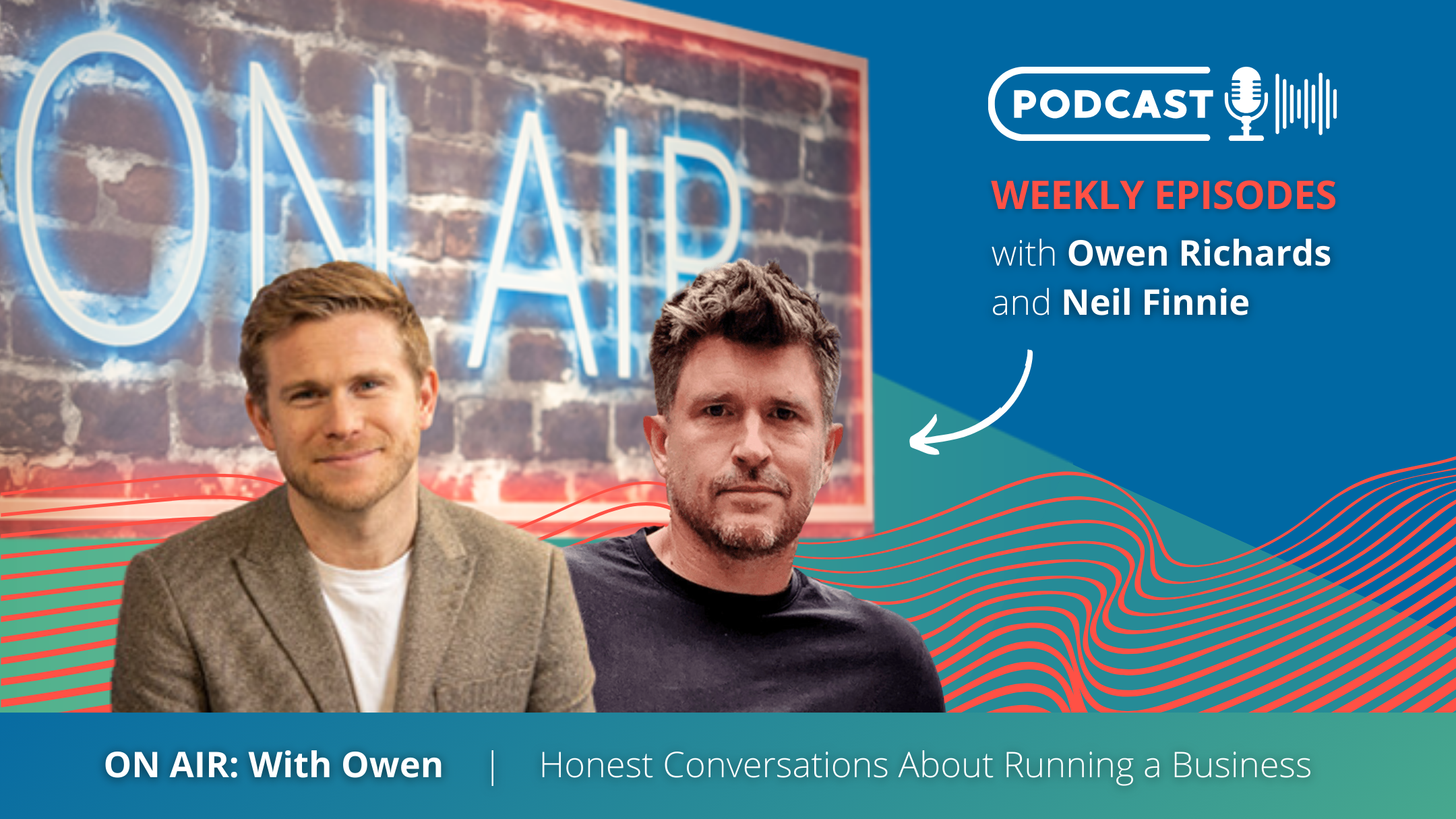
Introducing our 98th episode of ON AIR: With Owen – our podcast series for honest conversations about starting and scaling your own business, hosted by our Founder & CEO, Owen Richards, and his new co-host, Neil Finnie.
Meet Your Hosts: Owen Richards and Neil Finnie
Owen Richards hails from Kent and began his sales career at Forrest Marketing Group in Sydney. After an 8-year stint, Owen returned to the UK and co-founded Air Marketing Group, growing it into a powerhouse offering specialist B2B sales and marketing solutions to businesses across the globe. Known for his relentless positivity and strategic foresight, Owen brings a wealth of experience and a knack for big ideas to the podcast.
Neil Finnie is your quintessential ‘wabi-sabi entrepreneur’ – flawed but beautiful in approach. With over 25 years of experience in nurturing businesses around his passions, from co-working spaces to professional development agencies, Neil’s unique perspective enriches our discussions, making each episode a treasure trove of insights.
What to Expect in this Week’s Episode
AI in Action: Inspired by their own journeys, Owen and Neil are exploring how AI is transforming their industries and whether it’s delivering measurable results.
Neil’s Perspective: Discover how AI is empowering small businesses to focus on what matters most, even when it’s not part of a formal strategy.
Gaining a Competitive Edge: Will your business be left behind? Find out how AI is helping companies work faster and smarter, impacting pricing and competitiveness.
Breaking Barriers: Is AI accessible for everyone? We discuss whether the path to adopting AI is easy or challenging for businesses today.
Learning AI: Discover how ChatGPT can help you understand AI’s role in your industry and apply it to your business.
AI’s Effect on Jobs: Explore how AI is reshaping employment across industries, and what it means for the future of work.
The Search Shift: Do you now turn to ChatGPT instead of Google? We explore how people are changing the way they search for information.
Listen: On Spotify, Amazon Music, Apple Podcasts, TuneIn + Alexa, Deezer, and more.
Join us as we dive deep into the dynamics of running a business in today’s fast-paced world. Whether you’re seeking inspiration or practical advice, our podcast is your gateway to becoming more adept in the business arena.