
Why Cold Calling Still Works in an AI World: The Evolution of Modern Outbound Sales

cold calling outbound sales - air marketing
Why Cold Calling Still Works in an AI World | Air Marketing

Has AI killed cold calling?

It's a fair question.

Artificial Intelligence can research prospects in seconds, write personalised emails, analyse buying intent, summarise meetings and automate tasks that once consumed hours of a salesperson's day. So why would anyone still pick up the phone?

Because despite everything AI has changed, one thing hasn't.

People still buy from people.

The biggest deals, the longest buying cycles and the most valuable commercial relationships continue to rely on trust, commercial understanding and meaningful conversations.

In fact, we're seeing something interesting happen. As inboxes become increasingly flooded with AI-generated emails, generic LinkedIn messages and automated outreach, genuine conversations with knowledgeable sales professionals are becoming more valuable, not less.

The organisations generating the strongest outbound results today aren't choosing between AI and cold calling. They're combining the speed and intelligence of AI with the judgement, curiosity and commercial experience that only people can bring.

Cold calling hasn't disappeared.

It has evolved into a much broader outbound sales discipline.


Every decade predicts the death of cold calling. Every decade it adapts.

If you've worked in sales for long enough, you've probably heard the phrase before:

"Cold calling is dead."

It's been declared dead more times than most people can remember.

First it was email. Then LinkedIn. Then marketing automation. Then inbound marketing. Now it's AI.

Each new technology arrives with the same prediction: this time, the phone is finished.

Yet businesses across the world continue investing heavily in outbound sales every year. Not because they're ignoring technology, but because every wave of innovation has made outbound smarter rather than obsolete.

The role of the salesperson has continually evolved. The importance of meaningful conversations hasn't.

Technology changes how we reach buyers. It doesn't change how trust is built.


From telephone operators to AI copilots: the evolution of outbound sales

Today's outbound sales teams would barely recognise the telemarketing industry of the 1980s. Likewise, a salesperson from that era would probably be astonished by the technology available today.

The fundamentals, however, remain remarkably familiar.

Businesses still need to identify the right prospects, understand their commercial challenges and create enough high-quality conversations to generate predictable revenue. Everything else has evolved around those principles.

The 1950s
Businesses discover proactive selling

As telephone ownership became widespread after the Second World War, organisations realised they no longer had to wait for customers to walk through the door. The telephone became a proactive sales tool, allowing businesses to initiate conversations with potential customers at scale for the first time — marking the beginning of modern outbound sales.

The 1980s
Scale takes priority

As databases, predictive diallers and dedicated call centres emerged, outbound became increasingly efficient. But efficiency often came at the expense of relevance — large volumes of generic calls created a stereotype that has lingered long after the industry itself changed.

The 1990s & 2000s
CRM changes everything

Customer Relationship Management platforms fundamentally transformed outbound sales. Data became more valuable, follow-up more structured and processes more repeatable. Cold calling became one touchpoint within a much wider customer journey.

The 2010s
The rise of multichannel sales

Email, LinkedIn, content marketing and marketing automation changed how buyers interacted with suppliers. The highest-performing teams combined phone, email, social selling and digital engagement — the phone didn't disappear, it became one part of a smarter outbound strategy.

The 2020s
AI changes the way sales teams work

Prospect research that once took half an hour now takes seconds. Sales teams identify buying signals earlier, personalise outreach more effectively and eliminate much of the admin that used to slow them down. Yet the final step hasn't changed: someone still needs to earn attention, ask thoughtful questions and build trust.

AI has dramatically improved preparation for sales conversations. It hasn't replaced the conversations themselves.


What we've learned from ten years of delivering outbound sales

Over the past decade, Air has partnered with organisations ranging from ambitious SaaS scale-ups to global enterprise brands across the UK, United States and Europe.

One pattern appears time and time again.

Businesses don't suddenly wake up and decide they need more cold calling. They invest in outbound because something commercially significant has changed.

A new Chief Revenue Officer arrives with ambitious growth targets. Private equity investment accelerates expansion plans. The business enters a new market, launches a new product or finds that pipeline has begun to plateau. Sometimes internal sales teams simply reach capacity.

The trigger is rarely the phone itself.

The trigger is commercial ambition.

Outbound sales becomes one of the fastest ways to create the conversations needed to support growth.

A good example is global smart buildings leader Johnson Controls.

When the business wanted to accelerate growth in the UK, the challenge wasn't increasing activity for activity's sake. It was opening conversations with senior decision-makers inside carefully selected enterprise accounts.

Using an account-based outbound strategy combining phone outreach, personalised email, LinkedIn engagement and targeted content, Air engaged CFOs, CIOs, Heads of Facilities and Sustainability leaders, ultimately generating substantial sales pipeline.

£28 million
Sales pipeline generated for Johnson Controls
Read the full Johnson Controls case study

The phone wasn't the strategy.

It was one component of a coordinated revenue engine.


The challenges evolve as businesses grow

The sales challenges organisations face change dramatically as they scale.

Founder-led businesses often need help building predictable pipeline for the first time. Scale-ups need to enter new markets while maintaining aggressive growth targets. Mid-market organisations frequently reach the point where Account Executives spend too much time prospecting instead of closing opportunities, while enterprise businesses focus on regional expansion, product launches and maintaining consistent pipeline across multiple territories.

The specifics change.

The underlying challenge doesn't. Growth depends on consistently creating meaningful conversations with the right decision-makers.

We've seen this pattern across hundreds of campaigns.

Take Colossyan, an AI-powered workplace learning platform.

As the business expanded across the UK and Europe, it needed a repeatable way to engage Learning & Development decision-makers inside mid-market organisations. Success wasn't measured by the number of calls made. It was measured by the quality of commercial conversations.

Working as an extension of Colossyan's sales team, our campaign delivered:

Colossyan campaign results
36,108
Outbound activities
1,518
Conversations with decision-makers
245
Qualified meetings

Perhaps the most telling feedback came from Colossyan's VP of Sales:

For the same price as hiring one SDR, you get an entire outsourced sales department. We got exactly what we needed from Air — an experienced team that managed our outbound strategy from end to end. — VP of Sales, Colossyan

Read the full Colossyan case study

It's a perfect example of how modern outbound sales is no longer about making more calls.

It's about building a scalable, repeatable revenue engine that combines experienced people, intelligent technology and continuous optimisation.


Modern cold calling looks nothing like people imagine

Mention cold calling and many people still picture rows of salespeople reading from scripts, working through purchased lists and measuring success by the number of dials made. While that stereotype still exists, it bears little resemblance to how successful outbound sales teams operate today.

  • AI-assisted account research and intent data
  • CRM intelligence and personalised messaging
  • Coordinated engagement across phone, email and LinkedIn
  • Continuous testing, coaching and optimisation

The phone is no longer the strategy in itself. It's often the moment that brings everything else together.

A good example is Rakuten Advertising, a global leader in affiliate marketing and performance advertising. Their objective wasn't simply to make more calls. They wanted to accelerate growth across the UK, Spain, France, Italy and Germany while engaging senior marketing decision-makers in multiple languages.

Success required a coordinated outbound strategy supported by multilingual sales professionals, personalised email campaigns, LinkedIn engagement and carefully planned telephone conversations tailored to each market.

Read the full Rakuten case study

This is what modern outbound looks like: not more activity, but better-targeted, more relevant activity.


AI isn't replacing outbound sales. It's making it better.

Artificial Intelligence has transformed almost every stage of the outbound sales process.

Research is faster, data is richer and personalisation is easier to achieve at scale. Sales teams can identify buying signals earlier, understand target accounts more quickly and automate much of the administration that previously reduced selling time.

What AI hasn't replaced is human judgement.

It can't build credibility with a sceptical buyer. It can't recognise the nuance behind an unexpected response or uncover the commercial challenge that only emerges halfway through a conversation. Complex B2B buying decisions still require curiosity, empathy and commercial understanding.

Ironically, many of today's AI businesses recognise this better than anyone.

Take Armakuni, an AWS Premier Partner specialising in cloud engineering, artificial intelligence and data transformation. As demand for Generative AI solutions accelerated, the business needed to engage organisations actively exploring AI adoption across the UK and the United States.

Using AI-assisted research alongside experienced outbound sales professionals, the campaign targeted CTOs, CIOs, Heads of Data and AI leaders with highly personalised outreach. The results included:

Armakuni campaign results
30,000+
Outbound activities
1,700
Conversations with decision-makers
157
Qualified meetings
£250,000
Estimated sales pipeline

It's a useful reminder that AI and outbound sales are not competing forces.

The most successful organisations are using AI to make human conversations better, not replace them.


If cold calling is dead, why are big global brands still investing in outbound sales?

One of the strongest arguments against the idea that cold calling is obsolete is the behaviour of the organisations leading their industries.

Global brands continue investing in outbound sales because they understand that meaningful conversations remain one of the fastest ways to build pipeline, enter new markets and accelerate commercial growth.

Take E.ON, one of Europe's largest energy providers. They partnered with Air to support business energy acquisition, engaging thousands of SME decision-makers through structured outbound conversations and generating hundreds of qualified opportunities for their internal sales teams.

Read the full E.ON case study

Similarly, global smart buildings leader Johnson Controls used account-based outbound sales to accelerate growth in the UK, generating £28 million in pipeline by engaging carefully selected enterprise stakeholders.

Meanwhile, Rakuten Advertising used multilingual outbound sales to support expansion across five European markets, while Colossyan relied on outbound to accelerate growth across the UK and Europe.

For more than eight years, Funding Circle has trusted Air as an extension of its commercial team. During that partnership, we've delivered:

Funding Circle — eight years of partnership
612,000+
Outbound activities
137,000
Conversations with business owners
9,600
Qualified meetings
Read the full Funding Circle case study

Each organisation operates in a different market. They serve different buyers, face different commercial pressures and have different growth objectives.

What they have in common is a recognition that meaningful conversations remain one of the most effective ways to create pipeline.


Why businesses still invest in human conversations

Technology has undoubtedly made buying easier.

It hasn't made buying simpler.

Enterprise purchasing decisions now involve more stakeholders than ever before, with finance, procurement, technical teams and executive sponsors all playing a role. Each group has different priorities, different concerns and different questions that need answering before a decision is made.

Very few of those questions are resolved through a marketing email alone.

They are resolved through dialogue.

That's why outbound sales continues to play such an important role within modern revenue strategies. The objective isn't simply to make more phone calls. It's to create opportunities for meaningful conversations with the people responsible for making significant commercial decisions.


The future belongs to businesses that embrace both AI and people

The future of outbound sales is unlikely to be defined by AI replacing people.

Instead, it will be shaped by organisations that successfully combine intelligent technology with experienced sales professionals.

AI will continue helping teams identify buying signals, prioritise accounts, personalise outreach and reduce administrative workload. At the same time, businesses will place even greater value on the human skills that technology cannot replicate: curiosity, commercial judgement, active listening, relationship building and strategic thinking.

These qualities are what transform conversations into opportunities and opportunities into revenue.

The organisations that embrace both AI and human expertise will be best placed to build predictable pipeline over the next decade.


Cold calling hasn't disappeared. It's become more intelligent.

Perhaps the biggest misconception surrounding cold calling is that it has survived despite advances in technology.

The opposite is true.

It has survived because it has adapted.

Today's outbound sales teams are more informed, more targeted and more commercially focused than ever before. Rather than relying on volume, they use insight to identify the right organisations, engage the right stakeholders and start conversations that genuinely matter.


How Air Marketing has evolved with the outbound sales industry

Over the past ten years, we've adapted our approach in exactly the same way the outbound sales industry has evolved.

Today's campaigns aren't built around scripts or call volumes. They're built around understanding each client's market, identifying the right buyers and creating relevant conversations through a combination of technology, insight and experienced sales professionals.

Before a campaign launches, our teams immerse themselves in your business, proposition and ideal customer profile. We combine CRM intelligence, buyer intent signals, AI-assisted account research and real sales expertise to identify where the strongest commercial opportunities exist.

From there, outbound becomes a coordinated sales process rather than a single channel. Our Sales Development Representatives combine phone, email and LinkedIn outreach with messaging shaped by real customer conversations and continuously refined through campaign performance. Every programme is supported by Team Managers, Operations specialists, Quality Assurance and ongoing coaching to ensure results improve over time.

It's an approach that's helped organisations ranging from ambitious technology scale-ups to global brands including E.ON, Johnson Controls, Rakuten Advertising and Funding Circle generate predictable pipeline through modern outbound sales.

Exploring how outbound sales could support your growth strategy?

Complete the enquiry form at the bottom of the page — we'd be happy to share what's working across your market today.


The future of outbound sales is already here

Has AI killed cold calling?

The evidence suggests otherwise.

What AI has done is accelerate the evolution of outbound sales. The organisations achieving the strongest commercial results today aren't choosing between AI and human interaction; they're combining both to create smarter, more relevant conversations with the people who matter most.

The phone is no longer the centre of an outbound strategy, but it remains one of its most valuable channels. Supported by data, technology, insight and experienced sales professionals, it continues to help businesses open doors, build relationships and generate predictable pipeline.

That's why organisations ranging from ambitious AI scale-ups to global brands continue investing in outbound sales.

The technology will continue to evolve, and AI will continue to reshape how sales teams work. But as long as businesses continue buying complex products and services from other businesses, one thing is unlikely to change.

Meaningful conversations will remain one of the most powerful drivers of sustainable, measurable growth.

Need help applying this to your business?

Our expert team can help you find the right approach. Complete the form below and we’ll get back to you within 24 hours.


Talk to an expert at Air Marketing - Trusted Outsourced Sales Agency UK

Cup of Tea with a BDE: Joel vs The Great Cold Call Debate

The great cold call debate is a tale as old as time. LinkedIn warriors take to their keyboards to proclaim “COLD CALLING IS DEAD!” – and then usually promote a tool that can generate 2x your pipeline in four weeks without ever speaking to a prospect.

But the question remains – is cold calling really dead? Have we stopped valuing real human conversation?

We can’t deny that digital tools and AI are brilliant co-workers when it comes to efficiency. But our Business Development Executive, Joel Pugh, is living proof that we can’t afford to lose our voice in the sales journey.

Over the past quarter, Joel’s median target achievement has reached 264%+ across five separate client campaigns. He hasn’t missed a single target – in fact, he’s exceeded every one by a considerable margin.

Joel joined Air just over a year ago, fresh out of college, with no prior sales experience but a genuine thirst to learn the art of prospecting.

“I came to Air knowing I wanted to get into sales. I’ve always had a clear drive and goal to work in business, and the BDE role was the entry point for me to start that journey. I wanted to learn the basics and gain experience so I can progress in the future.”

Over the past year, Joel has become a consistent top performer and now works closely with his teammates to help them achieve similar results. But how exactly does he do it? We sat down with him – and a cup of tea – to find out how he continues to excel in a market that’s telling SDRs to avoid the phone…

What’s something you’ve learnt from your peers that helps you to succeed?

“Don’t say sorry for doing your job – that’s something a lot of people do when they start in sales because they feel like a nuisance. But my peers helped me see that it’s our job, and we’re here to help. Don’t apologise for that.”

If you were a BDE starting from scratch, what would your top tip be?

“Get used to rejection – embrace it. That was probably one of the first things I realised in this job. You can’t let rejection stop you. You’ve got to be OK with it.”

What traits make a good salesperson?

“Competitiveness. I’m a competitive person – not in a nasty way – but that competitive edge is needed in sales. I enjoy the banter with my mates; it helps us push harder.”

When you’re facing a tough day or week as a BDE, how do you turn it around?

“I make promises to myself. I was having a bad week recently, and my Team Manager asked if the workload was getting too much. I said, ‘No mate, I want to be doing all this work.’ I told myself that tomorrow would be make or break – either I’d have a great day or I’d be finished, retired!

I ended up getting seven fresh leads the next day and won the all-in-day incentive. It’s about not dwelling too much on the day before. That’s important. No dwelling on the past – it’s a marathon, not a sprint.”

Is cold calling dead?

“Cold calling is king – and I think it always will be. One of the reasons I got into sales is because I don’t fear AI replacing my job. People want to be taught and spoken to by people, not computers or robots. They want to hear a human voice – someone who’s confident and skilled. That’s always going to win.”

So, the answer to the great cold call debate? It’s simple – cold calling isn’t dead. It just takes grit.

There’s no shortcut to pipeline generation. Be like Joel: dedicated to your craft, resilient in the face of adversity, and confident in the power of real human connection.


Looking to kick start your sales career? 

Want to find out how we generate real sales pipeline for our clients? 

Cup of Tea with a BDE: Joel vs The Great Cold Call Debate

How To Increase Qualified B2B Sales Leads

In B2B sales, the real challenge isn’t generating leads—it’s generating the right leads.

If you’re looking to improve your sales pipeline quality and increase conversion rates, the solution lies in strategic preparation, not just volume. At Air Marketing, we’ve seen time and again that the single most effective tactic for boosting lead qualification is pre-call research.

By understanding the prospect before you ever pick up the phone, you equip yourself with the insights needed to have meaningful, relevant conversations that open doors—not shut them.

These insights were originally explored in our Calling Masters webinar – watch the full session here.


Why Pre-Call Research Is Key to Better Lead Quality

Cold calling, when done without context, is often met with indifference. When done with insight, it becomes a powerful tool for starting qualified sales conversations.

Pre-call research helps shift your approach from generic outreach to tailored messaging. It increases credibility, improves rapport, and ensures you’re targeting people and businesses with the highest potential to convert.


Start with a Clear Ideal Customer Profile (ICP)

High-performing sales teams don’t treat every prospect equally—they prioritise the ones that match their Ideal Customer Profile.

Understanding your ICP allows you to filter by relevant industry sectors, company size, and decision-making roles. That clarity ensures you’re speaking to organisations that not only need what you offer, but are structurally and strategically aligned to act on it.

This is a fundamental step in every outbound campaign we run at Air. It keeps messaging sharp, outreach relevant, and lead qualification rates high.

For a deeper dive into defining and leveraging your ICP, read our guide: Swipe Right: How to Match with Your Ideal Customer Profile.


Solve Specific Problems, Don’t Deliver Generic Pitches

The most successful sales calls start with a solution-focused mindset. But you can’t offer a solution if you don’t understand the problem.

By taking a few minutes to explore recent company activity, sector trends, and likely challenges, you’re better positioned to demonstrate value. That preparation allows you to speak directly to the pain points that matter most, making your proposition immediately more compelling.


Use Insight to Build Trust

Tailored calls that reference specific details about the prospect’s business stand out. Whether it’s a recent funding round, industry recognition, or a strategic initiative—they signal that you’ve done your homework.

This builds trust early in the call and positions you as someone who respects the prospect’s time. In a crowded market, that kind of credibility makes all the difference in moving a lead from cold to qualified.


What to Research Before You Call

Here’s how to prepare efficiently and effectively:

1. Company Information

  • Industry trends and challenges

  • Company size and structure

  • Press coverage, funding, partnerships

  • Website content and service lines

2. Decision-Maker Context

  • Job title and responsibilities

  • LinkedIn activity and content

  • Career milestones or professional interests

It’s about surfacing the information that can enrich the conversation—not overwhelming the prospect with a data dump.

3. Business Triggers

  • Expansion into new markets

  • Hiring trends or leadership changes

  • Regulatory pressures or sector innovation

  • ISO or ESG ambitions

These are often signs that an organisation is navigating change—and may be more receptive to new solutions.

4. Tools to Make It Easier

Our team leverages tools that cut through the noise, including:

  • BuiltWith – to assess technology stacks

  • Google News – for timely updates

  • LinkedIn – for individual signals and social proof

  • CRM history and intent data – for deeper context across previous interactions


Stay Focused: Efficient Research Yields Faster Results

Pre-call research doesn’t need to take hours. When done with discipline, it can take just 5–10 minutes and yield much higher-quality conversations.

The key is to find the balance: not so much research that it delays outreach, but not so little that it results in unqualified leads.

To maintain momentum, set clear time limits per prospect, segment your research by persona or vertical, and focus only on details that will genuinely support your conversation.


Putting Research Into Action

Research is only useful when it’s applied. Here’s how to bring it into the conversation without overwhelming the prospect:

Start With Relevance

Mention a recent update or known challenge to demonstrate that you’ve prepared. Then link that insight directly to how your solution can help.

Avoid Information Overload

Use just enough detail to demonstrate understanding. The goal is to create a sense of familiarity and relevance, not to show off how much you know.

Ask Smarter Questions

Guide the conversation by referencing industry context or common pain points. Asking “Is that something you’re seeing as well?” opens the door to discussion and deepens the prospect’s engagement.


Common Cold Calling Challenges – and How Research Helps

Cold Call Anxiety

Preparation builds confidence. Knowing your value proposition, understanding the audience, and being ready for objections makes each call more manageable.

Staying grounded in facts and insights also keeps the call professional, even when a prospect isn’t receptive.

Engaging Senior Stakeholders

Executives expect relevance and impact. Research allows you to cut to what matters—commercial results, risk mitigation, or strategic growth.

By speaking their language and demonstrating domain knowledge, you elevate the conversation and increase your chances of success.


Research + Relevance = Better Leads

If your goal is to increase qualified B2B sales leads, pre-call research is one of the most impactful habits you can adopt.

It improves call quality. It raises conversion rates. It helps you stop wasting time on the wrong leads and start focusing on the right ones.

At Air Marketing, we embed this thinking into every sales campaign we deliver—because preparation isn’t a luxury in outbound sales. It’s a performance advantage.

Ready to Improve Your Lead Quality?

Air Marketing helps businesses generate more qualified B2B leads through targeted, insight-led outbound sales campaigns. From strategy and messaging to SDR execution and reporting, we manage the full process—so you get results without guesswork.

📞 Request a quick discovery call and learn how our outsourced SDR teams can build your pipeline with precision.

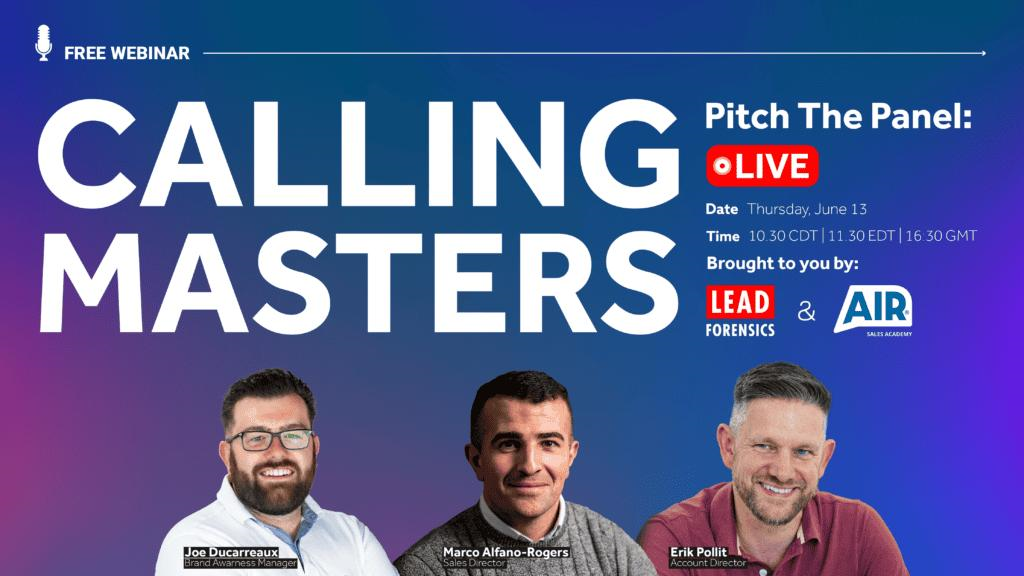
CALLING MASTERS | Pitch The Panel – Live!


Struggling to hit quota? Feeling frustrated with missed sales? Calling Masters will equip you with the skills and strategies to dramatically raise your cold calling game.

In this sixth, and final, episode of our Calling Masters series in partnership with Lead Forensics, we’re putting your cold calling skills to the test! Four brave sales reps dialled into the webinar and pitched live to our expert panel, where they received instant, personalised feedback. Tune in and pick up game-changing cold calling tips by witnessing the participants’ techniques and the panel’s feedback.

Our panel features:
Marco Alfano-Rogers – Sales Director at Air Marketing
Erik Pollitt – Training Consultant at Air Sales Academy

Gracie-May Bryan – Campaign Operations Manager at Air Marketing

Host:
Joe Duccarreaux – Brand Awareness Manager at Lead Forensics

Who is it for?
Founders & CEOs
Sales & Marketing Leaders
Revenue Leaders
Sales & Marketing Managers
Sales Development Representatives (SDRs)
Business Development Representatives (BDRs)

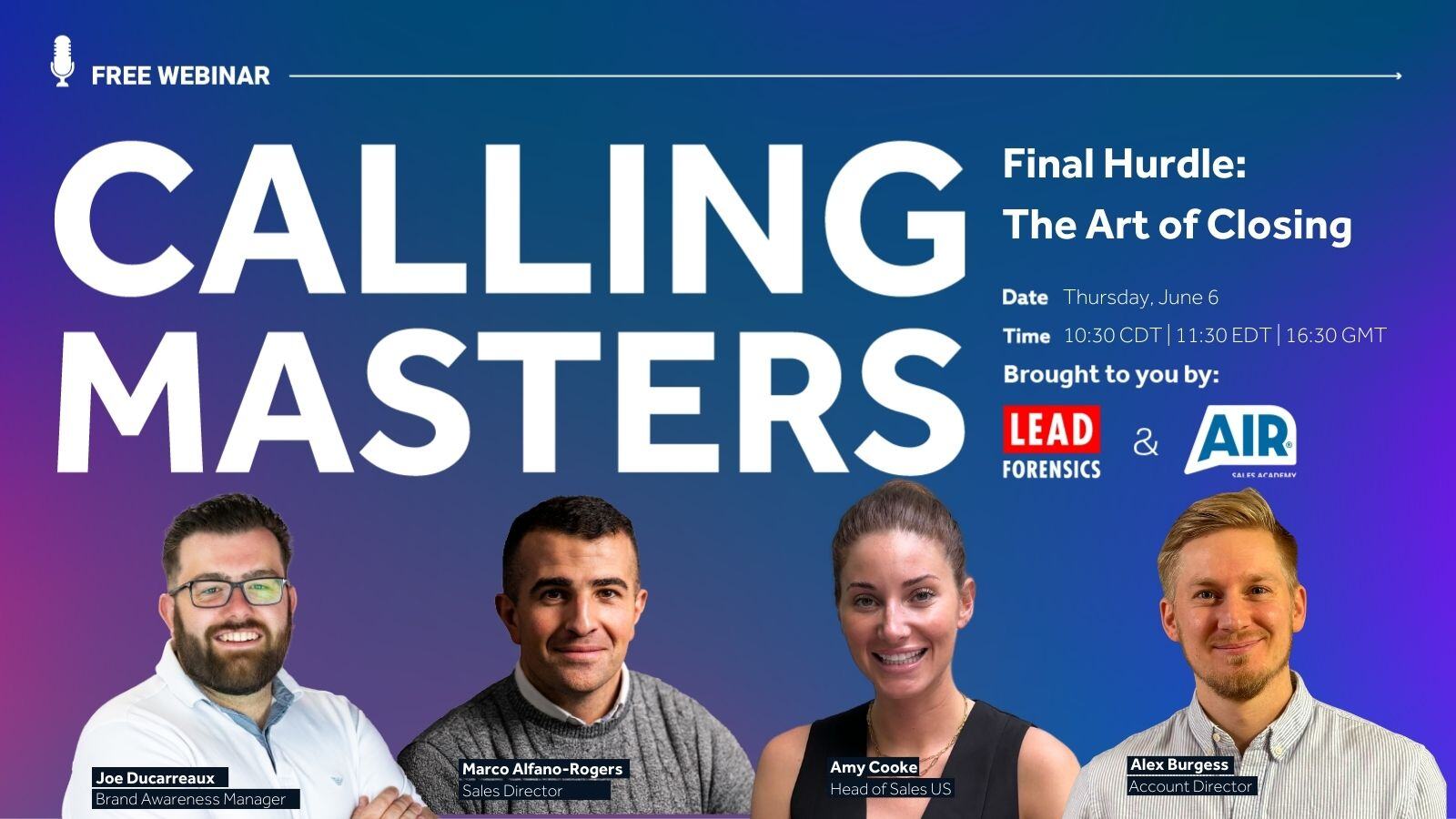
CALLING MASTERS | Final Hurdle: The Art of Closing


Consistently getting to the decision-maker, crafting a perfect pitch – but struggling to secure the deal?

In this fifth episode of our Calling Masters series in partnership with Lead Forensics, we’re exploring how to turn your successful cold calls into closed deals. We’ll equip you with the essential skills and strategies to confidently navigate objections and guide prospects towards a positive decision.

You’ll learn:

  • Mastering Objections: Discover effective techniques to overcome common objections and keep the conversation moving forward.
  • Building Value & Urgency: Learn how to highlight the value proposition of your offering and create a sense of urgency to act.
  • The Art of the Close: Explore different closing techniques and identify the ones that best suit your calling style.
  • Leaving the Door Open: Learn how to gracefully navigate a “no” while leaving the door open for future opportunities.

Our panel features:
Marco Alfano-Rogers – Sales Director at Air Marketing
Erik Pollitt – Training Consultant at Air Sales Academy
Amy Cooke – Head of Sales US at Lead Forensics 

Alex Burgess – Account Director at Air Marketing

Host:
Joe Duccarreaux – Brand Awareness Manager at Lead Forensics

Who is it for?
Founders & CEOs
Sales & Marketing Leaders
Revenue Leaders
Sales & Marketing Managers
Sales Development Representatives (SDRs)
Business Development Representatives (BDRs)

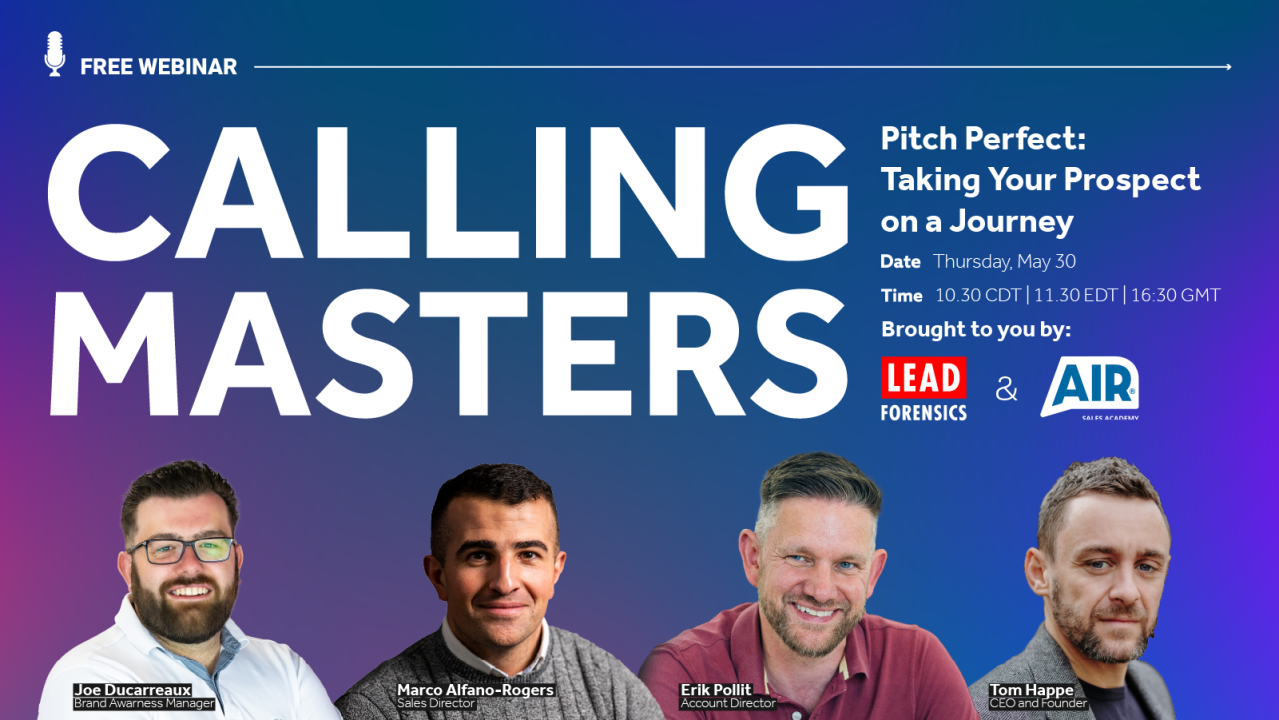
CALLING MASTERS | Pitch Perfect: Taking Your Prospect on a Journey


Feeling like your cold calls are missing the mark? Struggling to engage prospects and leave a lasting impression?

In this fourth episode of our Calling Masters series in partnership with Lead Forensics, we’re exploring the art of the perfect pitch. We’ll equip you with the skills to craft a compelling narrative and guide your prospect towards a positive outcome.

You’ll learn:

  • Hook ‘Em from the Start: Master the art of crafting captivating introductions that grab attention and break the ice.
  • The Power of Storytelling: Discover how to weave a compelling narrative that resonates with your prospect’s needs and challenges.
  • Building Value Throughout the Call: Learn how to highlight the benefits of your offering in a way that’s tailored to each prospect.
  • A Smooth Landing: Master the art of transitioning from a captivating pitch to a clear call to action.

Our panel features:
Marco Alfano-Rogers – Sales Director at Air Marketing
Erik Pollitt – Training Consultant at Air Sales Academy
Tom Happé – CEO and Founder at Trueleads

Host:
Joe Duccarreaux – Brand Awareness Manager at Lead Forensics

Who is it for?
Founders & CEOs
Sales & Marketing Leaders
Revenue Leaders
Sales & Marketing Managers
Sales Development Representatives (SDRs)
Business Development Representatives (BDRs)

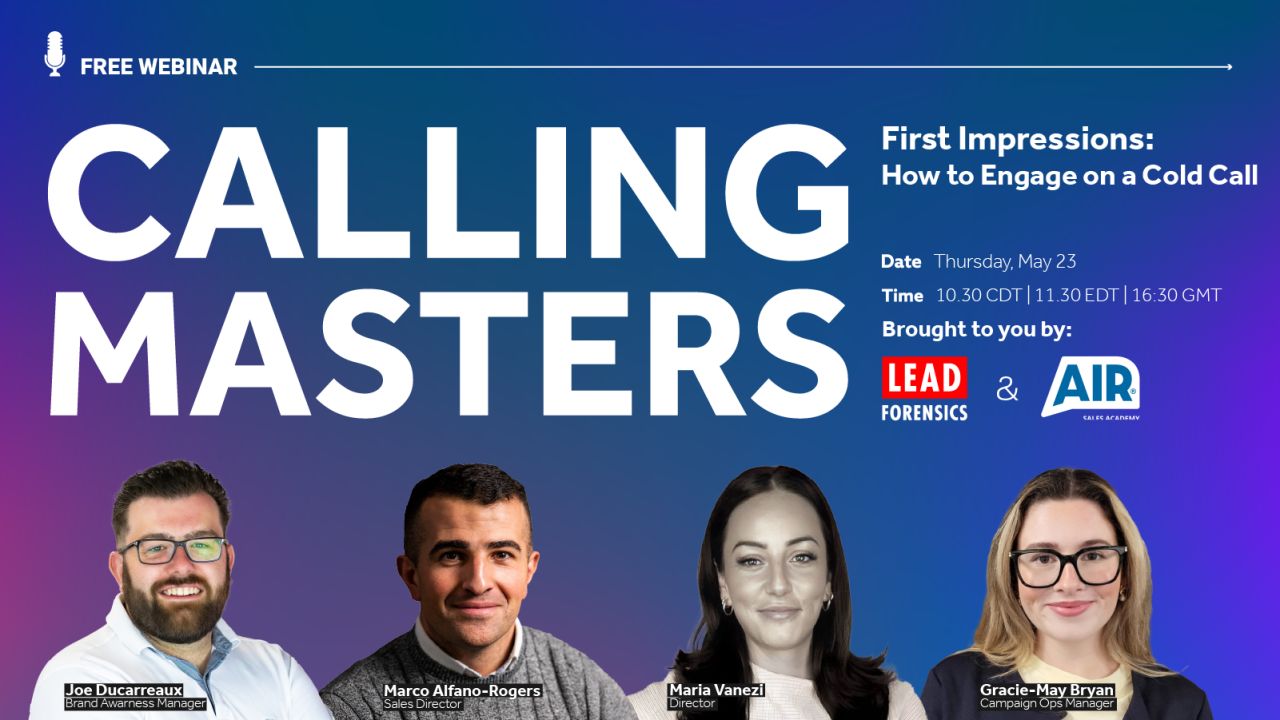
CALLING MASTERS | First Impressions: How to Engage on a Cold Call


Struggling to make a strong impact on calls with your prospects?

In this third episode of our Calling Masters series in partnership with Lead Forensics, we’ll equip you with the skills to craft powerful first impressions that turn cold calls into warm conversations.

You’ll learn:

  • How to bypass gatekeepers with powerful introductions that grab attention.
  • How to craft a personalized pitch that resonates with each prospect.
  • How to develop confident communication skills that instill trust and command attention.

Our panel features:
Marco Alfano-Rogers – Sales Director at Air Marketing
Maria Vanezi – Director at Ezicomms Marketing
Gracie-May Bryan – Campaign Operations Manager at Air Marketing

Host:
Joe Duccarreaux – Brand Awareness Manager at Lead Forensics

Who is it for?
Founders & CEOs
Sales & Marketing Leaders
Revenue Leaders
Sales & Marketing Managers
Sales Development Representatives (SDRs)
Business Development Representatives (BDRs)

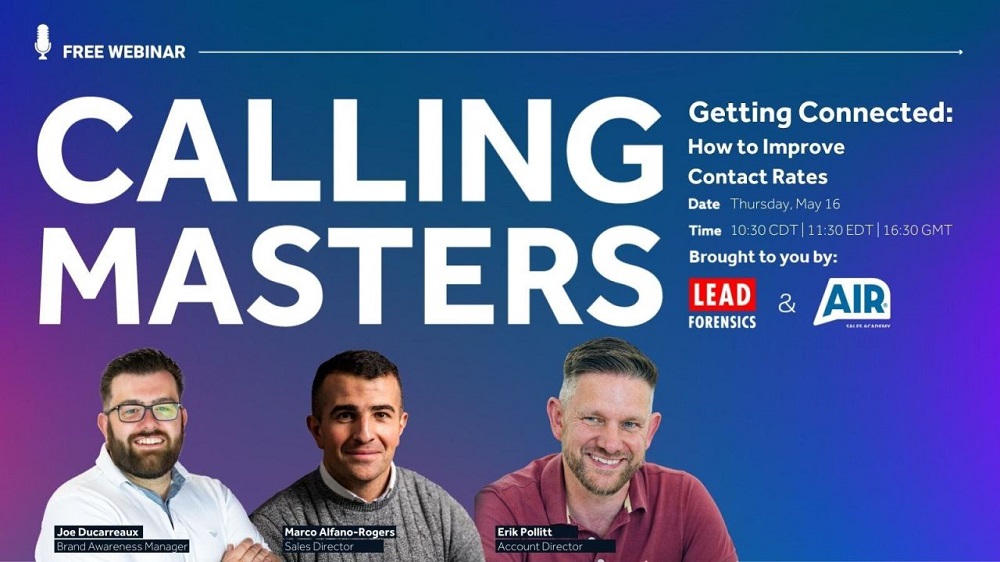
CALLING MASTERS | Getting Connected: How to Improve Contact Rates


Struggling to connect with decision-makers on cold calls? Spending hours leaving voicemails that never get returned?

If your skills need sharpening on bypassing gatekeepers, leaving compelling voicemails and connecting with real people, then this webinar is for you.

In this second episode of our Calling Masters series in partnership with Lead Forensics, we’re discussing the key elements of getting connected with your prospects, so you can dramatically improve your contact rates.

You’ll learn:

  • How to identify and navigate common gatekeeper tactics to reach decision-makers directly.
  • How to support phone calls with multi-channel messages and the importance of personalization.
  • The importance of Active Listening and how you can use it to your advantage in the early stages of the call.

Our panel features:
Marco Alfano-Rogers – Sales Director at Air Marketing
Erik Pollitt – Training Consultant at Air Sales Academy
Amy Cooke – Global Development Director at Lead Forensics

Host:
Joe Duccarreaux – Brand Awareness Manager at Lead Forensics

Who is it for?
Founders & CEOs
Sales & Marketing Leaders
Revenue Leaders
Sales & Marketing Managers
Sales Development Representatives (SDRs)
Business Development Representatives (BDRs)

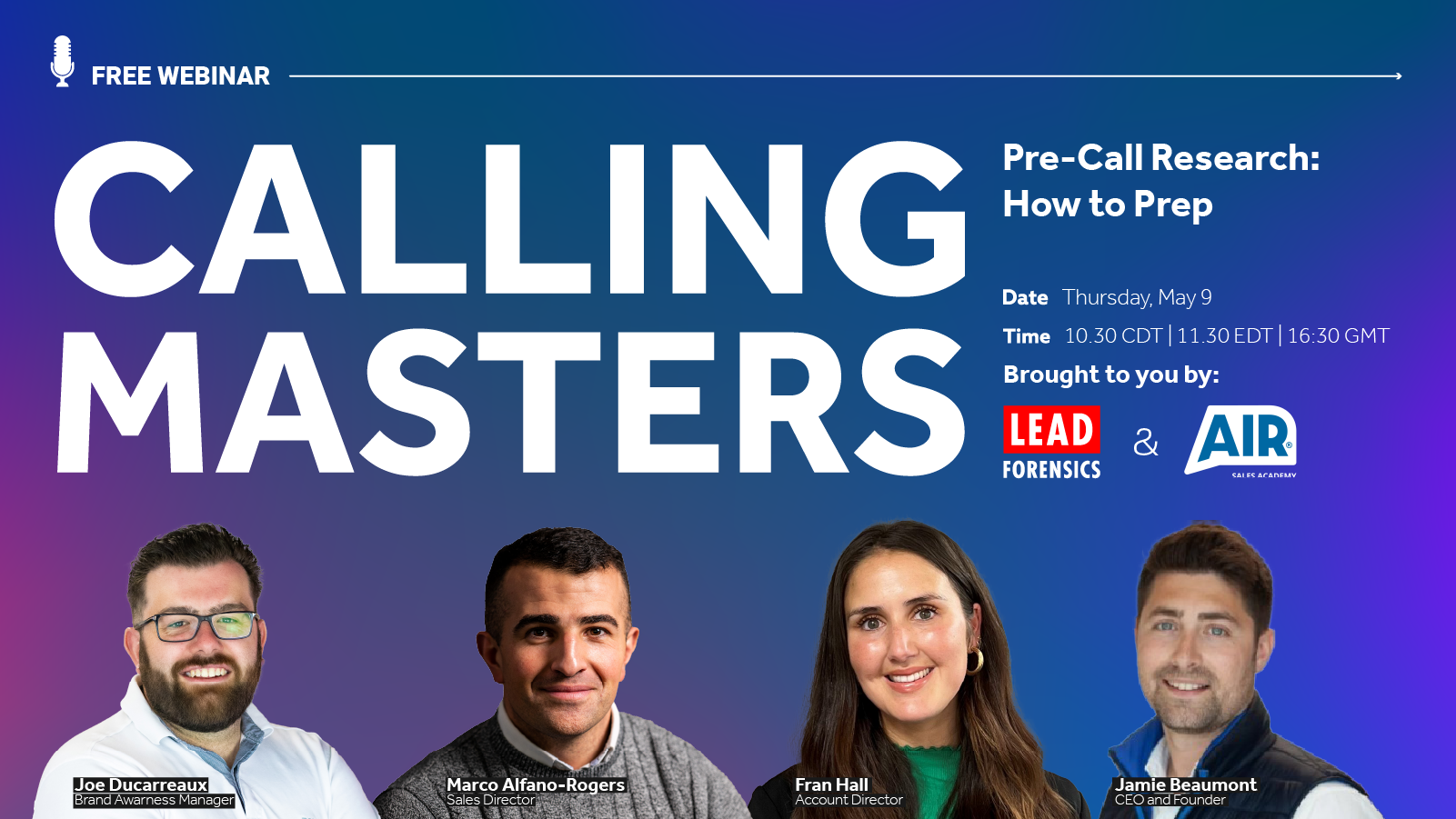
CALLING MASTERS | Pre-Call Research: How to Prep


Tired of wasting time on unqualified leads and getting stuck in voicemail jail?

If you want to increase your closing rate over the phone, you need to understand who you’re selling to. 

In this webinar, the first in our Calling Masters series in partnership with Lead Forensics, we’re discussing the key elements of pre-call preparation to ensure that you’ve packed out your cold call toolbox.

You’ll learn:

  • How to quickly gather relevant knowledge about your prospect’s business, their specific needs, and the key players you need to connect with.
  • Which essential tools will help inform your approach during your call to the prospect.
  • How to apply the information you find during your research on the cold call and ensure your sales success.

Our panel features:
Marco Alfano-Rogers – Sales Director at Air Marketing
Fran Hall – Account Director at Air Marketing
Jamie Beaumont – CEO and Founder of Playter

Host:
Joe Duccarreaux – Brand Awareness Manager at Lead Forensics

Who is it for?
Founders & CEOs
Sales & Marketing Leaders
Revenue Leaders
Sales & Marketing Managers
Sales Development Representatives (SDRs)
Business Development Representatives (BDRs)

Cold Calling Vs Social Selling – Let’s settle the debate.

There is a long-standing debate raging among sales professionals – which is more effective, social selling or cold calling? To me, the answer is simple.

Now, I am not going to bore you to death with stats which, depending on who you speak to, can be validated both ways. Instead, I’m going to give you some insight that I have gained as a Sales Professional who has sat on both sides of the fence, sometimes stuck in the middle, for over a decade.

So, my insight:

Logging into a webinar recently, I watched keenly as the debate in discussion swung from side to side, with each team offering their opinions. On one side, the UK’s top social seller and on the other, a Canadian based CMO from a well-known Sales Engagement Platform provider and advocate of cold calling. Both camps provided stats to back up their arguments, making it a close call. Although either could have come out on top, in my opinion, cold calling won this round. However, was this down to the geographical benefit of the stats, a more engaging presentation or more tangible evidence? I’m still unsure.

Since this debate, I’ve viewed multiple posts, blogs and podcasts to try and determine a winner for myself. I came across a recent Hubspot blog which appeared to settle the debate in favour of social selling, boldly stating that prospective customers and sales people alike “hate” cold calling. The blog consisted of impressive conversion figures, with the origins of these stats referenced, however, what is often left unclear is the industry, target, sales cycle, resource or end result of these stats origin. Without knowing the full picture, how can we possibly judge what is best for our businesses?

My background includes an enjoyable period as an Event Manager, assisting in the growth of the largest sales and marketing expo in Europe. At this event, exhibitors included direct sales people, cold callers and, what appeared to be, the more passive social sellers. All evidenced by the solutions which they were there to present. There has always been one impression that stuck with me after this event. Whilst the direct sellers had a constant sense of energy and approached any delegate who came within talking distance, the social sellers would wait to be approached – usually sat on their mobile phones. I’ll leave it to you to conclude whose stands were busier…

Now, it seems that these characteristics are commonplace, as shown to me by a recent experience. A well-known, international sales trainer recently posted on LinkedIn, “I have an associate looking for support in their telesales process.” The post had received dozens of comments and recommendations, however, with the benefit of having their phone number, I picked up the phone and introduced Air, asking how we could help. I was astounded to find out that from a 2-day old post requesting TELESALES SUPPORT I was the first person to pick up the phone and call. Now, yes, I was connected to and known by this person through social media, we’d swapped some niceties and a few messages which supported our conversation, but I was the only person to call and actually have a conversation! Whilst multiple people had attempted to social sell, guess what? The prospect wanted a conversation and, funnily enough, I was the only one introduced to their associate.

If this doesn’t settle the debate, I don’t know what will… it pays to use both!

Both cold calling and social selling have their place, it’s not really a matter of which one is better. When used together, they maximise the effectiveness, reach, efficiency and quality of your process. Each prospective client will buy in a different way and their more likely to notice your company if you get on their radar in 2 or 3 different ways. Any marketeer or sales professional worth their salt will tell you that a multi-channel, multi-touch approach will always maximise effectiveness.

Here at Air, we have multiple ways to win new business for ourselves and our clients. We run targeted email campaigns, sponsored LinkedIn mails, Facebook ads, engage traffic using IP trackers, networking events and referral channels. I will social sell, but I will still pick up the phone and cold call too. One shameless stat I will give you is that we’ve seen 257% growth in a year. We’re an award-winning company who are about to go through our second office move in less than 12 months due to increasing demand and our work with well-known household brands. And do you know why? Because wherever our clients and their customers are, and however they like to buy, we ensure we’re there too. Simple.

If you would like to discuss how we can help your business, give us a call: 0345 241 3038, or email: contact@air-marketing.co.uk.

Opinion Piece by Simon Murthwaite, Sales Director, Air Marketing Group