

Everyone Else Is Slowing Down. That’s Exactly Why You Should Be Prospecting This December

air marketing sales in december - prospecting - outsourced sales agency uk

Everyone Else Is Slowing Down. That’s Exactly Why You Should Be Prospecting This December

The Christmas decorations are up. Calendars are filling with end-of-year socials. Slack messages start to include phrases like “back in January”.

And inevitably, the same question comes up in sales teams across the UK:

“Should we just ease off prospecting until the New Year?”

Our Founder & CEO, Owen Richards , has been answering that question for over a decade. His response hasn’t changed.

Carry on as normal.

Not because he’s allergic to Christmas cheer – but because the data, the behaviour, and the commercial reality all point in the same direction. December isn’t a dead month. It’s a misunderstood one.

Why December prospecting still works in 2025

At Air Marketing, outbound is our day job. We make hundreds of thousands of calls every year across multiple sectors, seniority levels, and markets. That volume gives us a clear view of what actually happens in December – not what people assume happens.

As the year winds down, decision-makers are more open to conversation, call quality improves, and meaningful discussions happen faster.

Inbox pressure drops. Meeting overload eases. People finally have breathing room to think rather than react.

Even in the final two weeks before Christmas, engagement rates remain strong. Appointments may land for January, but the groundwork happens in December.

And when teams switch prospecting off entirely? January becomes a cold start instead of a warm continuation.

Three reasons December still delivers results

1

Conversations are better, not worse

December isn’t quieter because people stop working. It’s quieter because the noise reduces. Decision-makers are clearing desks, reflecting on the year, and are often more relaxed and open. That leads to longer, higher-quality conversations with less defensiveness and more honesty.

2

Budgets and priorities are already in motion

By December, leadership teams are shaping the year ahead. Budgets are being finalised, suppliers reviewed, and performance gaps acknowledged. December is ideal for positioning your proposition and securing January conversations with real intent.

3

Switching off costs more than people realise

Write off December and you lose around 8% of the selling year. Add summer, Easter, and other “bad timing” periods and suddenly a quarter of the year disappears. Top-performing sales teams prioritise consistency, not perfect conditions.

A realistic December caveat

December isn’t the time to launch brand new sales initiatives from scratch. If a campaign is already running, keep momentum going and build pipeline for January. If something requires heavy onboarding or major change, wait until the New Year when teams are refreshed.

December feels like the wrong time to prospect. That’s exactly why it works.

While competitors slow down, the teams that keep going quietly build advantage – and reap the rewards in the new year.

If you want January to start with momentum rather than zero, our sales specialists can help build pipeline that lasts beyond the Christmas break.

Get in touch with Air Marketing to see how we can support your growth into 2026.

How To Increase Qualified B2B Sales Leads

In B2B sales, the real challenge isn’t generating leads—it’s generating the right leads.

If you’re looking to improve your sales pipeline quality and increase conversion rates, the solution lies in strategic preparation, not just volume. At Air Marketing, we’ve seen time and again that the single most effective tactic for boosting lead qualification is pre-call research.

By understanding the prospect before you ever pick up the phone, you equip yourself with the insights needed to have meaningful, relevant conversations that open doors—not shut them.

These insights were originally explored in our Calling Masters webinar – watch the full session here.


Why Pre-Call Research Is Key to Better Lead Quality

Cold calling, when done without context, is often met with indifference. When done with insight, it becomes a powerful tool for starting qualified sales conversations.

Pre-call research helps shift your approach from generic outreach to tailored messaging. It increases credibility, improves rapport, and ensures you’re targeting people and businesses with the highest potential to convert.


Start with a Clear Ideal Customer Profile (ICP)

High-performing sales teams don’t treat every prospect equally—they prioritise the ones that match their Ideal Customer Profile.

Understanding your ICP allows you to filter by relevant industry sectors, company size, and decision-making roles. That clarity ensures you’re speaking to organisations that not only need what you offer, but are structurally and strategically aligned to act on it.

This is a fundamental step in every outbound campaign we run at Air. It keeps messaging sharp, outreach relevant, and lead qualification rates high.

For a deeper dive into defining and leveraging your ICP, read our guide: Swipe Right: How to Match with Your Ideal Customer Profile.


Solve Specific Problems, Don’t Deliver Generic Pitches

The most successful sales calls start with a solution-focused mindset. But you can’t offer a solution if you don’t understand the problem.

By taking a few minutes to explore recent company activity, sector trends, and likely challenges, you’re better positioned to demonstrate value. That preparation allows you to speak directly to the pain points that matter most, making your proposition immediately more compelling.


Use Insight to Build Trust

Tailored calls that reference specific details about the prospect’s business stand out. Whether it’s a recent funding round, industry recognition, or a strategic initiative—they signal that you’ve done your homework.

This builds trust early in the call and positions you as someone who respects the prospect’s time. In a crowded market, that kind of credibility makes all the difference in moving a lead from cold to qualified.


What to Research Before You Call

Here’s how to prepare efficiently and effectively:

1. Company Information

  • Industry trends and challenges

  • Company size and structure

  • Press coverage, funding, partnerships

  • Website content and service lines

2. Decision-Maker Context

  • Job title and responsibilities

  • LinkedIn activity and content

  • Career milestones or professional interests

It’s about surfacing the information that can enrich the conversation—not overwhelming the prospect with a data dump.

3. Business Triggers

  • Expansion into new markets

  • Hiring trends or leadership changes

  • Regulatory pressures or sector innovation

  • ISO or ESG ambitions

These are often signs that an organisation is navigating change—and may be more receptive to new solutions.

4. Tools to Make It Easier

Our team leverages tools that cut through the noise, including:

  • BuiltWith – to assess technology stacks

  • Google News – for timely updates

  • LinkedIn – for individual signals and social proof

  • CRM history and intent data – for deeper context across previous interactions


Stay Focused: Efficient Research Yields Faster Results

Pre-call research doesn’t need to take hours. When done with discipline, it can take just 5–10 minutes and yield much higher-quality conversations.

The key is to find the balance: not so much research that it delays outreach, but not so little that it results in unqualified leads.

To maintain momentum, set clear time limits per prospect, segment your research by persona or vertical, and focus only on details that will genuinely support your conversation.


Putting Research Into Action

Research is only useful when it’s applied. Here’s how to bring it into the conversation without overwhelming the prospect:

Start With Relevance

Mention a recent update or known challenge to demonstrate that you’ve prepared. Then link that insight directly to how your solution can help.

Avoid Information Overload

Use just enough detail to demonstrate understanding. The goal is to create a sense of familiarity and relevance, not to show off how much you know.

Ask Smarter Questions

Guide the conversation by referencing industry context or common pain points. Asking “Is that something you’re seeing as well?” opens the door to discussion and deepens the prospect’s engagement.


Common Cold Calling Challenges – and How Research Helps

Cold Call Anxiety

Preparation builds confidence. Knowing your value proposition, understanding the audience, and being ready for objections makes each call more manageable.

Staying grounded in facts and insights also keeps the call professional, even when a prospect isn’t receptive.

Engaging Senior Stakeholders

Executives expect relevance and impact. Research allows you to cut to what matters—commercial results, risk mitigation, or strategic growth.

By speaking their language and demonstrating domain knowledge, you elevate the conversation and increase your chances of success.


Research + Relevance = Better Leads

If your goal is to increase qualified B2B sales leads, pre-call research is one of the most impactful habits you can adopt.

It improves call quality. It raises conversion rates. It helps you stop wasting time on the wrong leads and start focusing on the right ones.

At Air Marketing, we embed this thinking into every sales campaign we deliver—because preparation isn’t a luxury in outbound sales. It’s a performance advantage.

Ready to Improve Your Lead Quality?

Air Marketing helps businesses generate more qualified B2B leads through targeted, insight-led outbound sales campaigns. From strategy and messaging to SDR execution and reporting, we manage the full process—so you get results without guesswork.

📞 Request a quick discovery call and learn how our outsourced SDR teams can build your pipeline with precision.

How to Fix Your Reactive Pipeline Before It’s Too Late

Sales leaders often don’t realise their pipeline is reactive until it’s already hurting performance. Deals start slipping, forecasts become fiction, and the team is stuck in a cycle of chasing rather than closing.

By the time most sales teams acknowledge there’s a problem, it’s already critical. And while quick fixes might keep things afloat in the short term, they won’t build predictable revenue.

If your pipeline relies on luck, last-minute heroics, or one or two key accounts coming in ‘just in time’, you’re already at risk.

The good news? It’s fixable – if you act fast.

First: Do you have a reactive pipeline?

Here are five warning signs:

  1. Peaks and troughs in monthly pipeline value

  2. Inbound-heavy strategies with minimal outbound activity

  3. Late-stage pressure to “find” deals before quarter-end

  4. No structured prospecting rhythm across the team

  5. Sales forecasts based on gut feel, not verified data

If any of these feel familiar, your pipeline isn’t futureproof – and it’s time to take control.

Why reactive pipelines happen

Most reactive pipelines are the result of one thing: neglecting top-of-funnel activity. When prospecting is inconsistent or deprioritised, pipeline coverage becomes patchy. Add in over-reliance on marketing or referrals, and you’ve got a pipeline vulnerable to external market shifts.

There’s also a cultural factor. Sales teams often fall into ‘delivery mode’ – focused on closing or servicing existing deals, rather than fuelling the funnel for future months. By the time attention returns to new business generation, it’s already too late.

Fixing it: A practical playbook for regaining control

Diagnose the gaps

  • Analyse your pipeline by source, stage, and age.
  • Look for bottlenecks, drop-offs, or channels delivering diminishing returns.

Reset the prospecting culture

  • Daily outbound activity must be non-negotiable, not optional.
  • Equip the team with clear messaging, targeted data, and accountability frameworks.

Build an outbound motion that scales

  • Relying on individual effort alone won’t cut it.
  • Invest in a systematic outbound engine combining automation, personalisation, and multi-channel outreach.

Rebuild forecasting from the ground up

  • Start with pipeline coverage and conversion rates – not wishful thinking.
  • Hold regular, realistic pipeline reviews that focus on progression, not just volume.

Align sales and marketing on pipeline goals

  • Marketing should be focused on generating demand, not just leads.
  • Shared ownership over pipeline health drives consistency across channels.

The mindset shift: from reactive to repeatable

Fixing a reactive pipeline isn’t about finding a silver bullet. It’s about building a machine – one that prioritises daily pipeline activity, empowers your team with the right tools and insight, and aligns every effort to a consistent revenue rhythm.

Don’t wait for the next dry month to take action. The earlier you fix the foundation, the sooner you gain predictability – and the confidence that comes with it.

Ready to futureproof your pipeline?

Discover how Air Marketing helps sales leaders build sustainable, repeatable outbound strategies that deliver results.

Explore our sales services.

Sales team working on strategy to fix sales pipeline

Ep. 2 | The Resilient Seller: Lessons Beyond the Sales Floor (with Dan Brown) | ON AIR With O & J

“I’m constantly pushing to find points of failure. Because if you’re not failing, you’re not trying hard enough.”

Introducing our 2nd episode of ON AIR: With Owen & Josh – the podcast where two founders who’ve done their time in the sales trenches share refreshingly honest insights on what genuinely moves the needle when scaling revenue.

Meet Your Hosts: Owen Richards and Josh Smith

Owen Richards hails from Kent and began his sales career at Forrest Marketing Group (now Forrest Contact) in Sydney. After an 8-year stint, Owen returned to the UK and co-founded Air Marketing Group, growing it into a powerhouse offering specialist B2B sales and marketing solutions to businesses across the globe. Known for his relentless positivity and strategic foresight, Owen brings a wealth of experience and a knack for big ideas to the podcast.

Joshua Smith is the founder of CRO Connected, a fast-growing network on a mission to democratise the insight and experience Chief Revenue Officers need to scale. From startup scrappiness to boardroom strategy, Josh has seen the full spectrum on his professional journey. He brings sharp commercial acumen and a dry wit to the podcast, fuelled by a real-world understanding of what it takes to build, lead, and scale.

What to Expect in this Episode

In Episode 2, Owen and Josh are joined by Dan Brown, Executive Director at CDM Media – a sales leader with a personal story that challenges the conventional ‘hustle’ narrative.

This episode goes beyond sales frameworks and pipeline talk. Dan opens up about how his experiences outside of work – from adversity to mindset coaching – have shaped a stronger, more grounded approach inside the world of sales. Expect reflections that hit deeper than your average sales podcast.

Together, Owen, Josh and Dan explore:

🔸 Why resilience is the most underrated sales skill
🔸 The power of self-awareness in driving performance
🔸 Lessons from outside the office that build commercial strength
🔸 How to balance ambition with wellbeing
🔸 Why authenticity wins more than bravado in modern sales

This is a refreshing, real-world conversation for revenue leaders who know that mindset and mental stamina are as critical as sales tactics.

🔔 New episodes drop monthly – subscribe and follow the journey as we speak to the experts who are actually doing the work.

Watch: On YouTube or via Air Marketing’s Knowledge Hub.

Listen: On Spotify, Amazon Music, Apple Podcasts, TuneIn + Alexa, Deezer, and more.

Warning: Contains swearing

How to Sell EV Charging to Businesses That Don’t See the Financial Benefits (Yet)

It’s easy to assume that selling EV charging into businesses should be straightforward. The market’s growing. The need is rising. The future is electric. But here’s the reality: if the financial case isn’t immediately obvious, most businesses won’t move.

And for many, it still isn’t.

That’s the challenge sales teams are up against. You’re not selling an EV charger. You’re selling future value – in a market where short-term pressures dominate decision-making. So how do you get through to a business that doesn’t yet see EV charging as commercially viable?

Reframing the Conversation

The problem isn’t that they don’t care. It’s that they’re not connecting the dots between EV charging and business impact. Your job is to reframe the narrative – from a ‘green tick box’ to a commercial lever. That starts with repositioning the value in ways that resonate with your buyer’s priorities.

🔹 Talk in commercial language, not carbon


If your buyer is measured on cost, revenue, or operational efficiency, lead with that – not emissions. Show how EV charging can reduce fleet fuel costs, increase footfall, or open new revenue streams.

🔹 Make the intangible, tangible
Sustainability might not sit on a P&L, but reputation does. Position EV charging as a signal of innovation and leadership that attracts top talent, investors, and customers alike.

🔹 Anchor to data, not hype
Generic trends won’t cut it. Use sector-specific stats, real case studies, and ROI models tailored to their environment. Help them see themselves in the opportunity.

🔹 Get ahead of regulation
If they’re not feeling pressure now, they will. Build urgency by highlighting upcoming legislation and market shifts – then position them as a first mover, not a late adopter.

🔹 Sell simplicity, not complexity
The tech might be clever, but your pitch shouldn’t be. Break down the operational lift, make the rollout feel doable, and remove any perceived barriers.

Sales is About Translating Vision Into Value

At its core, this is about connecting future-facing solutions with present-day business pressures. That requires empathy, commercial insight, and the confidence to challenge assumptions.

You don’t need your prospect to become an EV evangelist overnight. You just need them to see that this isn’t just a nice-to-have. It’s an investment – in efficiency, differentiation, and future readiness.

And with the right approach, that’s a far easier sell than it looks.

Need support converting cautious prospects into confident buyers?

At Air Marketing, we help growth-focused EV brands build high-performance sales strategies that cut through hesitation and accelerate adoption.

Get in touch and let’s talk about your sales goals.

Ep. 1 | Professionalising Sales in SMBs (with Adam Philpott) | ON AIR With O & J

Introducing our 1st episode of ON AIR: With Owen & Josh – the podcast where two founders who’ve done their time in the sales trenches share refreshingly honest insights on what genuinely moves the needle when scaling revenue.

Meet Your Hosts: Owen Richards and Josh Smith

Owen Richards hails from Kent and began his sales career at Forrest Marketing Group (now Forrest Contact) in Sydney. After an 8-year stint, Owen returned to the UK and co-founded Air Marketing Group, growing it into a powerhouse offering specialist B2B sales and marketing solutions to businesses across the globe. Known for his relentless positivity and strategic foresight, Owen brings a wealth of experience and a knack for big ideas to the podcast.

Joshua Smith is the founder of CRO Connected, a fast-growing network on a mission to democratise the insight and experience Chief Revenue Officers need to scale. From startup scrappiness to boardroom strategy, Josh has seen the full spectrum on his professional journey. He brings sharp commercial acumen and a dry wit to the podcast, fuelled by a real-world understanding of what it takes to build, lead, and scale.

What to Expect in this Episode

In our very first episode, Owen is joined by Adam Philpott (CEO, Fingerprints). With co-host Josh unexpectedly out of action, the conversation doesn’t hold back. From leading sales in global enterprises to transforming sales operations in a small business, Adam shares unfiltered insight from both sides of the scale spectrum.

Together, Owen and Adam explore:

🔸 What it really means to professionalise sales in SMBs

🔸 The key differences between enterprise and startup sales culture

🔸 Building sales processes without stifling individuality

🔸 Balancing operational rigour with entrepreneurial flair

🔸 Why forecasting is not about reading the news—but creating it

This is an honest, sharp-edged chat for sales leaders, founders, and revenue professionals who want more than the same recycled advice.

🔔 New episodes drop monthly – subscribe and follow the journey as we speak to the experts who are actually doing the work.

Watch: On YouTube or via Air Marketing’s Knowledge Hub.

Listen: On Spotify, Amazon Music, Apple Podcasts, TuneIn + Alexa, Deezer, and more.

Warning: Contains swearing

Why Traditional Sales Approaches No Longer Work in Utilities – And What to Do Instead

“The best salespeople today act more like consultants than traditional reps.”

For years, the utilities sector has been powered by tried-and-tested sales tactics: cold calls, bulk mailers, and lengthy procurement cycles that move at the speed of a slow-charging EV battery. But times have changed. Customers are savvier, markets are evolving, and the old-school playbook is no longer fit for purpose.

So, if traditional sales approaches no longer work, what should utilities companies do instead? Let’s take a closer look at why the shift is happening – and how forward-thinking firms can adapt.

The Problem with Traditional Sales in Utilities

  1. Customers Have More Control

Once upon a time, utilities companies could dictate terms. Now, digital platforms have put power (literally and figuratively) in the hands of customers. Whether it’s comparing energy providers or choosing a new smart home solution, today’s buyers expect transparency, speed, and self-service options. If they have to jump through hoops to get information, they’ll simply go elsewhere.

  1. Procurement is No Longer a Slow Game

Historically, sales in the utilities sector involved long RFPs (Request for Proposal), multiple stakeholder approvals, and decisions that took months, if not years. But automation and AI-powered procurement tools have sped things up. Customers don’t have time for drawn-out pitches and old-school sales cycles.

  1. The “Push” Model is Dead

Hard-selling tactics and aggressive pitches feel out of place in today’s utilities market. Customers don’t want to be “sold to” – they want to be educated, advised, and empowered to make their own choices. The companies that focus on value, rather than just selling, will win the race.

The New Sales Playbook: What to Do Instead

  1. Shift to a Consultative Approach

Modern sales isn’t about convincing someone to buy; it’s about guiding them to the right decision. Utilities firms should act as advisors, helping customers navigate options, regulatory changes, and emerging technologies. Whether it’s sustainability, efficiency, or cost-saving strategies, the best salespeople today act more like consultants than traditional reps.

  1. Embrace Digital-First Sales

If customers are searching for solutions online, why are so many sales teams still relying on cold calls alone? Digital marketing, content strategies, and self-service portals allow buyers to do their own research before ever speaking to a salesperson. However, a well-timed, strategic cold call can still be an effective tool to engage decision-makers, clarify needs, and drive meaningful conversations. Companies that integrate digital-first sales strategies alongside personalised outreach will be the ones capturing demand, rather than chasing it.

  1. Focus on Personalisation

No one wants a one-size-fits-all pitch. With AI-driven insights and customer data analytics, utilities companies can personalise their outreach, ensuring customers receive relevant recommendations based on their specific needs. Whether it’s a tailored energy efficiency report or a predictive maintenance schedule, personalisation makes sales efforts more effective.

  1. Build Trust, Not Just Pipelines

The utilities sector is built on trust. Customers aren’t just buying a service – they’re making a long-term commitment. Sales teams need to focus on credibility, transparency, and customer education rather than quick wins. By offering valuable insights, engaging in thought leadership, and being upfront about costs and benefits, utilities firms can foster stronger, longer-lasting relationships.

The Bottom Line

Traditional sales methods in utilities are fading fast. Customers now expect seamless, digital-first interactions, personalised recommendations, and value-driven conversations. Utilities companies that shift away from outdated sales tactics and embrace a more consultative, tech-enabled approach will be the ones that thrive.

The future of sales in utilities isn’t about pushing harder – it’s about making it easier for customers to buy.

Now, who’s ready to rethink their sales strategy? Our sales and marketing experts can help. Speak to us on 07884 185911, or enquire here.

Business owner declining services over the phone

ON AIR With Owen: Episode 100 | The UK Budget’s Impact on Business Owners

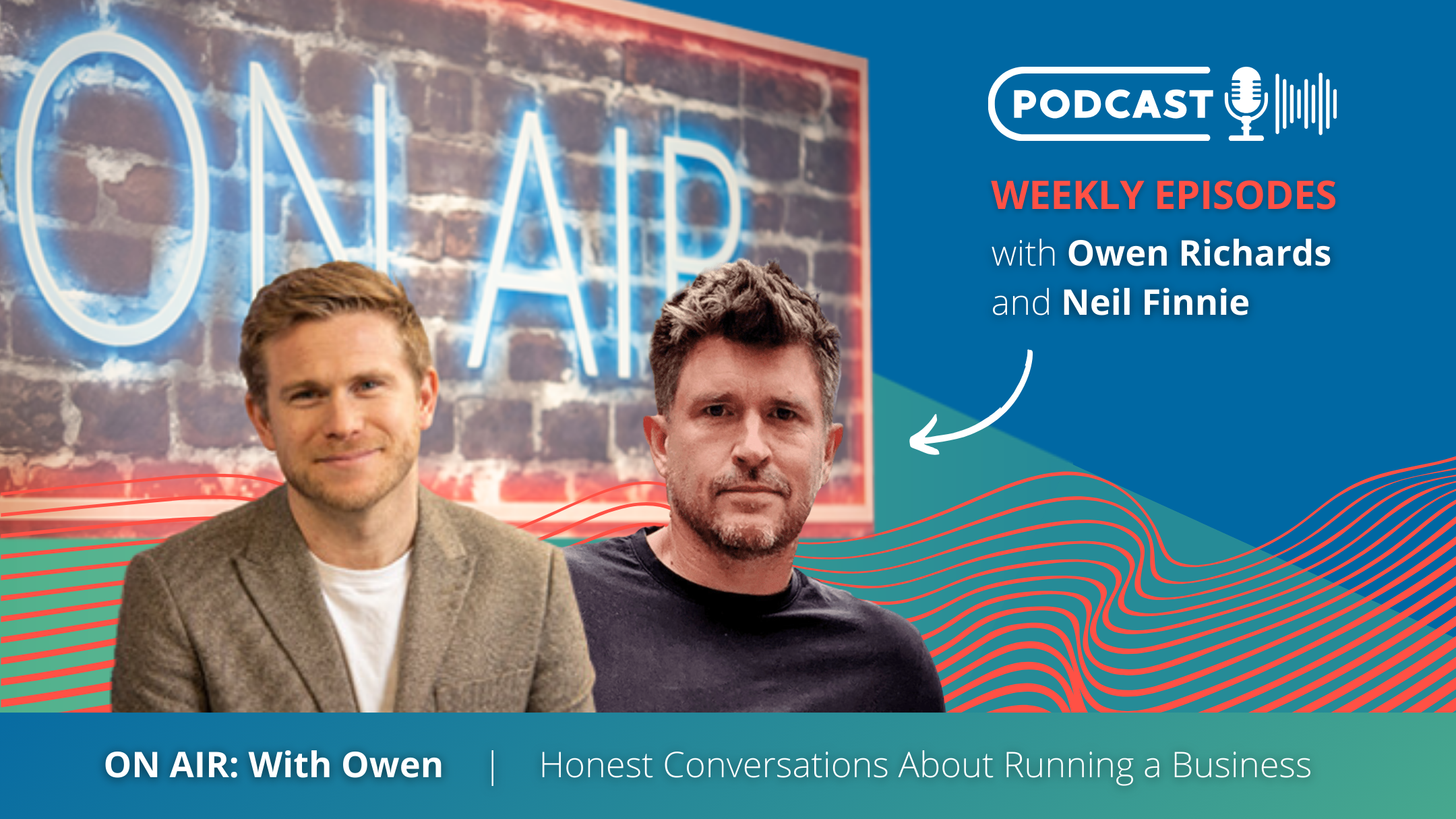
Introducing our 100th(!) episode of ON AIR: With Owen – our podcast series for honest conversations about starting and scaling your own business, hosted by our Founder & CEO, Owen Richards, and his new co-host, Neil Finnie.

Meet Your Hosts: Owen Richards and Neil Finnie

Owen Richards hails from Kent and began his sales career at Forrest Marketing Group in Sydney. After an 8-year stint, Owen returned to the UK and co-founded Air Marketing Group, growing it into a powerhouse offering specialist B2B sales and marketing solutions to businesses across the globe. Known for his relentless positivity and strategic foresight, Owen brings a wealth of experience and a knack for big ideas to the podcast.

Neil Finnie is your quintessential ‘wabi-sabi entrepreneur’ – flawed but beautiful in approach. With over 25 years of experience in nurturing businesses around his passions, from co-working spaces to professional development agencies, Neil’s unique perspective enriches our discussions, making each episode a treasure trove of insights.

What to Expect in this Week’s Episode

Neil is back, and he and Owen are diving straight into the UK budget announcement and its profound impact on businesses.

  • The Business Bottom Line: From national insurance increases to minimum wage adjustments and higher business rates, how will companies cope with these rising costs?
  • A New Monthly Bill: With little time and limited information to prepare, businesses face a financial burden they didn’t account for last year.
  • Jobs and the Future Workforce: What does the budget mean for job creation amid pressures from AI, outsourcing, and escalating employment costs?
  • Employee Rights at Day One: We discuss how this impacts startups and businesses trying to get off the ground.
  • Retirement on Hold: For business owners nearing retirement, the new tax ratio is a game-changer, leaving less time to plan for the future.

Where and When to tune in

Catch new episodes every Wednesday:

Watch: On YouTube or via Air Marketing’s Knowledge Hub.

Listen: On Spotify, Amazon Music, Apple Podcasts, TuneIn + Alexa, Deezer, and more.

Join us as we dive deep into the dynamics of running a business in today’s fast-paced world. Whether you’re seeking inspiration or practical advice, our podcast is your gateway to becoming more adept in the business arena.

Warning: Contains swearing

ON AIR With Owen: Episode 99 | Do You Need a Personal Brand to Succeed?

Introducing our 99th episode of ON AIR: With Owen – our podcast series for honest conversations about starting and scaling your own business, hosted by our Founder & CEO, Owen Richards, and his new co-host, Neil Finnie.

Meet Your Hosts: Owen Richards and Neil Finnie

Owen Richards hails from Kent and began his sales career at Forrest Marketing Group in Sydney. After an 8-year stint, Owen returned to the UK and co-founded Air Marketing Group, growing it into a powerhouse offering specialist B2B sales and marketing solutions to businesses across the globe. Known for his relentless positivity and strategic foresight, Owen brings a wealth of experience and a knack for big ideas to the podcast.

Neil Finnie is your quintessential ‘wabi-sabi entrepreneur’ – flawed but beautiful in approach. With over 25 years of experience in nurturing businesses around his passions, from co-working spaces to professional development agencies, Neil’s unique perspective enriches our discussions, making each episode a treasure trove of insights.

What to Expect in this Week’s Episode

  • The Role of Personal Brands: Is a founder’s brand essential for business success, or can a company succeed without a face? Owen and Neil weigh the pros and cons.
  • Creating Connection and Trust: Owen and Neil debate whether audiences are more engaged with businesses that show a personal side.
  • Owen’s Approach: From in-person events to raw, unfiltered content, Owen shares how he blended personal and professional elements to build his brand.
  • The LinkedIn Landscape: Once just for job updates, LinkedIn is now a crowded space for personal branding. How can you stand out in this environment?
  • Finding Your Balance: There’s no one-size-fits-all for branding. Owen and Neil explore the different ways to build a genuine, authentic presence beyond LinkedIn, and how to find the balance that works for you and your business.

Where and When to tune in

Catch new episodes every Wednesday:

Watch: On YouTube or via Air Marketing’s Knowledge Hub.

Listen: On Spotify, Amazon Music, Apple Podcasts, TuneIn + Alexa, Deezer, and more.

Join us as we dive deep into the dynamics of running a business in today’s fast-paced world. Whether you’re seeking inspiration or practical advice, our podcast is your gateway to becoming more adept in the business arena.

Warning: Contains swearing

ON AIR With Owen: Episode 98 | AI in Business

Introducing our 98th episode of ON AIR: With Owen – our podcast series for honest conversations about starting and scaling your own business, hosted by our Founder & CEO, Owen Richards, and his new co-host, Neil Finnie.

Meet Your Hosts: Owen Richards and Neil Finnie

Owen Richards hails from Kent and began his sales career at Forrest Marketing Group in Sydney. After an 8-year stint, Owen returned to the UK and co-founded Air Marketing Group, growing it into a powerhouse offering specialist B2B sales and marketing solutions to businesses across the globe. Known for his relentless positivity and strategic foresight, Owen brings a wealth of experience and a knack for big ideas to the podcast.

Neil Finnie is your quintessential ‘wabi-sabi entrepreneur’ – flawed but beautiful in approach. With over 25 years of experience in nurturing businesses around his passions, from co-working spaces to professional development agencies, Neil’s unique perspective enriches our discussions, making each episode a treasure trove of insights.

What to Expect in this Week’s Episode

  • AI in Action: Inspired by their own journeys, Owen and Neil are exploring how AI is transforming their industries and whether it’s delivering measurable results.
  • Neil’s Perspective: Discover how AI is empowering small businesses to focus on what matters most, even when it’s not part of a formal strategy.
  • Gaining a Competitive Edge: Will your business be left behind? Find out how AI is helping companies work faster and smarter, impacting pricing and competitiveness.
  • Breaking Barriers: Is AI accessible for everyone? We discuss whether the path to adopting AI is easy or challenging for businesses today.
  • Learning AI: Discover how ChatGPT can help you understand AI’s role in your industry and apply it to your business.
  • AI’s Effect on Jobs: Explore how AI is reshaping employment across industries, and what it means for the future of work.
  • The Search Shift: Do you now turn to ChatGPT instead of Google? We explore how people are changing the way they search for information.

Where and When to tune in

Catch new episodes every Wednesday:

Watch: On YouTube or via Air Marketing’s Knowledge Hub.

Listen: On Spotify, Amazon Music, Apple Podcasts, TuneIn + Alexa, Deezer, and more.

Join us as we dive deep into the dynamics of running a business in today’s fast-paced world. Whether you’re seeking inspiration or practical advice, our podcast is your gateway to becoming more adept in the business arena.

Warning: Contains swearing